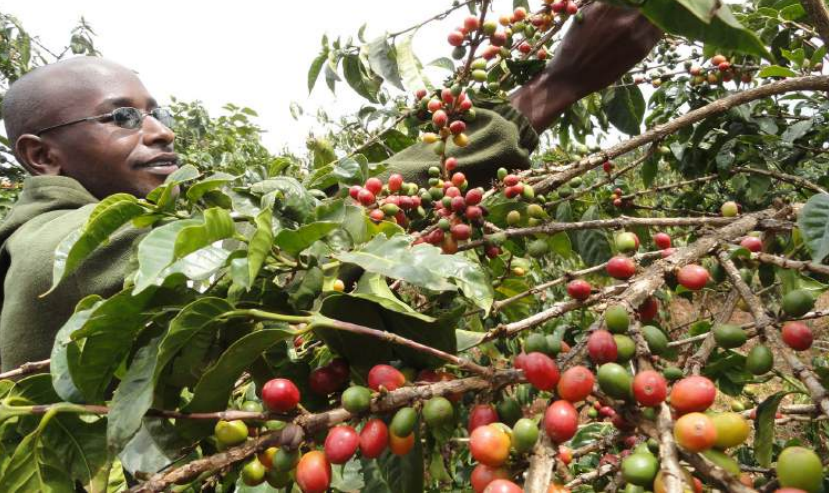
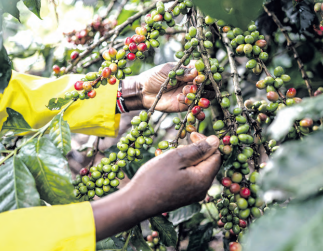
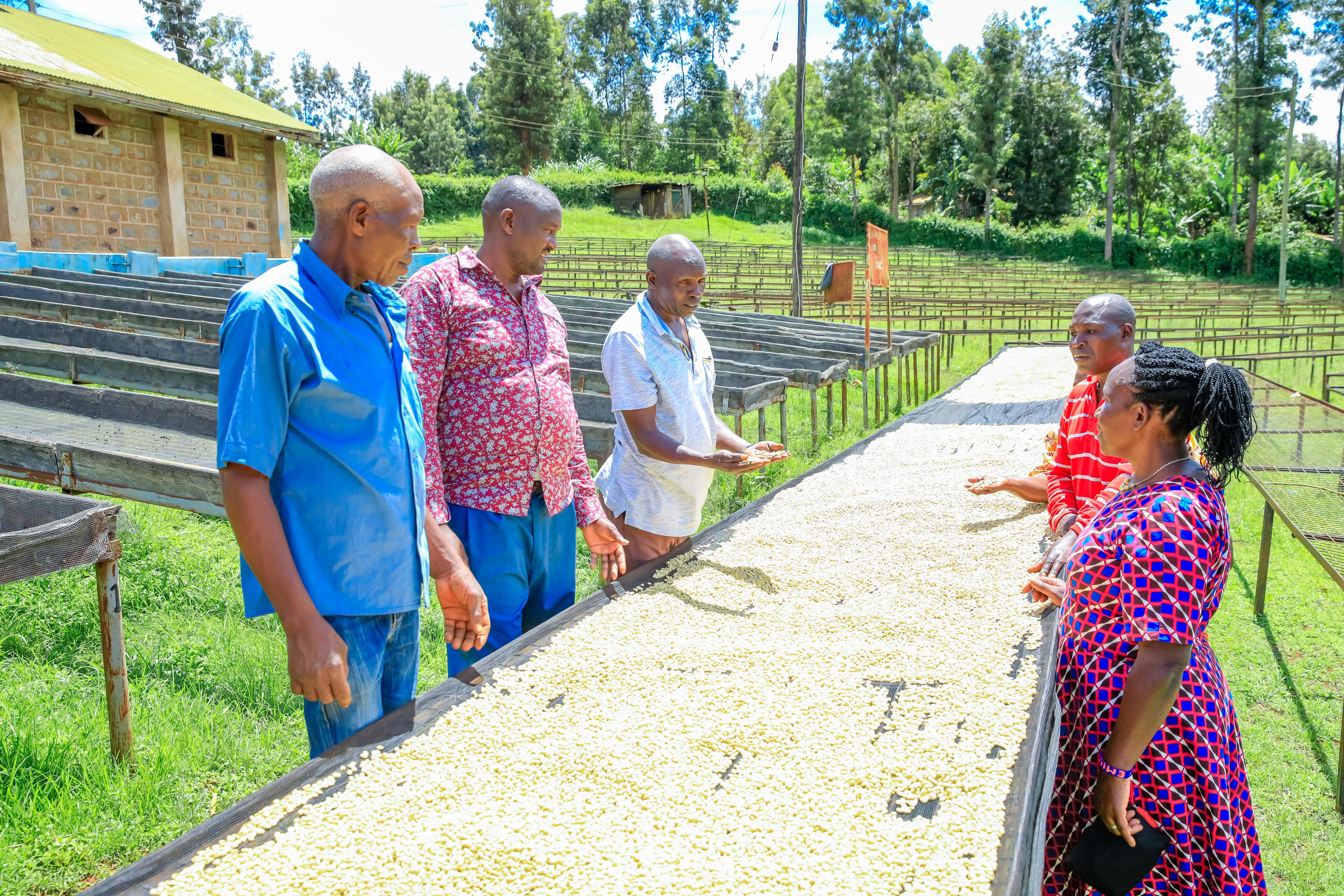
Kirinyaga County’s long-suffering coffee
farmers are celebrating a historic pay for their crop.
As recently as 2023, frustrated growers were
uprooting coffee trees due to persistently low prices and high input costs.
Now, they will share a record Sh7.4
billion. The latest payments range between Sh104 and Sh157.40 per
kilogramme of cherry, with the average payout standing at Sh139 per kilogramme.
“Our coffee farmers are beginning to enjoy the
fruits of their labour, with impressive cherry payouts this season,” Kirinyaga Governor
Anne Waiguru said.
“Our county-level interventions, from extension
services to cooperative strengthening, together with national government
support on coffee reforms and subsidised farm inputs, are delivering real
impact. When we work together, the farmer wins.”
Coffee officials, farmers and politicians attribute
the huge payout to government support, especially in the provision of
subsidised farm inputs, training and marketing of the produce.
The success is also due to reforms in the coffee
subsector that allowed farmers to sell directly to buyers at the Nairobi Coffee
Auction.
Coffee production in Kenya shot up from 49.5
thousand tonnes during the 2023-24 season to 51.4 thousand tonnes in 2024-25,
according to the Economic Survey 2026 released by the Kenya National Bureau of
Statistics.
The growth aligns with the Kenya Kwanza administration's targeted interventions under the five pillars of the
Bottom-Up Economic Transformation Agenda.
President William Ruto’s government aims to shift
agriculture from subsistence to a productive, technology-driven sector.
The goal is to enhance food security, raise
farmers’ incomes and expand exports through irrigation, subsidised inputs and
improved market access.
Although agriculture’s overall growth slowed down
to 2.8 per cent from 4.3 per cent the previous year, key subsectors performed
well. Maize production improved by 2.4 per cent to 45.8 million bags.
Rice paddy production increased by 6.4 per cent to
303.7 thousand tonnes, supported by a 5.3 per cent expansion in cropped area to
48,379 hectares across all irrigation schemes.
Fresh horticultural export volumes increased by
13.8 per cent to 457.9 thousand tonnes, with overall earnings rising by 5.3 per
cent to Sh143.8 billion.
The volume of cut flower exports increased by 27.4
per cent to 130.6 thousand tonnes, while earnings grew by 12.8 per cent to Sh81.3
billion in 2025.
Milk production increased by 3.5 per cent to 5.5
billion litres. Similarly, the volume of marketed milk production increased by
11.5 per cent to 1.0 billion litres during the same period.
On the other hand, wheat production fell by 18.2
per and green leaf tea output dropped by 7.8 per cent to 2,476.7 thousand
tonnes in 2025.
Sugarcane production dropped by 24.7 per cent to
7,051.9 thousand tonnes while the production of dry pyrethrum flowers dropped
by 18.2 per cent to 1,337.0 tonnes. Earnings from exports of fresh vegetables
declined by 9.0 per cent to Sh 21.3 billion.
The country’s economy expanded by 4.6 per cent last
year, marginally down by 0.1 per cent from 4.7 per cent the previous year.
Responding to critics of the government’s
performance, Treasury Cabinet Secretary John Mbadi said the growth demonstrated
“significant resilience” despite multiple domestic and global shocks.
The growth rate is above the global real GDP
expansion of 3.3 per cent and Africa’s average of 4.4 per cent.
It was not only agriculture that recorded progress
but all sectors of the economy, the Economic Survey 2026 says.
Construction rebounded from a 0.7 per cent drop in
2024 to grow by 6.8 per cent on the back of the affordable housing programme.
Cement production rose from 8,852.6 thousand tonnes
in 2024 to 10,442.7 thousand tonnes. The quantities of basic metals
manufactured grew by 4.9 per cent.
The length of paved roads stood at 25.4 thousand
kilometres in 2025, while residential housing units completed by the State
Department for Housing and Urban Development more than quadrupled, from 1,655
units in 2024 to 6,738 units.
The fisheries sector experienced notable growth,
with the total quantity of fish landed increasing by 12.3 per cent to 189,150.6
tonnes, while the value increased by 39.5 per cent to Sh54.9 billion.
Similarly, mining and quarrying recovered from a
7.8 per cent contraction in 2024 to 14.9 per cent, partly driven by increased
production of minerals used in cement production.
Other sectors that recorded notable growth included
accommodation and food service (15.6 per cent), public administration (8.3),
financial and insurance (6.5), and information and communication (4.8).
Transportation and storage expanded by 3.7 per cent
and wholesale and retail trade by 3.6 per cent.
Total recorded employment, excluding small-scale
agriculture, increased to 21.6 million from 20.8 million recorded in 2024.
The total number of new jobs generated in the
economy last year was 822.1 thousand, with 87.2 per cent of them in the informal
sector. The informal sector employment rose by 716.8 thousand jobs to stand at
18.1 million.
Total domestic demand for petroleum products
increased by 9.9 per cent to 5.7 million tonnes, reflecting increased
consumption across major sectors.
Consumption demand for Liquefied Petroleum Gas
increased by 14.7 per cent to 475.9 thousand tonnes, supported by government
interventions, including the implementation of the National LPG Growth
Strategy, which promoted uptake through subsidised cylinders for low-income
households and installation of LPG systems in public learning institutions.
Last year, the manufacturing sector accounted for
7.1 per cent to the national GDP. Total manufacturing output grew by two per cent to Sh3,817.4 billion, supported by
expansion across both domestic‐focused and export‐oriented activities.
The tourism sector recorded improved performance as
visitors to the country grew by more than five per cent to more than two million. The number of departing visitors
increased by eight per cent to 2.428.5 thousand.
The largest share of the visitors, accounting for
47.8 per cent, came on holiday. Hotel bed-nights occupancy increased by 12.6
per cent to 11,556.2 thousand in 2025, with a share of 45 per cent being
occupied by Kenyan residents.
The ICT sector output value grew by 3.8 per cent to
Sh728.2 billion in 2025. Mobile subscriptions increased from 71.4 million in
2024 to 78.4 million in 2025, driving up penetration from 136.14 in 2024 to
146.99 per 100 inhabitants.
In education, the total amount of loans granted to
students by the Higher Education Loans Board increased by 32.1 per cent to Sh62.0
billion. The amount of loans granted under the New Funding Model increased by
69.7 per cent to Sh53.1 billion.
Government expenditure on health services increased,
with national and county governments spending growing to Sh150.9 billion and
Sh133.4 billion, respectively.
This investment supported the expansion in health
infrastructure, increasing the number of health facilities to 16.7 thousand,
hospital beds to 106.3 thousand, and cots to 12.2 thousand in 2025.
Over the same period, the health workforce expanded, leading to improved delivery of health services.
Effective governance underpins economic progress by
creating a stable, just, and predictable environment in which people,
businesses, and institutions can thrive. Crimes reported to the police dropped
by 5.1 per cent to 96,038.
During the review period, the Central Bank rate was
revised downward from 11.25 per cent in December 2024 to nine per cent in December 2025. Similarly, lending
interest rates for loans and advances decreased from 16.89 per cent in December
2024 to 14.82 per cent in December 2025.



![[PHOTOS] The new Ngong –Naivasha Road viaduct](https://cdn.radioafrica.digital/image/2026/06/64d4f771-4432-4aee-ba3c-2f304c4436ec.jpg)









![[PHOTOS] 'Mr Speaker Sir' Gen Z protester in court](https://cdn.radioafrica.digital/image/2026/06/b3e62d8e-25c3-4780-90f9-4eb48b1ce8a7.jpg)