Barely three months remain before the legal deadline of
August 9, 2026, for the Independent Electoral and Boundaries Commission to
gazette campaign spending caps.
Parliament has yet to begin processing the regulations
needed to operationalise the law, raising fears of a money-fuelled political
free-for-all.
The delay has triggered alarm among governance watchdogs,
lawyers and election transparency advocates.
They warn of a repeat of the chaos seen before the 2022
polls, when campaigns ran without enforceable financial controls after MPs
rejected similar regulations.
The Election Campaign Financing (ECF) Act, 2013, provides
for the regulation of how much candidates and political parties can spend
during campaigns.
Its central aim is to shield elections from illicit money,
corruption and undue influence.
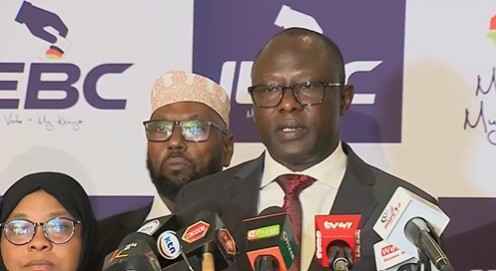
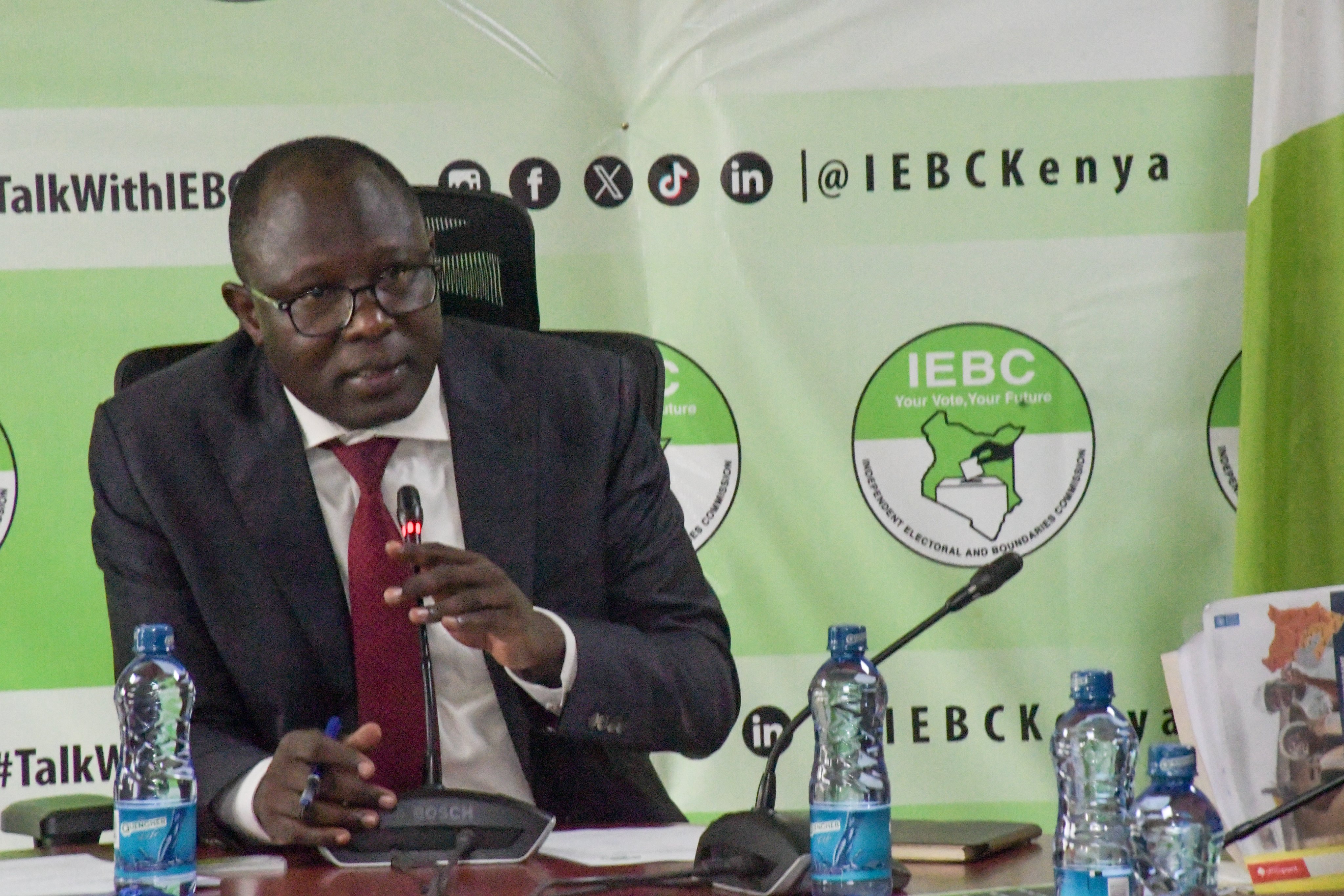
The law requires the Erastus Ethekon-led IEBC to publish
campaign spending limits at least 12 months before a general election.
However, delegated legislation requires pre-publication
scrutiny by the National Assembly. The draft must therefore be tabled in the
House before publication.
The standing rule states that “any regulation relating to
election matters once made by the IEBC must be approved by the House.” For the
August 10, 2027 polls, the deadline falls on August 9, 2026.
Parliament is currently on recess until the last week of
May, and the National Assembly is expected to prioritise the 2026-27 budget and
Finance Bill.
Fears are growing that campaign financing regulations may
once again be sacrificed at the altar of political convenience.
Justice and Legal Affairs Committee chairman Gitonga
Murugara confirmed that the process has not formally commenced in Parliament.
“It is work in progress on the part of the IEBC,” Murugara
told the Star, adding that the regulations had not yet been introduced to
Parliament for scrutiny.
Regulations approval is an elaborate process. The Committee
on Delegated Legislation is required to oversee it. Anxiety is mounting.
In a recent meeting with MPs, the IEBC said it has already
prepared draft Election Campaign Financing Regulations, 2026.
Despite this, parliamentary engagement has not started,
eating into the already narrow legal timeline.
Philip Gichana of Mzalendo, one of the petitioners who
successfully challenged Parliament’s previous rejection of the rules before the
2022 elections, said the country was staring at a repeat of history.
“I would expect that the IEBC should already have started
engagements at this point,” Gichana said.
“Looking at the
realities of the parliamentary calendar, there is cause for concern. The
attitude towards these instruments has always been the problem. MPs are likely
to use the timelines as the justification for not passing the regulations.”
Over the years, there has been significant political
resistance to regulating campaign money.
The IEBC first attempted to introduce comprehensive campaign
financing regulations in 2016, ahead of the 2017 polls, but the proposals were
rejected.
A second attempt came before the 2022 elections. In 2021,
the commission proposed spending caps for candidates and political parties,
only for the National Assembly to annul the regulations.
This saw the 2022 elections proceed without enforceable spending
limits. The IEBC submitted the regulations a few days before the deadline.
Campaigns then morphed into massive cash operations, with
wealthy candidates openly spending millions and in some cases billions, with
little scrutiny over the source of the money.
Civil society organisations moved to court, arguing that
Parliament had unlawfully crippled the law.
Separate petitions were filed by Katiba Institute and
AFRICOG, as well as Transparency International Kenya and activist Philip
Gichana.
In a landmark judgment, Justice Antony Mrima ruled that
Section 29(1) of the ECF Act, which required parliamentary approval before
gazetting the regulations, was unconstitutional.
The judge found that the provision violated Article 88(4) of
the constitution, which grants the IEBC independent authority to regulate
campaign financing and electoral conduct.
Yet, nearly four years later, the system remains in limbo.
Critics argue that even after the court decision, Parliament retains enormous
power to frustrate implementation through procedural delays.
Gichana believes the timelines embedded in the law were
deliberately designed to create loopholes.
“The whole point we have been fighting for is to amend the
Act and remove these restrictive timelines,” he said.
“I think it was intentional to put it in the law that the
regulations must be published within the set 12 months. Without regulations,
the Act becomes practically unimplementable.”
The draft IEBC regulations lay out a detailed formula to
control campaign spending across all elective positions.
Under the proposals, the spending cap for a parliamentary
candidate forms the base figure from which limits for all other offices are
calculated.
The formula factors in campaign costs such as venues,
publicity materials, media advertising, campaign staff, transport, security,
accommodation and administrative expenses.
Constituencies with populations significantly above or below
the national average would have their limits adjusted accordingly. Sparsely
populated regions would receive additional allowances based on geographical
size.
The cascading formula would then determine limits for
governors, MCAs, presidential candidates and political parties. County assembly
candidates would be restricted to 30 per cent of the constituency limit.
Presidential candidates would be capped at the aggregate national constituency
ceiling minus 40 per cent.
The regulations also seek to tighten transparency around
fundraising. One provision requires campaign teams to keep records of all
Harambee contributors donating more than Sh20,000, including their identities
and contribution details. The money would also have to be banked immediately.
Supporters say the measures are critical in blocking dirty money from
infiltrating politics.
Opponents within political circles argue that the rules are
unrealistic, difficult to enforce and discriminatory against candidates,
especially in expansive constituencies.
Without gazetted spending limits, the IEBC cannot penalise
candidates for excessive campaign expenditure because no enforceable ceiling
legally exists.
That loophole could allow proceeds of corruption, organised
crime and abuse of state resources to fuel elections.
Election observers warn that in the absence of clear
financial controls, wealthy individuals, business cartels and state actors can
quietly bankroll candidates.
The IEBC itself acknowledged the danger in a presentation to
the National Assembly earlier this year.
It informed lawmakers that the campaign financing framework
needed to be fully operational at least two months before August 10, 2026. That
leaves Parliament with barely enough time to conduct public participation,
committee scrutiny, debate and approval before the legal deadline lapses.
Political temperatures are already rising ahead of 2027,
with early campaigns taking shape across the country.
Elog National Coordinator Mule Musau, however, stated that
the IEBC needs no MPs’ approval, citing the court ruling that the regulations
do not require parliamentary approval.
“IEBC have been given the go-ahead to develop the
regulations without the need to go to Parliament, so long as they can subject
them to public participation,” he said.
“The risk now is that they have two months before being
time-barred by constitutional timelines. If they move quickly, they could
address the problem. If they don’t, then the chances of having the most skewed
electoral landscape in terms of resources and use of money will be in full
display.”
He added, “Illicit financial flows are allowing cross-border
penetration and many foreign actors are increasingly influencing electoral
processes. We need that regime as soon as possible.”
Analysts say delaying campaign finance controls under such
circumstances risks unleashing an unprecedented spending war. As MPs prepare to
return from recess and focus on budget politics, the fate of the campaign
financing regulations remains uncertain.



![[PHOTOS] The new Ngong –Naivasha Road viaduct](https://cdn.radioafrica.digital/image/2026/06/64d4f771-4432-4aee-ba3c-2f304c4436ec.jpg)




![[PHOTOS] 'Mr Speaker Sir' Gen Z protester in court](https://cdn.radioafrica.digital/image/2026/06/b3e62d8e-25c3-4780-90f9-4eb48b1ce8a7.jpg)