INVESTORS in bank
stocks at the Nairobi Securities Exchange are looking forward to yet
another twin harvest, with those institutions expected to report huge profits for
the first three months of the year.
The financial sector has experienced a
strong bullish rally at the Nairobi bourse since the beginning of the year,
contributing to a record surge in investor wealth.
Market capitaliSation increased by roughly Sh475
billion by mid-February 2026, driven by high demand for banking and large-cap
stocks.
Analysts expect the big three: KCB Group,
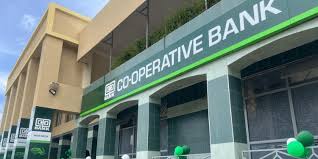
Equity and Co-operative Bank to lead the charm offensive at the bourse, with
some like Co-op Bank having gained 22.8 per cent on price valuation, ranking it 12th on the NSE in terms of
year-to-date performance.
On Friday, it closed
the market at Sh29.40 per share on NSE, recording a 0.3
per cent gain over its previous closing price of Sh29.30.
KCB closed its last trading day at Sh66.75
per share, recording a 0.4 per cent drop from its previous closing price of Sh67
The biggest lender in Kenya in terms of asset
value began the year with a share price of Sh65.75 and has since gained 1.52
per cent on that price valuation, ranking it 38th on the NSE in terms of
year-to-date performance.
Equity Bank, on the other hand, has since gained
12 per cent on price valuation, ranking it 25th on the NSE in terms of
year-to-date performance.
The lender’s share price at the Nairobi bourse
closed the week at Sh74.75 per share, recording a 0.3 per cent gain over its
previous closing price of Sh74.50.
The positive sentiment for the banking
stocks is perhaps boosted by impressive results posted by Stanbic Bank Kenya.
The bank posted a five per cent year-on-year growth in profit after tax to Sh3.5
billion in the first quarter of 2026, driven by increased lending that offset
margin compressions from consecutive policy rate cuts.
The growth, compared
to the Sh3.3 billion realised in a similar period last year, was driven by a
double-digit balance sheet growth, prudent cost and risk management.
Loans and advances
grew by six, driven by foreign currency lending demand to clients in the trade,
energy, building and construction sectors as the Central Bank of Kenya
continued to ease its policy stance, aimed at stimulating lending and easing
pressure on businesses and households.
This saw the lender
expand its balance sheet by 23 per cent from Sh450 billion to Sh552 billion, driven by higher customer deposits and the recovery of the private sector, which
picked up to 8.1 per cent in March.
“We sustained balance
sheet growth from mid‑2025, reflecting renewed momentum in the Kenyan economy,
underpinned by improving market conditions and a rebound in private sector
credit," said Abraham Ongenge, CEO, Stanbic Bank Kenya.
Generally, the capital
market registered a mixed signals in the past week as the country gears towards
hoisting Africa Forward Summit.
The NASI, NSE 25 share price indices
increased by 1.88 percent, and 0.31 respectively while the NSE 20 decreased by
0.62 per cent, respectively, during the week ending May 7.
Market capitalization, total shares traded
and equity turnover also increased by 1.89 per cent, 13.03 per cent, and 15.09
per cent, respectively, largely boosted by Safaricom, which posted a net profit
of Sh100 billion.
Bond turnover in the domestic secondary
market decreased by 53.77 per cent during the week.
In the money market, the Treasury bill
auction of May 7 received bids totalling Sh29.4 billion against an advertised
amount of Sh24.0 billion, representing a performance of 122.6 per cent.
Interest rate on the 91-day and 364-day
Treasury bills increased. However, the interest rate on the 182-day Treasury bill
declined marginally.
In the Treasury bond auction of May 6, the
three reopened 20-year and 25-year treasury bonds received bids totaling Sh106 billion against an advertised amount of Sh
80 billion, representing a performance of 132.5 per cent.



![[PHOTOS] The new Ngong –Naivasha Road viaduct](https://cdn.radioafrica.digital/image/2026/06/64d4f771-4432-4aee-ba3c-2f304c4436ec.jpg)





![[PHOTOS] 'Mr Speaker Sir' Gen Z protester in court](https://cdn.radioafrica.digital/image/2026/06/b3e62d8e-25c3-4780-90f9-4eb48b1ce8a7.jpg)