A staffing crisis has gripped the public service, with fresh
audit findings exposing how severe shortages across ministries, commissions and
courts are crippling service delivery and hampering critical functions.
The details emerged just months after the National Treasury
extended a three-year employment freeze to contain the ballooning wage bill.
According to the report by Auditor General Nancy Gathungu, interns are now running Huduma Centre
desks in some regions while courts are struggling with unresolved cases
stretching beyond three years.
Many state departments are operating with barely a third of their required workforce.
Agencies responsible for education, health, justice, land
management, policing, agriculture and climate governance have been adversely
affected.
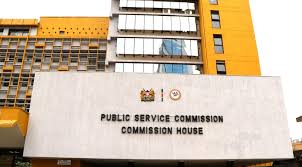
At least 272 public institutions are under-established, a review
by the Public Service Commission (PSC) shows.
The audit findings show that some of the most sensitive and
critical public institutions are among the worst affected.
For instance, in the Judiciary, auditors found a staff deficit
of 3,224 employees, with only 6,882 workers against an approved
establishment of 10,106.
The shortage was even more acute among judges and magistrates,
where only 564 officers were in place against a required 1,200, leaving a gap
of 636 judicial officers.
The consequences, the report warns, are already visible in the
justice system.
Auditors found that at the Kwale law courts alone, 496 court
cases had remained unresolved for more than three years.
Another 905 case records lacked documented court directives,
preventing progress of the matters.
The report also cited delays in updating the Court Tracking
System and frequent transfers of judicial officers without clearance of pending
cases.
“In the circumstances, the long-standing cases and missing
outcomes on continuing court cases may negatively impact the effective delivery
of justice,” Gathungu stated.
The health sector also emerged among the hardest hit.
At the Public Health department, only 190 positions had been
filled out of an approved establishment of 663, leaving a shortfall of 473
workers.
Gathungu warned that the effectiveness of internal controls in
the management of human resources could not be confirmed.
The Basic Education department was also flagged for massive
staffing imbalances.
The department had 4,890 officers against an approved
establishment of 9,587, translating to an understaffing of 4,697 employees.
At Lands and Physical Planning, auditors established that the
department had 2,651 employees against an approved workforce of 4,590,
resulting in a deficit of 1,939 officers.
The report warned that operations in the department could be
hindered, affecting effective and efficient service delivery.
The State Law Office and Department of Justice was also found to
be struggling with a major staffing crisis.
The office had 1,038 employees against an approved establishment
of 1,492, resulting in a shortage of 454 workers.
Gathungu warned that the deficit could undermine the AG’s
ability to advise ministries, departments, commissions and state corporations
on legislative and legal matters.
The National Police Service Commission emerged among the most
severely understaffed institutions.
Auditors found that the commission had only 271 employees
against an approved establishment of 1,333, leaving a massive gap of 1,062
officers.
The Kenya National Commission on Human Rights was also operating
far below its approved staffing level.
The commission had only 135 employees against an approved
establishment of 461, leaving a shortfall of 326 officers, or 71 per cent below
required levels.
At the Office of the Registrar of Political Parties, staffing
stood at 116 against an authorised establishment of 299 despite the recruitment
of eight new employees during the year.
The shortage represented a deficit of 183 workers.
The Judicial Service Commission was similarly affected, with
only 67 staff members against an approved establishment of 166.
The Teachers Service Commission secretariat also recorded a
staffing gap of 420 employees.
At the Salaries and Remuneration Commission, 15 positions
remained vacant.
The audit further revealed that some institutions had resorted
to using interns to keep operations running.
Huduma Centre desks in Kisii, Kakamega, Bungoma and Nakuru were
being managed by interns because of severe staffing shortages.
At the Commission on Administrative Justice, commonly known as the Ombudsman regional offices in Kisumu, Eldoret, Kisii,
Nakuru, Mombasa and Makueni were also struggling with inadequate funding, lack
of computers and logistical challenges.
Auditors warned that the lack of staffing and resources was
undermining the commission’s ability to fulfil its mandate.
In the aviation sector, the Kenya Meteorological Department was
found to be critically understaffed at key stations, including airports.
Auditors found that sampled meteorological stations in counties
including Narok, Nyeri, Murang’a, Machakos, Kajiado, Kisumu, Uasin Gishu and
Trans Nzoia had an average of only three technical staff against the optimal
six.
At four international airports, only seven meteorological
technical staff were in place against the required 16.
The report warned that the situation had led to a “perceived
compromise” of air safety standards required by the Kenya Civil Aviation
Authority.
Staff shortages were also flagged in agencies handling climate
and youth affairs.
The Directorate of Climate Change had only 11 employees against
an approved establishment of 30.
Auditors said the staffing gap could affect the directorate’s
ability to advise on legislation, policy coordination and climate governance.
At Youth Empowerment Centres, more than 40 centres countrywide
lacked substantive managers, with some officers overseeing multiple centres
simultaneously.
The audit concluded that effective service delivery to the youth
could not be confirmed.
In the Public Trustee of Kenya, the headquarters had only two
accountants against the required five, while four regional offices lacked
accountants altogether.
Auditors warned that the lack of proper staffing posed risks of
errors and misstatements in accounting records.
Other departments flagged for serious understaffing include the
departments of Water and Sanitation (92 officers), Tourism (25), Culture (406),
Agriculture (216) and Public Service (188).
The National Land Commission was also found to be operating
below capacity, with 842 employees against an approved establishment of 1,369.
Across the institutions, Gathungu repeatedly warned that the
staffing shortages were undermining efficiency, weakening internal controls and
affecting the ability of agencies to deliver services to the public.
The findings come amid mounting pressure on President William
Ruto’s administration over the efficiency of public services and delays in the
delivery of key government programmes.
While the government has in recent years argued that it is
pursuing a leaner and more efficient public service, the audit findings suggest
the cuts may now be stretching critical institutions beyond operational limits.




![[PHOTOS] The new Ngong –Naivasha Road viaduct](https://cdn.radioafrica.digital/image/2026/06/64d4f771-4432-4aee-ba3c-2f304c4436ec.jpg)






![[PHOTOS] 'Mr Speaker Sir' Gen Z protester in court](https://cdn.radioafrica.digital/image/2026/06/b3e62d8e-25c3-4780-90f9-4eb48b1ce8a7.jpg)