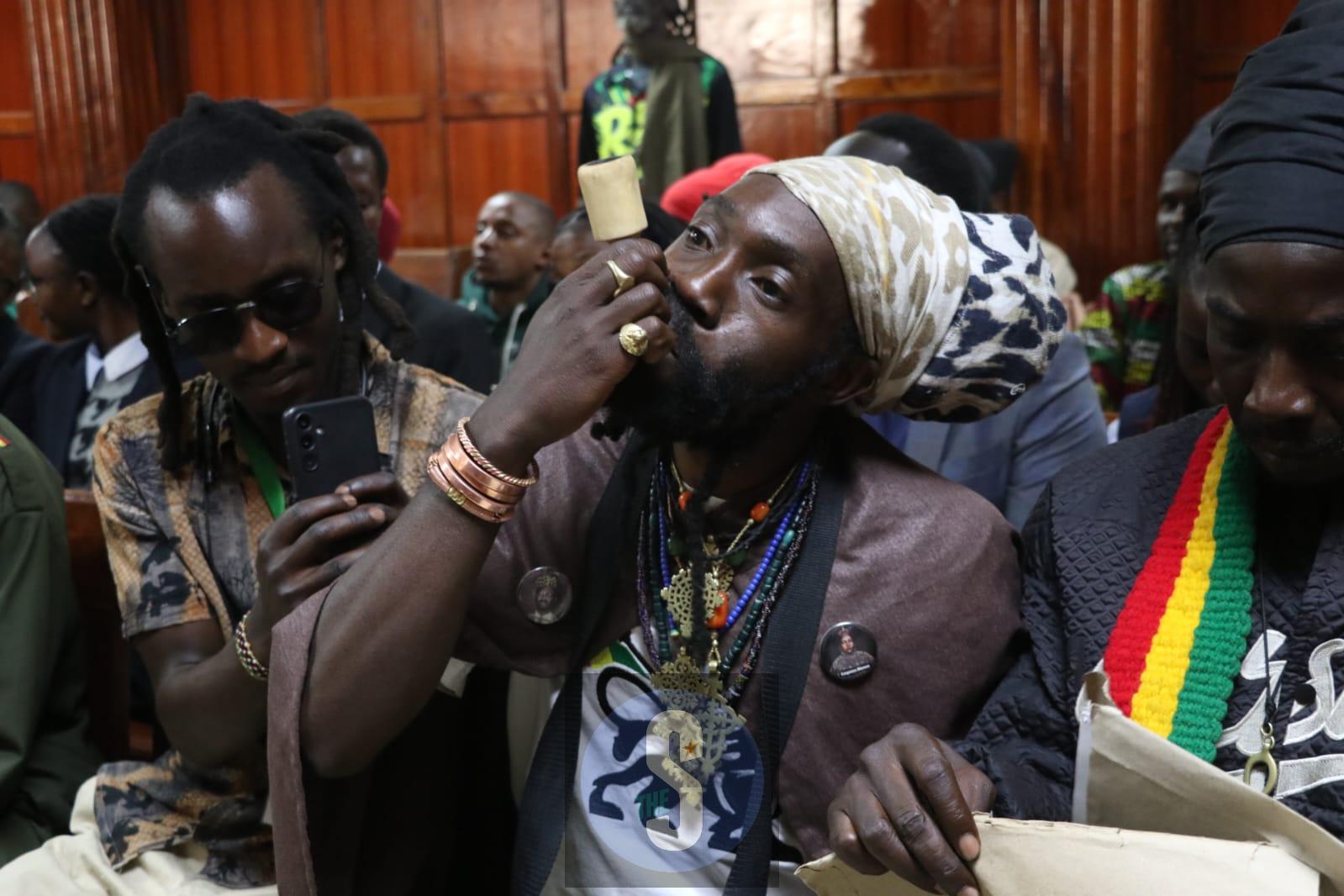
The High Court has been told that Kenya’s narcotics law has created a direct clash between freedom of religion and criminal prohibition on cannabis, with Rastafarians arguing that the law places them in a constitutional dilemma between faith and compliance.
The amended petition before Justice Bahati Mwamuye challenges sections 3, 5 and 6 of the Narcotic Drugs and Psychotropic Substances Control Act, which criminalise possession, use and cultivation of cannabis, including for personal consumption.
The petitioners, led by the Rastafari Society of Kenya, in a hearing on Friday, told the court that the provisions are overly broad and fail to distinguish between private and public use.
This, they argue, results in what they termed an unreasonable intrusion into constitutionally protected rights.
"They (Rastafarians) have been placed in a position between compliance with law or fidelity to their beliefs," counsel Jeff Kangethe stated.
Lawyer Shadrack Wambui argued that the law effectively criminalises core aspects of their beliefs.
He submitted that cannabis use, within their faith context, is tied to worship and conscience, and therefore falls within the protection of religious freedom and privacy rights guaranteed under the constitution.
"While law was served on public interest, it's important that the court consider the effect of blanket prohibition of private use, consumption, and cultivation of marijuana," he submitted.
The petitioners further argued that the law does not meet the threshold of a reasonable limitation.
They contended that Article 31 on privacy protects the intimate sphere of personal life, including adult choices that do not harm others, and that criminalising private conduct amounts to excessive state interference.
"It's afforded with the most intimate sphere of private home, conscience and choices an adult makes that don't harm others," he said.
Citing comparative jurisprudence, the petitioners referred to the South African Constitutional Court decision that decriminalised private cannabis use, arguing that Kenya should adopt a similar approach that allows adult personal use within private spaces, while maintaining restrictions for public safety and minors.
They also pointed out that Kenyan law already provides for limited lawful possession of cannabis for licensed medical professionals.
The case also touched on broader issues of marginalisation, with the Rastafari Society describing its members as a "politically powerless group often excluded from mainstream social life."
They urged the court to recognise their religious identity and protect their practices from what they described as blanket criminalisation.

![[PHOTOS] The new Ngong –Naivasha Road viaduct](https://cdn.radioafrica.digital/image/2026/06/64d4f771-4432-4aee-ba3c-2f304c4436ec.jpg)



![[PHOTOS] 'Mr Speaker Sir' Gen Z protester in court](https://cdn.radioafrica.digital/image/2026/06/b3e62d8e-25c3-4780-90f9-4eb48b1ce8a7.jpg)