The row was sparked by Samson Cherargei, who alleged that
the state could move to withdraw Uhuru’s benefits on the grounds that he is
actively involved in politics.
The Nandi senator stirred debate on Monday after indicating
he would push a motion in the Senate to have the benefits reviewed and possibly
redirected “to serve the interests and welfare of the people of Kenya”.
But by Tuesday, there was little indication that such a move
had any backing within government ranks.
The matter did not feature on the Senate’s Order Paper, and
sources within the House indicated that no formal process was under way to
actualise the proposal.
“No one will ever consider such a motion, given its
polarising nature. We all know it’s a ruse for headlines and social media
traction,” a senior Senate official said, speaking on condition of anonymity.
The source dismissed the proposal as politically motivated
and unlikely to gain traction, drawing parallels with previous initiatives by
Cherargei that failed to materialise, including a controversial attempt to
extend presidential term limits.
“Remember his bill on increasing term limits?” the official
posed, suggesting the latest push could meet a similar fate.
Within President Ruto’s inner circle, the reaction was even
sharper, with allies distancing the administration from the senator’s claims.
Kapseret MP Oscar Sudi accused Cherargei of advancing the
agenda of the President’s critics, dismissing the proposal as political
theatrics.
“Don’t drag us into this nonsense… we know you’re
colluding,” Sudi said in a post on his social media pages.
Other leaders privately suggested the move could be part of
broader political manoeuvres as alignments begin to take shape ahead of the
2027 General Election.
At the centre of the controversy is a benefits package that
remains one of the most generous for retired public officials.
Treasury disclosures show Uhuru is set to receive a package
worth nearly Sh260 million annually, in addition to a monthly pension of about
Sh1.2 million.
The allocation covers a wide range of expenses, including
staff salaries, travel, utilities, insurance and office maintenance, all funded
by taxpayers.
The former president is entitled to a fully staffed office,
security personnel and support staff at both his rural and urban residences,
alongside logistical and administrative support.
The scale of the benefits has, in the past, drawn public
scrutiny, particularly at a time when the government is under pressure to rein
in spending amid a rising debt burden and constrained revenues.
Even so, the law sets a high threshold for any attempt to
withdraw or reduce such benefits.
Under the Presidential Retirement Benefits Act, Parliament
must pass a resolution supported by at least two-thirds of members of the
National Assembly to deny a former president their entitlements.
The law limits such action to specific circumstances,
including when a former president is found to have violated the constitution, engaged in gross misconduct, or is convicted of an offence and sentenced to at least three years' imprisonment without the option of a fine.
It also provides that benefits may be adjusted if a retired
president takes up public office, with the perks reduced by the value of their
salary.
Regarding political activity, the law states that a retired president should not hold office in a political party for more than 6 months after leaving office and is expected to play a largely advisory role to the state
and the public.
This provision has fuelled debate over Uhuru’s perceived
involvement in opposition politics, an issue that has increasingly become a
point of contention within political circles.
However, there is no formal finding or legal process underway that would trigger the withdrawal of his benefits.
Uhuru had previously complained that his retirement benefits
were not being disbursed consistently in the early days of the Ruto
administration, though the payments have since stabilised.
INSTANT ANALYSIS
For now, insiders say the latest claims are far-fetched,
dismissing them as political gimmicks by President Ruto’s detractors. They,
however, point to political undercurrents as the country edges closer to the
next election cycle. Even so, the episode underscores how the question of
former presidents’ privileges and their role in active politics is fast
becoming part of the contest shaping the road to 2027.

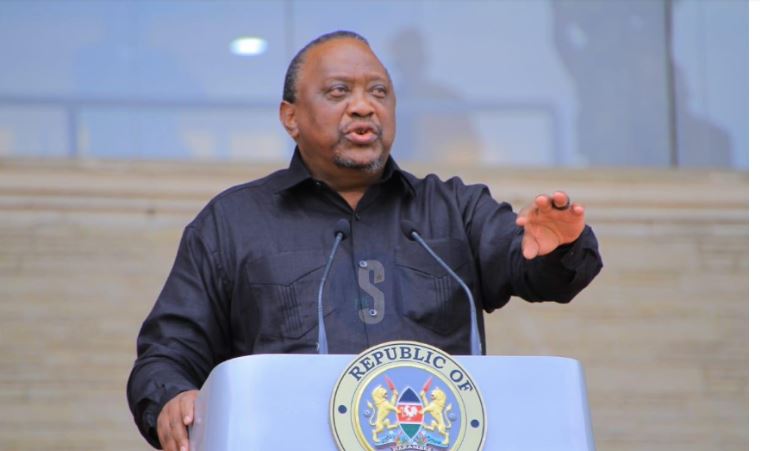
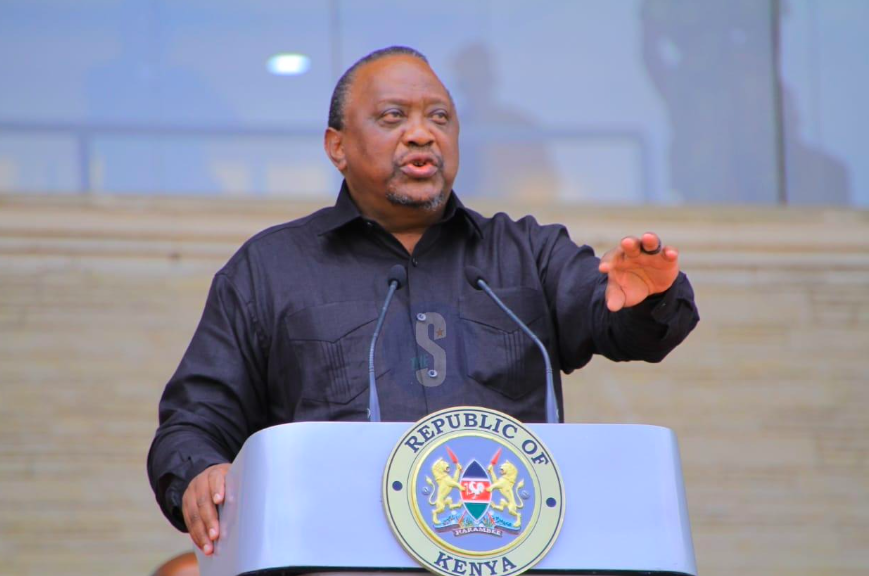 Former President Uhuru Kenyatta/HANDOUT


![[PHOTOS] The new Ngong –Naivasha Road viaduct](https://cdn.radioafrica.digital/image/2026/06/64d4f771-4432-4aee-ba3c-2f304c4436ec.jpg)






![[PHOTOS] 'Mr Speaker Sir' Gen Z protester in court](https://cdn.radioafrica.digital/image/2026/06/b3e62d8e-25c3-4780-90f9-4eb48b1ce8a7.jpg)