Inside the proposed Tanga oil refinery: Regional power play, billions at stake, and what it means for East Africa
Ruto, speaking during his visit to Tanzania, framed refinery as a cornerstone of regional industrialisation
by FELIX KIPKEMOI
Audio By Vocalize
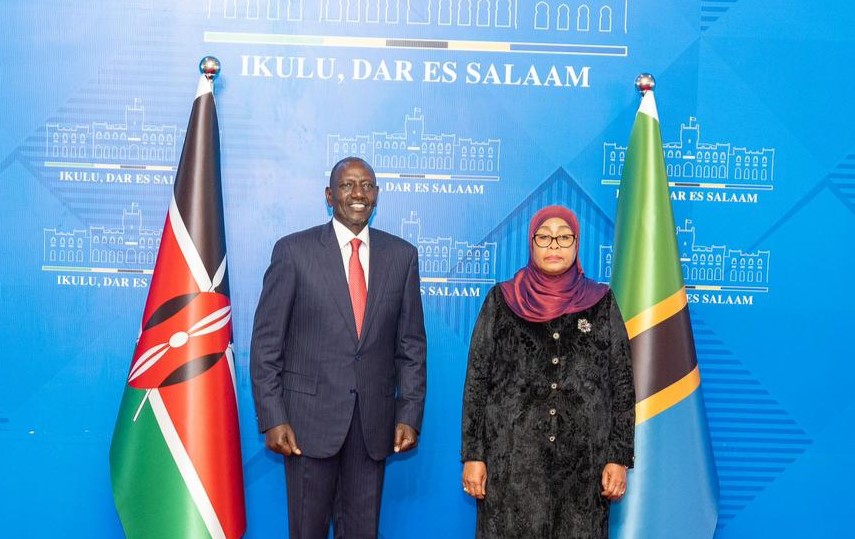
President William Ruto and Tanzanian President Samia Suluhu in Dar Es Salaam on May 4, 2026 / PCS
A proposal to
construct a mega oil refinery in Tanzania’s coastal city of Tanga
has quickly evolved from a regional industrial vision into a
diplomatic talking point, exposing both the promise and sensitivities
of East Africa’s integration agenda.
The refinery plan,
backed by President William Ruto, Yoweri Museveni and Nigerian industrialist
Aliko Dangote, is being framed as a transformative project that could
redefine how the region exploits its oil resources.
Yet, remarks by
Tanzanian President Samia Suluhu Hassan have highlighted the delicate
politics behind such cross-border investments.
At the heart of the
proposal is the construction of a 650,000-barrel-per-day refinery in
Tanga, an ambitious scale that would place it among Africa’s
largest refining complexes.
The idea is simple
but far-reaching: process crude oil within East Africa instead of
exporting it raw, then re-importing refined products at a premium.
President Ruto,
speaking during his visit to Tanzania, framed the refinery as a
cornerstone of regional industrialisation.
“I have been told
that our announcement to build a refinery in Tanga has upset you. Had
I known, I would have announced that the refinery would be built in
Mombasa,” he remarked, in a candid acknowledgement of the debate the
proposal has sparked.
He underscored that
refining crude locally unlocks far more than fuel production.
According to him,
such a facility would catalyse petrochemical industries, fertiliser
manufacturing, plastics production, and a broader ecosystem of
industrial activity.
“The building of a
refinery is a big opportunity for business,
industrialisation…fertiliser industries and plastic industries,”
Ruto said.
WHY TANGA?
Tanga’s strategic
location is central to the proposal.
The city sits along
the Indian Ocean and is relatively close, about 190 kilometres, to
Mombasa, East Africa’s main petroleum import and distribution hub.
Ruto outlined a
logistics chain that leverages existing and planned infrastructure
across the region. Crude oil from Uganda would be transported via
pipeline to Tanga, refined there, and then distributed through
established networks, including pipelines linked to Mombasa, for
onward supply across East Africa.
“We will use our
crude pipeline coming from Uganda to transport the crude, refine it
in Tanga, take it to Mombasa and transport it back to our region,”
he explained.
This integration
model aligns with ongoing projects such as the East African Crude Oil
Pipeline (EACOP), which is expected to transport Uganda’s crude to
the Tanzanian coast.
SULUHU’S CONCERNS:
PROCESS MATTERS
Despite the economic
logic, President Samia Suluhu publicly raised concerns over how the
announcement was made.
Speaking at the
Kenya-Tanzania Business Forum at the Julius Nyerere International
Convention Centre on Monday, May 4, she questioned why such a major
project was unveiled without prior consultation.
“When we were
having a conversation, I asked Ruto why he announced a refinery in
Tanga without my knowledge. Now he will explain to himself why he
announced it,” she said jokingly.
Her remarks point to
a broader issue in regional cooperation: while integration is widely
supported, sovereignty and consultation remain critical.
Large-scale
infrastructure projects require alignment not just at the leadership
level, but also within national planning frameworks.
Ruto, however,
defended the move, saying the proposal emerged from broader regional
discussions rather than unilateral action.
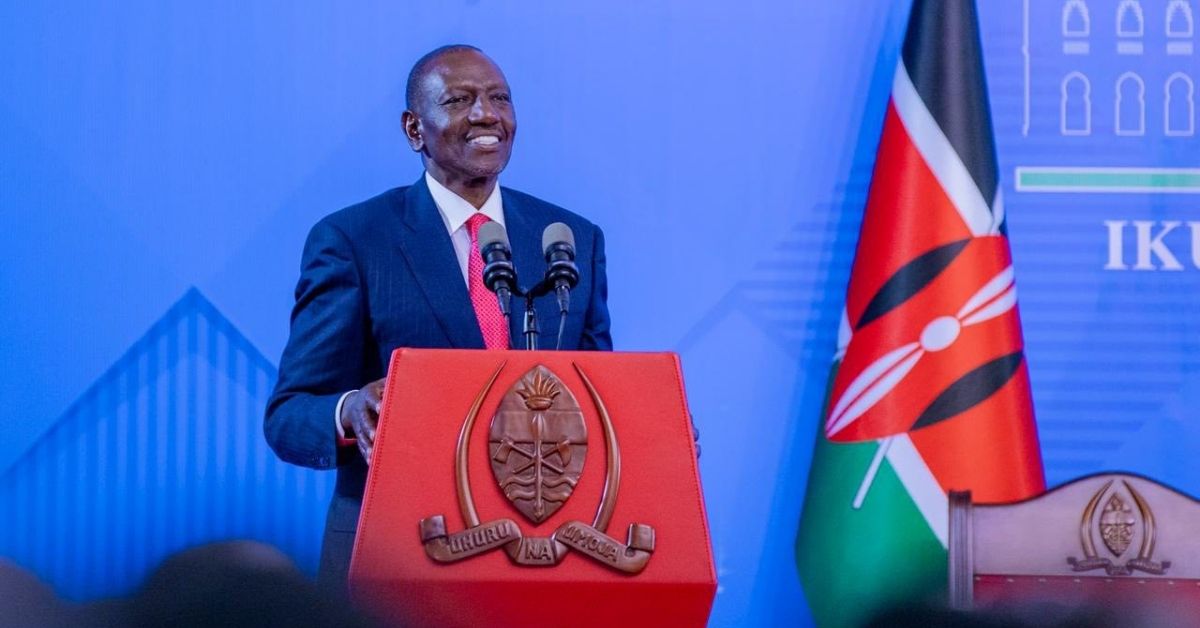
President William Ruto in Tanzania on May 4, 2026/PCS
THE DANGOTE FACTOR
The involvement of
Aliko Dangote adds significant weight to the proposal.
Dangote, who built
Africa’s largest refinery in Nigeria, has expressed interest in
replicating a similar model in East Africa.
During the Africa We
Build Summit 2026 held in Nairobi on April 23, Dangote proposed the
development of a refinery of comparable scale, 650,000 barrels per
day, arguing that the region has both the resource base and market
demand to sustain it.
At the summit,
leaders and investors reportedly agreed on several key points:
The refinery would
be structured as a public-private partnership, with governments
providing policy support and infrastructure while private investors
drive capital and execution.
Regional
governments, including Kenya, Uganda, and Tanzania, would take up
equity stakes, ensuring shared ownership and benefits.
The project would be
integrated with existing and planned oil infrastructure, particularly
pipelines and port facilities.
A timeline of
approximately five years was proposed, contingent on regulatory
approvals and financing commitments.
Dangote emphasised
that Africa must move away from exporting crude and importing refined
products, a cycle he described as economically unsustainable.
Most African crude
oil is exported outside the continent to destinations like Europe,
Asia and the United States.
Nigeria is the
largest oil producer and exports it to the US, while Angola exports it
to Asia.
Algeria and Libya
are the key suppliers to Europe, while Egypt produces and imports
depending on demand.
In East Africa,
crude oil exports are still developing.
Uganda has
discovered significant oil reserves in the Albertine Graben but has
not yet begun large-scale exports.
Production is
expected to start soon, with crude set to be exported via the East
African Crude Oil Pipeline (EACOP) to the Tanzanian coast.
South Sudan is
currently the only major crude oil exporter in East Africa.
It exports most of
its oil through pipelines that pass via Sudan to Port Sudan on the
Red Sea, where it is then loaded to tankers and shipped to
international markets.
Kenya has small oil
discoveries in Turkana but exports have been pilot-scale and
intermittent, not yet commercial.
Energy Cabinet
Secretary Opiyo Wandayi announced recently that the country would
commence commercial oil production in South Lokichar, Turkana by
December.
Tanzania is not a
crude oil exporter; it mainly has natural gas resources.
Regional buy-in
expands
Ruto indicated that
interest in the project extends beyond Kenya, Uganda, and Tanzania.
Countries such as
South Sudan and Rwanda are expected to join, signalling a broader
East and Central African coalition around energy industrialisation.
“Tanzania is going
to lead the way… I am sure South Sudan will come on board, Rwanda
has already said it is coming on board,” Ruto said.
Such a coalition
could guarantee a stable market for refined products, improving the
project’s commercial viability while strengthening regional trade
ties.
ECONOMIC IMPACT:
JOBS, INDUSTRY, AND VALUE ADDITION
If successful, the
Tanga refinery could be a game-changer for East Africa’s economy.
Currently, most
countries in the region export raw materials, including crude oil,
only to import finished products.
The main reasons why
Africa exports crude instead of refining it is because of limited
refining capacity in that many African countries do not have enough
or modern refineries.
Others are the cost of
building refineries, which costs billions of dollars with current
infrastructure historically designed for exporting raw materials.
The other issue is
logistics, where it has often been easier to ship crude abroad and
import refined fuel.
This model exports
jobs and industrial opportunities.
By refining oil
locally, the region could create thousands of direct and indirect
jobs in construction, operations, and auxiliary industries.
It will also lower
fuel import costs by reducing reliance on international refineries,
stimulate downstream industries, including plastics, chemicals, and
fertilisers and boost government revenues through taxes and export
earnings.
Ruto framed the
refinery as part of a broader philosophy of self-reliance.
“We can no longer
continue to export raw materials. We need to be intentional about
creating jobs and opportunities here rather than exporting them,”
he told Tanzania’s Parliament.
POLITICAL
UNDERTONES: TANGA VS MOMBASA?
Ruto’s remark that
he could have chosen Mombasa instead of Tanga hints at underlying
regional competition for mega investments.
While framed partly
in jest, the comment underscores how infrastructure projects often
carry political and economic weight, influencing national pride,
employment, and revenue streams.
However, Ruto
insisted his decision to back Tanga was guided by regional solidarity
rather than national interest.
“I chose Tanga out
of neighbourly faith and African unity,” he said.
Despite the optimism surrounding the project, several hurdles remain.
Chief among them is financing, as a refinery of this scale will require billions of dollars in investment.
Coordination is another major challenge, with multiple governments needing to align despite differing national priorities.
Regulatory approvals, particularly environmental and legal clearances, could also slow progress and delay timelines.
In addition, market risks persist, especially as the global shift toward renewable energy raises questions about the long-term demand for fossil fuels.
This is premium content
Subscribe to Continue Reading
Help us continue bringing you unbiased news, in-depth investigations, and diverse perspectives. Your subscription keeps our mission alive and empowers us to provide high-quality, trustworthy journalism. Join us today to make a difference!

 President William Ruto and Tanzanian President Samia Suluhu in Dar Es Salaam on May 4, 2026 / PCS


 President William Ruto in Tanzania on May 4, 2026/PCS
![[PHOTOS] The new Ngong –Naivasha Road viaduct](https://cdn.radioafrica.digital/image/2026/06/64d4f771-4432-4aee-ba3c-2f304c4436ec.jpg)






![[PHOTOS] 'Mr Speaker Sir' Gen Z protester in court](https://cdn.radioafrica.digital/image/2026/06/b3e62d8e-25c3-4780-90f9-4eb48b1ce8a7.jpg)