Senate uncovers “ghost” municipalities and Deep Financial Irregularities in counties
The panel established that several municipalities have failed to operationalise their charters
by JULIUS OTIENO
Audio By Vocalize
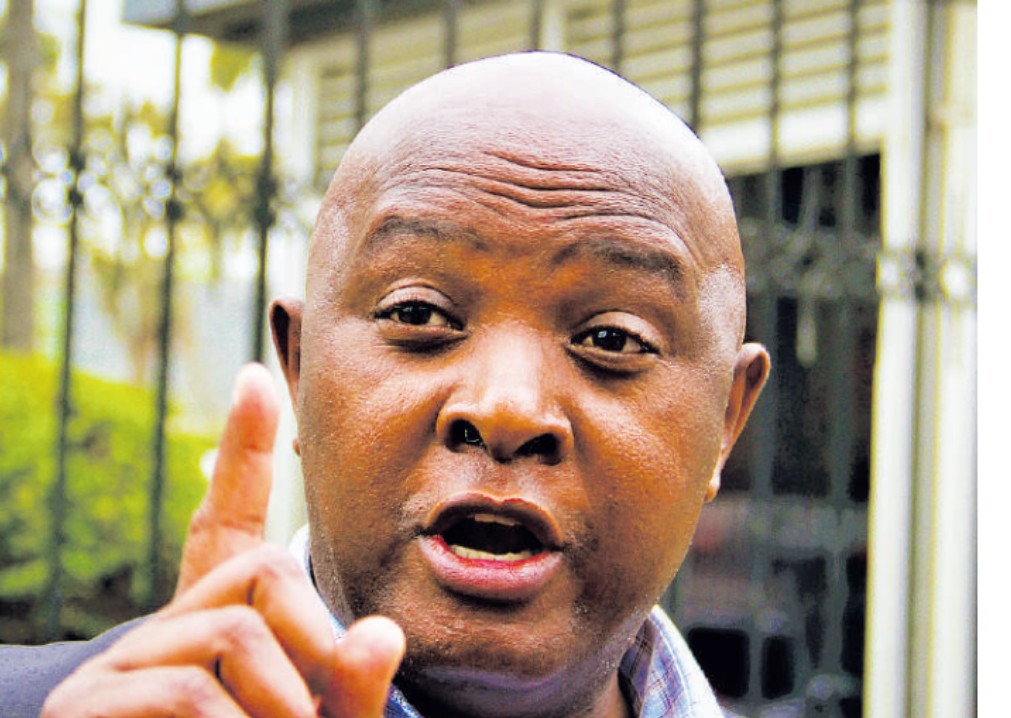
Vihiga Senator Godfrey Osotsi /FILE
A SenateA Senate committee has
uncovered widespread dysfunction, financial mismanagement and weak governance
structures in municipalities across the country.
The Senate County
Public Investments and Special Funds Committee has revealed what it describes
as “ghost” urban entities that exist in name but are largely non-operational.
The panel established
that several municipalities have failed to put their charters into full
operation.
They also suffer from weak
budgetary controls, revenue far lower than expected, and lack the required
autonomy to be granted by county executives.
The committee reported
that many municipalities are operating below the legal threshold set out under
the Urban Areas and Cities Act, and key governance structures are either
missing or heavily interfered with by county administrations.
The report highlights
that despite being granted municipal charters, numerous urban centres have not
implemented the functions delegated to them.
Instead, these roles
continue to be performed by county executives, effectively rendering the
municipalities dormant.
“Inadequate funding,
absence of strategic plans and non-functional municipal boards have
significantly undermined service delivery in these urban areas,” the committee
notes.
A case in point is
Maralal Municipality in Samburu county, which was granted a charter in 2018 but
remains largely non-operational.
Similar patterns, the
committee says, are replicated in other counties where municipalities exist on
paper but lack functional independence.
The committee, chaired
by Senator Godfrey Osotsi, also found serious anomalies in asset management and
financial reporting.
Many municipalities
either lack comprehensive fixed asset registers or are unable to provide
valuation reports and ownership documentation for properties listed in their
books.
In several instances,
municipalities disclosed zero values for properties, plants and equipment,
despite these physical assets being visible on the ground.
The report also
reveals that key assets remain under the control of county executives and are
not transferred to municipal authorities as required by law.
“Some municipalities
could not even demonstrate ownership of the land on which their offices sit,”
the report read, raising concerns about accountability and governance.
The committee observed
that the operational autonomy of municipalities has been severely compromised,
contrary to provisions of the Urban Areas and Cities Act.
Sections relating to
management independence, functional autonomy and financial self-governance are
largely violated.
In practice, municipal
budgets are prepared by county executives, revenue collection is centrally
controlled by counties, payments are processed through county treasuries and
municipal employees remain on county payrolls.
“This centralised
control undermines the municipalities’ ability to make independent operational
and financial decisions, thereby hampering their effectiveness in delivering
services efficiently to urban residents,” the report read.
The audit further
exposed widespread inaccuracies in financial statements prepared by
municipalities.
These include
misclassifications, omissions, casting errors, unexplained variances, and
non-compliance with Public Sector Accounting Standards Board (PSASB) reporting
templates.
The committee noted
discrepancies between financial statements and supporting ledgers, inconsistent
comparative balances, missing notes, incorrect budget-versus-actual reporting
and failure to adhere to the required accrual accounting basis.
For example, Eldoret
Municipality in Uasin Gishu county was flagged for multiple financial
anomalies, including missing notes on cash generated from operations,
inconsistencies in depreciation figures, unsupported prior-year adjustments and
unreconciled inter-entity transfers.
“These errors reflect
weak financial controls and a lack of adherence to established accounting
standards,” the committee observed.
To address the problems,
the committee has issued recommendations aimed at restoring accountability and
functionality in municipalities.
It has directed
governors to ensure that by the 2026-27 financial year, all municipalities are
fully operational in line with their delegated functions and gazetted mandates
under the Urban Areas and Cities Act.
The committee also wants
municipalities adequately resourced in accordance with the Public Finance
Management Act, 2012, to ensure effective service delivery.
Further, it recommends
that municipal boards develop Integrated Development and Economic Plans as well
as Integrated Strategic Urban Development Plans to guide urban growth and
management.
The Auditor General
has also been tasked with reviewing progress in subsequent audit cycles and
reporting on the extent to which counties have granted municipalities
operational autonomy.
In addition, governors
are required, within 60 days of the report’s adoption, to fast-track the
transfer of ownership documents of all municipal assets from county executives
to municipalities.
Municipal management
is also expected to conduct comprehensive valuation of assets and submit
reports for verification by the Auditor General. Accounting officers must then
update and maintain proper asset registers in compliance with public finance
regulations.
Finally, the National
Treasury has been urged to strengthen training and awareness programmes on
public sector accounting standards to improve financial reporting across
counties.
This is premium content
Subscribe to Continue Reading
Help us continue bringing you unbiased news, in-depth investigations, and diverse perspectives. Your subscription keeps our mission alive and empowers us to provide high-quality, trustworthy journalism. Join us today to make a difference!




![[PHOTOS] The new Ngong –Naivasha Road viaduct](https://cdn.radioafrica.digital/image/2026/06/64d4f771-4432-4aee-ba3c-2f304c4436ec.jpg)










![[PHOTOS] 'Mr Speaker Sir' Gen Z protester in court](https://cdn.radioafrica.digital/image/2026/06/b3e62d8e-25c3-4780-90f9-4eb48b1ce8a7.jpg)