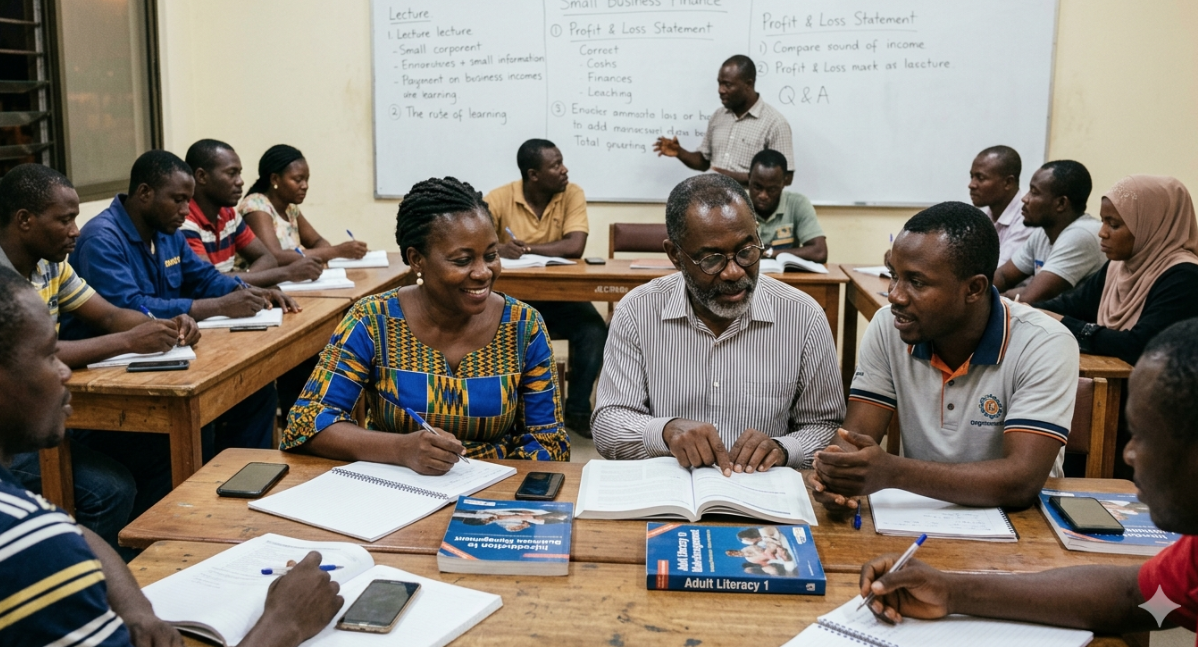
Kenya National Bureau of Statistics has ranked Nairobi as the leading county in adult education enrolment.
The county recorded a sharp rise in the number of learners seeking basic literacy and continuing education.
According to the Economic Survey 2026, total enrolment in adult education programmes grew by 18.8 per cent to reach 165,552 learners in 2025, underscoring renewed interest in second-chance learning opportunities.
Women accounted for the majority of learners, making up 61.2
per cent of total enrolment, a trend attributed to targeted mobilisation
efforts and growing awareness on the importance of education among adult women.
Nairobi topped the list with 34,506 learners, a figure largely driven by urban access to digital learning platforms and aggressive enrolment campaigns.
It was followed by Turkana county with 11,523 learners and Nakuru county at 10,600, reflecting strong uptake in both arid and peri-urban regions.
Other counties in the top 10 included Kitui county (5,624), Kisii county (4,922), Mandera county (4,584), Makueni county (4,408), Baringo county (4,253), Meru county (3,936) and Bungoma county (3,813).
The spread of counties reflects a nationwide push to tackle illiteracy, particularly in marginalised and rural areas.
However, the report also flagged disparities, with Narok county recording the steepest decline in enrolment.
The number of adult learners in Narok dropped from 4,900 in
2024 to 1,639 in 2025, raising concerns over retention and access challenges in
some regions.
Adult education in Kenya targets individuals aged 15 years and above who missed out on formal schooling. The programme, managed by the Directorate of Adult Learning and Education, offers a wide range of learning pathways including basic literacy, post-literacy training, continuing education and community empowerment initiatives.
The Basic Adult Literacy Programme equips learners with foundational reading, writing and numeracy skills, while post-literacy programmes help sustain these competencies and introduce practical life skills.
Continuing education provides an avenue for learners to sit national examinations such as KCPE and KCSE as private candidates, opening doors to further education and employment. Community education programmes, on the other hand, focus on civic awareness, health education and income-generating skills.
Programmes are highly flexible. Institutions and community centers often offer early morning, evening, weekend, and online classes to accommodate learners who have daytime work or family responsibilities.
Education stakeholders say the rising enrolment reflects growing recognition of adult learning as a critical tool in reducing inequality, improving livelihoods and promoting lifelong learning.
With counties such as Nairobi, Turkana and Nakuru leading the way, the government is expected to intensify efforts to expand access and address regional disparities in the coming years.

![[PHOTOS] The new Ngong –Naivasha Road viaduct](https://cdn.radioafrica.digital/image/2026/06/64d4f771-4432-4aee-ba3c-2f304c4436ec.jpg)







![[PHOTOS] 'Mr Speaker Sir' Gen Z protester in court](https://cdn.radioafrica.digital/image/2026/06/b3e62d8e-25c3-4780-90f9-4eb48b1ce8a7.jpg)