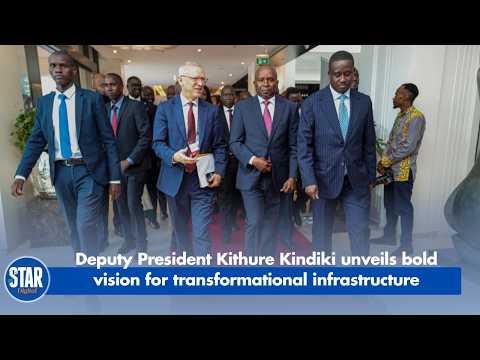
President William Ruto has, in recent weeks, sent what many
within his political circle interpret as the clearest signal yet on his
preferred running mate ahead of the 2027 General Election.
Through a mix of public praise, carefully chosen words, and
symbolic appearances, the President appears to be closing the door on
speculation and quietly consolidating support around Deputy President Kithure
Kindiki.
What is emerging is less a tentative political hint and more
a deliberate, sustained endorsement—one that allies say leaves little room for
ambiguity.
From State House forums to coalition meetings, Ruto has
repeatedly spoken of his deputy in glowing terms.
In various forums, he has often described Kindiki as
dependable, efficient, and fully aligned with the administration’s agenda.
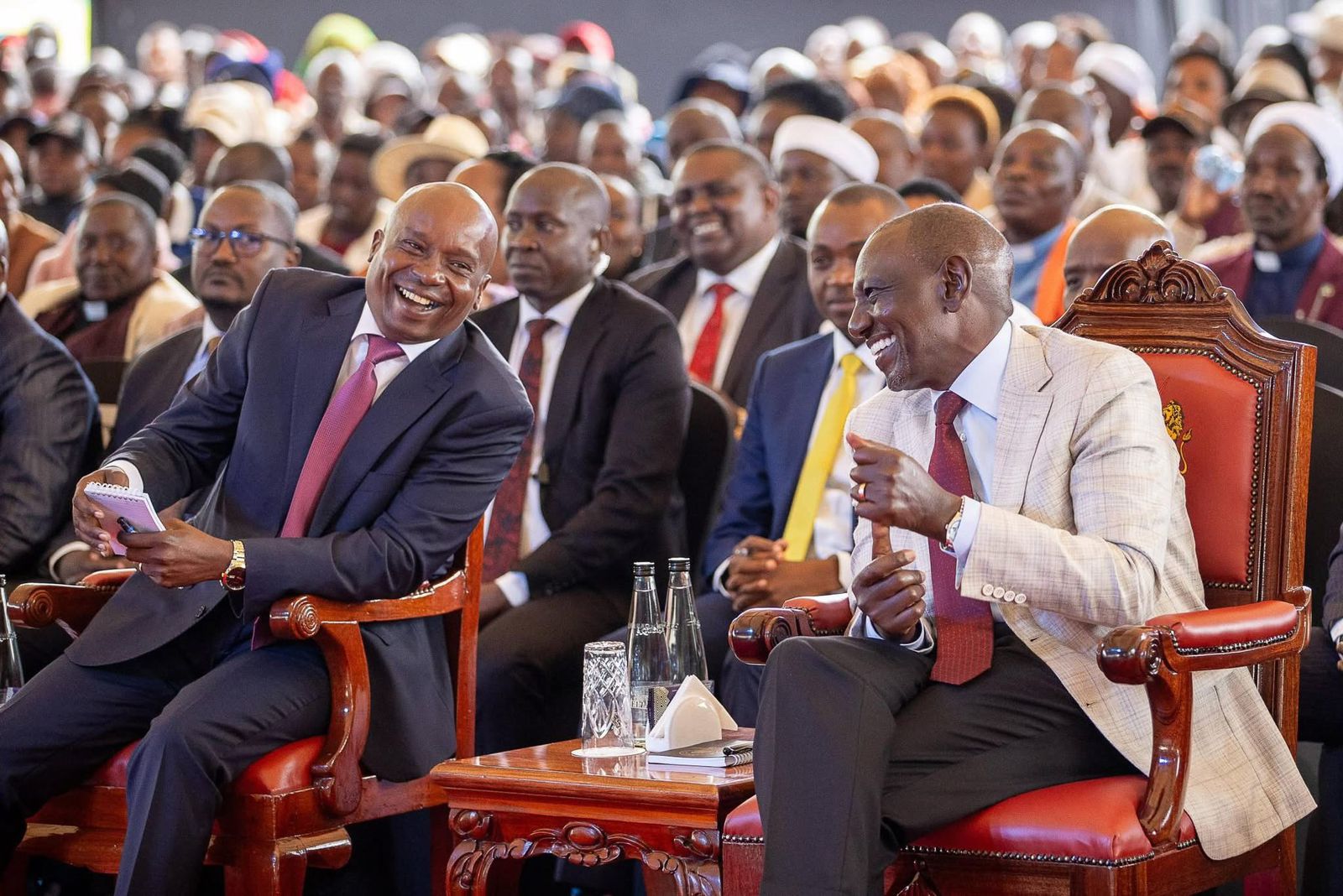
During a recent gathering that brought together ruling
coalition figures, the President remarked that he had a “perfect Deputy who
understands his assignment,” a statement insiders interpret as both an
affirmation and a reassurance.
Amid the push by coalition allies—especially UDA’s
broad-based partner ODM—President Ruto’s message has remained consistent:
“continuity over disruption.”
Within Kenya Kwanza circles, the framing of the 2027 ticket
is increasingly being cast as a choice between stability and experimentation.
Those advancing this narrative argue that Kindiki embodies
continuity, having been at the heart of implementing the administration’s
Bottom-Up Economic Transformation Agenda.
They describe him as deeply familiar with government
programmes, articulate in policy matters, and steady in execution.
Some hail the Deputy President as a wise counsellor who
resolves disputes, a sober go-to mediator, and Mt Kenya’s shortest route back
to the helm of power.
In contrast, alternatives such as the Rigathi Gachagua route
are subtly portrayed as risky—an unnecessary departure from a system already in
motion.
Gachagua has mounted a campaign to challenge Ruto. He is
currently aligned with Kalonzo Musyoka’s camp while also pursuing a court
process to revive his presidential ambitions.
As such, the impeached Deputy President argues that Mt
Kenya’s path back to power lies with a united opposition.
Sources intimate that, should his bid fail, the region would
seek a 40 per cent stake in government.
Kindiki’s supporters, however, disagree. They point to his
political temperament as a key asset and argue that his bargaining power is
irreplaceable compared to the Gachagua proposition.
Unlike more combative figures in the country’s political
landscape, Kindiki is often portrayed as measured, approachable, and
non-polarising.
These qualities, they argue, make him an effective
bridge-builder at a time when coalition politics remains fluid and essential.
His ability to engage across divides is seen as particularly
valuable in sustaining the broad-based political arrangement that has defined
Ruto’s governance approach over the past year.
Beyond policy and politics, loyalty has emerged as perhaps
the most emphasised trait in the President’s apparent endorsement.
Allies say Kindiki represents the ideal principal assistant,
describing him as consistent, calm, and firmly aligned with the President’s
vision.
There is a deliberate contrast here with past experiences
marked by internal friction at the highest levels of government, which
culminated in Gachagua’s impeachment.
Those close to the President suggest that trust and
predictability are now non-negotiable qualities within his inner circle.
Kindiki, they say, offers exactly that.
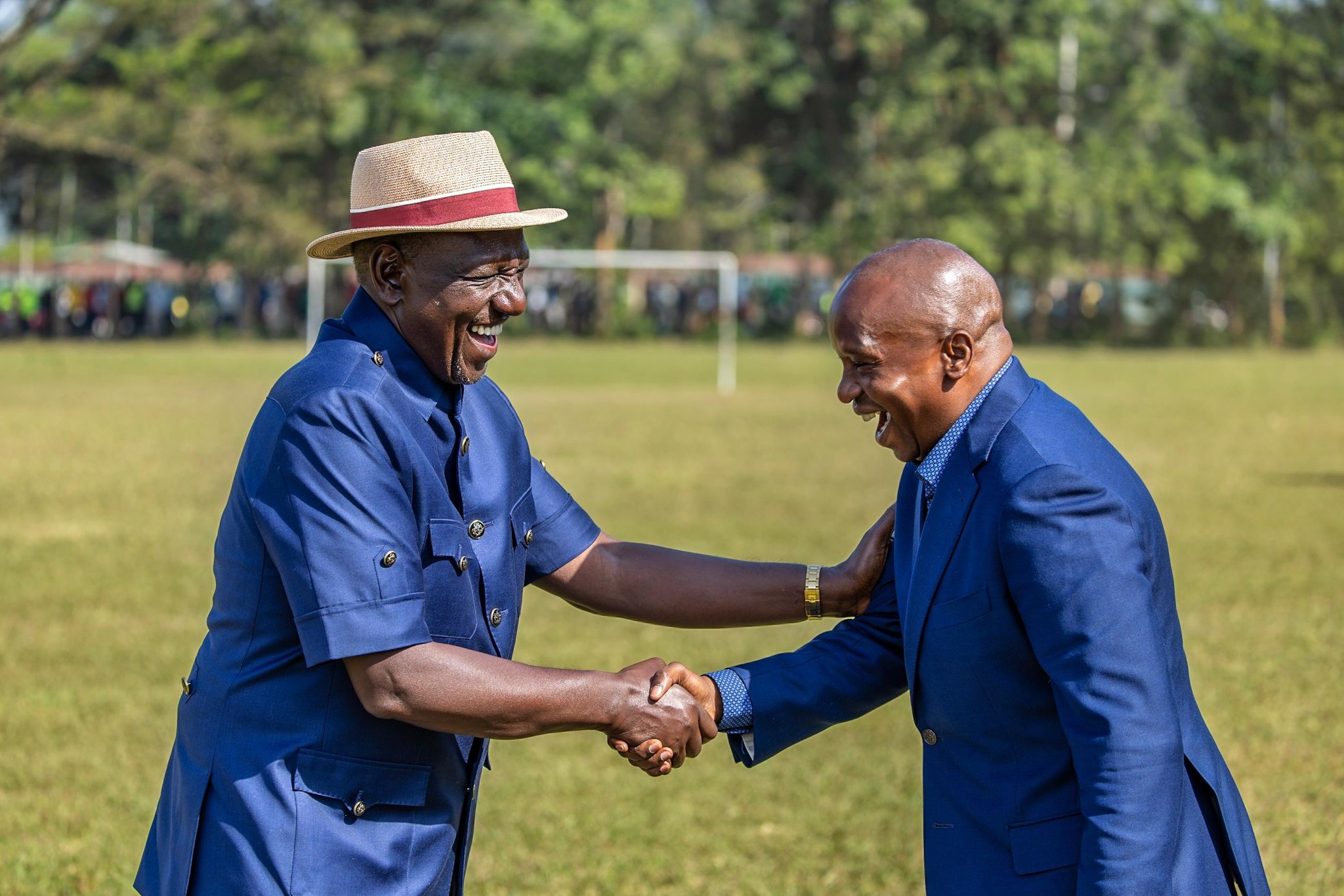
The clearest public articulation of this preference came
during a rally in Chuka last Sunday, where Ruto’s remarks were widely
interpreted as an outright endorsement.
In a pointed statement directed at critics, the President
suggested that those who currently underestimate his deputy would, in time,
seek his audience with newfound respect.
For many observers, the reference to “hapo mbele,” which
loosely translates to “the future,” was not merely rhetorical flourish but a
subtle nod to political timelines extending beyond 2027 into 2032 and beyond.
If that interpretation holds, then the endorsement is not
merely about the next election but about succession politics within the ruling
coalition.
The implications are already being felt. Within Kenya
Kwanza, the endorsement is seen as effectively shutting down internal
competition for the running mate slot.
Pundits argue that aspirants who may have harboured
ambitions for the position now face a reality in which the decision appears all
but settled.
It also sends a message to partners in the broader political
arrangement that the slot is not up for negotiation.
“This is about clarity and focus,” said Taveta MP John
Bwire, who has been vocal in his support for Kindiki.
“When you have a deputy who understands the system,
communicates effectively, and connects with people, you don’t gamble with
that.”
Bwire pointed to Kindiki’s communication style as one of his
standout strengths, noting his ability to craft messages that resonate with
ordinary citizens.
From catchy phrases to relatable expressions, the Deputy
President has, in recent months, developed a distinct political voice that
blends intellect with accessibility.
Beyond public messaging, Bwire also highlighted what he
described as Kindiki’s humility and grounded nature.
He recalled personal encounters where the Deputy President
went out of his way to serve guests himself, dismissing unnecessary protocol
and formality.
“That kind of humility is rare,” he said. “It speaks to a
leader who is secure, approachable, and respectful.”
More voices within government are reinforcing this line of
thought, adding weight to what is shaping up as a coordinated political
position.
Lands and Housing Cabinet Secretary Alice Wahome framed
Kindiki as the singular link between the President and the political base,
underscoring the trust already built within the administration.
“We don’t have another DP connecting us to President Ruto.
It is only Kindiki. As a people, we are with you 100 per cent,” she said.
Her remarks reflect a growing narrative within the executive
that the deputy presidency is not merely a constitutional office but also a
political bridge—one that requires both proximity to power and acceptance
across the coalition.
Mining CS Hassan Joho is among those angling for the seat,
with his top campaigner being his successor in the Mombasa governorship,
Abdulswamad Nassir.
Recently, he argued that any alternative would not be
welcome in the Coast, insisting it was their turn to secure the position.
While critics argue that Kindiki is yet to fully penetrate
the grassroots, some voices say progress is visible.
Murang’a Woman Representative Betty Maina pointed to his
growing grassroots engagement, linking his appeal to tangible interactions with
communities.
“The President made a good choice of deputy. He is a
gentleman. He came to Kenol and empowered our women and youth. We really
appreciate it,” she said.
Such endorsements, coming from both national and grassroots
leaders, reinforce the portrayal of Kindiki as both a policy insider and a
people-centred politician—an unusual but politically valuable combination.
Lamu Woman Representative Muthoni Marubu echoed similar
sentiments, framing the decision in terms of risk management.
“The stakes are too high for experimentation,” she said.
“What we have is a tried and tested partnership that is delivering. Why change
that?”
Marubu argued that Kindiki has, in just over a year,
demonstrated what the role of Deputy President should entail—supporting the
President in implementing key projects, maintaining focus on governance, and
avoiding distractions linked to personal ambition.
She contrasted this with previous periods marked by tensions
at the top, suggesting that the current arrangement offers a level of stability
that should be preserved.
Central to the growing consensus is a broader political
calculation. By signalling his preference early, Ruto may be seeking to avoid
the kind of internal wrangling that often weakens coalitions ahead of
elections.
Insiders argue that a settled ticket allows the
administration to focus on delivery and messaging rather than succession
battles. It also provides a sense of predictability to supporters and partners
alike, sources say.
Even so, as with all political strategies, the approach is
not without risks. Locking in a running mate too early can limit flexibility in
responding to shifting political dynamics.
It may also leave little room for bargaining in a landscape
where alliances are often fluid.
For now, however, the President appears comfortable with
that trade-off. Whether the early endorsement will hold through the murky
waters of politics remains to be seen.
![[PHOTOS] The new Ngong –Naivasha Road viaduct](https://cdn.radioafrica.digital/image/2026/06/64d4f771-4432-4aee-ba3c-2f304c4436ec.jpg)





![[PHOTOS] 'Mr Speaker Sir' Gen Z protester in court](https://cdn.radioafrica.digital/image/2026/06/b3e62d8e-25c3-4780-90f9-4eb48b1ce8a7.jpg)