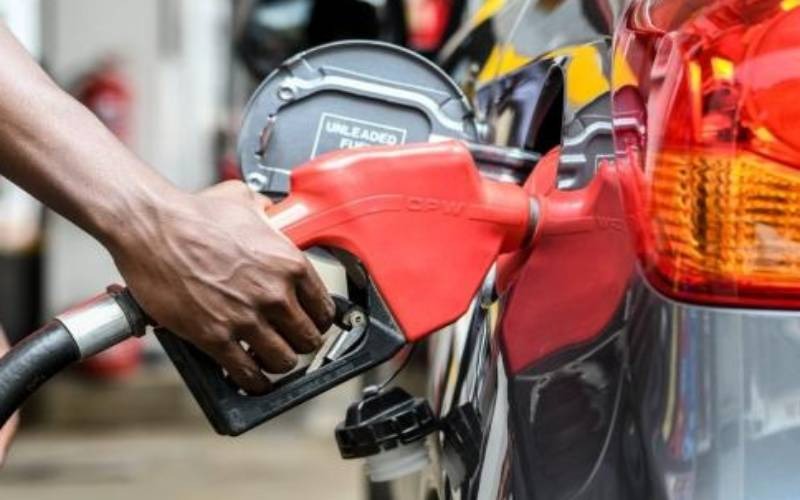
The government has unveiled a fresh legislative push aimed at easing the cost of fuel, with the National Treasury proposing a significant reduction in the road maintenance levy.
Under the proposed law, the Treasury seeks to cut the allocation from Sh3 to Sh1.50 per litre of fuel, a move that could translate into lower pump prices if Parliament approves the amendment.
The proposal is contained in the Road Maintenance Levy Fund
(Amendment) Bill, 2026, which targets changes to Section 3(2) of the Road
Maintenance Levy Fund Act (Cap 427).
“The section is amended in
subsection (2) by deleting the words ‘three shillings’ and substituting
therefor the words ‘one shilling and fifty cents’,” the Bill reads in part.
The amendment specifically
focuses on the portion of the levy directed to the Road Annuity Fund, which
finances road construction projects under the Road Annuity Programme and other
initiatives approved by the National Assembly.
If enacted, the change
would effectively reduce the levy component on every litre of petrol and diesel
sold in the country by Sh1.50. This comes at a time when fuel prices remain
elevated, with petrol retailing at Sh197.6 per litre in the latest pricing
cycle.
Treasury sources argue
that the reduction would provide direct relief to consumers at the pump without
undermining the broader road maintenance framework, as only a specific
allocation within the levy is being adjusted rather than the entire charge.
The cabinet secretary
retains the authority under Section 3(1) of the Act to revise the overall levy
through a Gazette notice, offering additional flexibility in managing fuel
costs.
The proposed amendment is
the latest in a series of interventions by President William Ruto’s
administration aimed at cushioning Kenyans from the impact of rising global oil
prices, which have exerted pressure on transport costs, food prices and overall
household spending.
Just days before the introduction of the Bill, Parliament passed the Value Added Tax (Amendment) Bill, 2026, reducing VAT on petroleum products from 16 per cent to 8 per cent.
The tax cut, which has already been assented to by President Ruto, is a
temporary measure set to run for 90 days, with the option of extension for a
further three months depending on global market conditions.
The combined effect of the
VAT reduction and the proposed levy cut could significantly lower fuel prices,
although other statutory charges will remain in place.
In addition to tax
measures, the government has also tapped into the Petroleum Development Levy
(PDL) Fund to cushion consumers. A total of Sh6.2 billion has been released to
stabilise pump prices amid global volatility.
Energy Cabinet Secretary
Opiyo Wandayi said the intervention helped prevent sharper increases in fuel
costs.
“You all saw that fuel
prices went up, but don’t worry. Even though prices increased, the national
government made strategic interventions. First, we introduced a Sh6.2 billion
subsidy, prices would have escalated much further,” he said.
The administration has also
continued to rely on the Government-to-Government (G-to-G) fuel import
arrangement, which President Ruto has credited with ensuring a steady supply and
competitive pricing despite disruptions in global oil markets, particularly in
the Middle East.
Attention now shifts to
Members of Parliament, who will be required to debate and approve the Road
Maintenance Levy Fund amendment. With the VAT cut already in effect and subsidy
measures in place, the proposed levy reduction represents the third major
intervention within a short period.
The government has faced
mounting criticism over the high cost of fuel, with the latest measures seen as
part of a broader effort to deliver sustained price relief.
However, analysts note that
the Cabinet Secretary’s powers to adjust the levy through Gazette orders mean
the relief may not necessarily be permanent unless anchored firmly in law.
Even so, the bill offers
renewed hope to consumers that fuel prices could ease further in the coming
months, potentially lowering the cost of living across multiple sectors of the
economy.

![[PHOTOS] The new Ngong –Naivasha Road viaduct](https://cdn.radioafrica.digital/image/2026/06/64d4f771-4432-4aee-ba3c-2f304c4436ec.jpg)







![[PHOTOS] 'Mr Speaker Sir' Gen Z protester in court](https://cdn.radioafrica.digital/image/2026/06/b3e62d8e-25c3-4780-90f9-4eb48b1ce8a7.jpg)