Deputy President Kithure
Kindiki has shifted UDA’s campaign from urban rallies to rural
grassroots mobilisation, aiming to consolidate support for President William Ruto ahead of election.
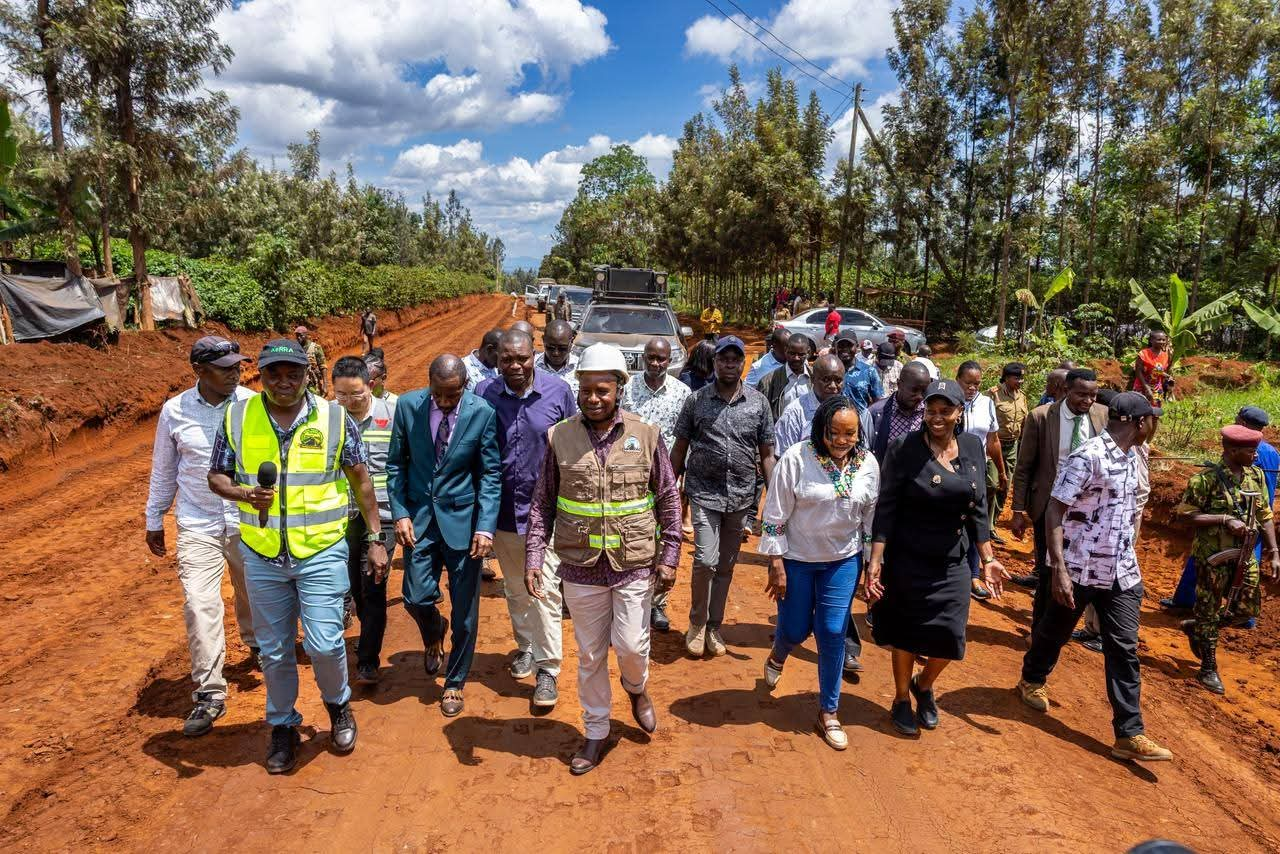
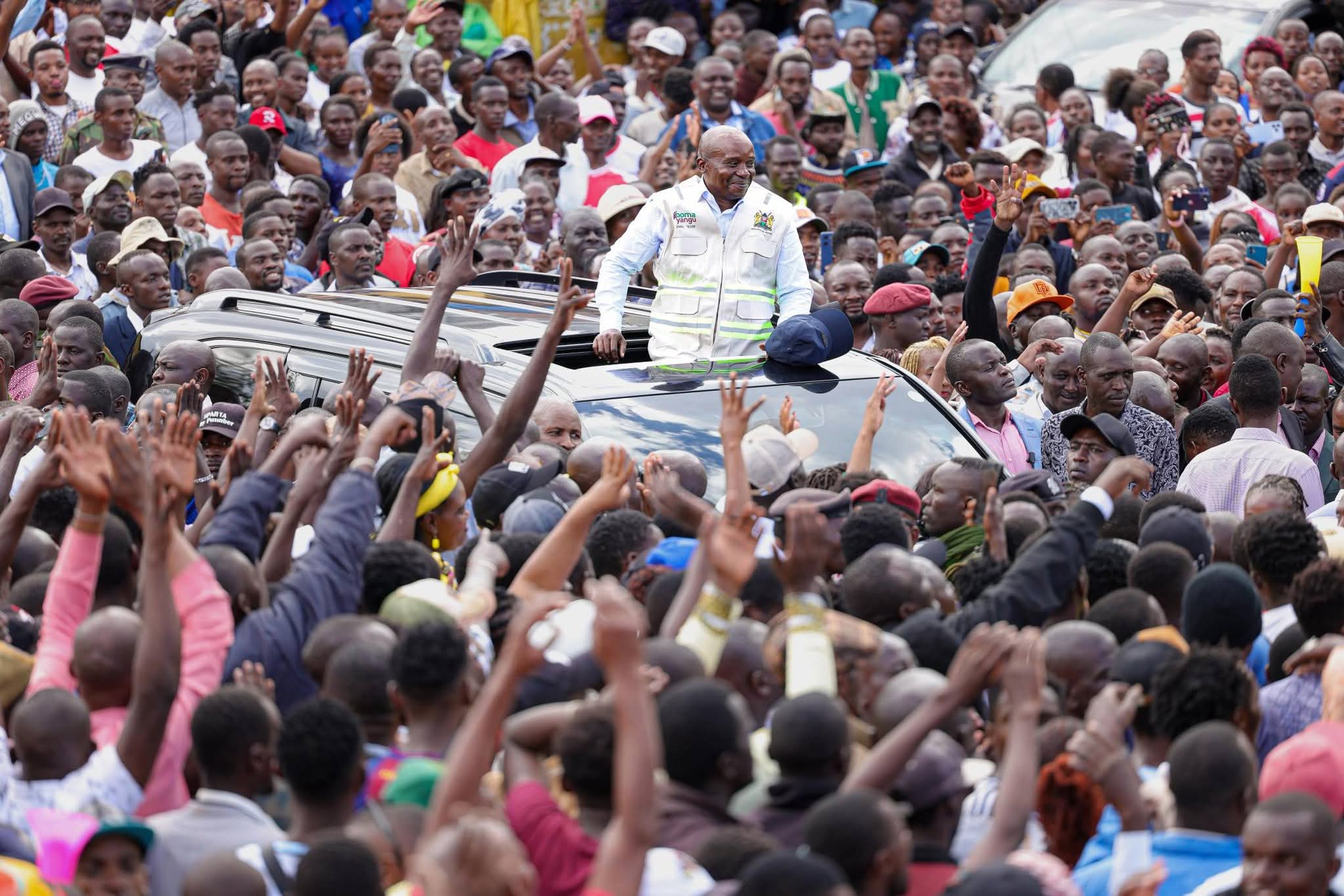
Over the past two months, Kindiki
has crisscrossed at least 70 grassroots stations, moving from interior wards to
small trading centres, inspecting projects, commissioning works and holding
low-key public engagements designed to bring government closer to ordinary
citizens.
Unlike the traditional political
playbook that leans heavily on mass rallies in major towns, the DP’s itinerary has been deliberately
granular, starting early morning site visits and culminating in brief afternoon
addresses, often after hours of direct interaction with project beneficiaries.
In Rabai constituency, Kilifi county, residents said it was the
first time a senior government official had ventured deep into the interior to
inspect a technical training institution and electrification projects.
The visit, residents
said, carried more
weight than a rally in a nearby town, where audiences are often repetitive and
detached from the direct impact of government programmes.
UDA insiders say the approach is
informed by a simple calculation that voters are more likely to trust and
support the government when they can physically see and experience development
projects.
“Rallies create noise, but
projects create conviction,” a strategist familiar with the tours said. “When someone uses a road,
gets electricity, or sells in a modern market, that becomes personal.”
This ‘project-first politics’ is now at the heart of the
administration’s broader vote-hunting strategy, aimed at countering opposition
claims that the government has failed to deliver.
In Baringo county’s Mogotio constituency, Kindiki pointed to
stalled electrification projects, including a transformer in Kapkararam that
had remained inactive for years, as evidence of past neglect now being
addressed.
President Ruto spoke to the DP’s
activities, saying they have been of immense help to his administration and to
delivering the Singapore dream.
“He has been to many places, three
times more places than his predecessor (me),” the President said during a
thanksgiving service at Chuka Igambang’ombe.
Similar narratives have played out
across counties, with the DP highlighting resumed road works
following the clearance of pending bills and the rollout of last-mile
electricity connections.
Across Murang’a, Kirinyaga, Meru
and Embu counties, Kindiki has consistently tied development to tangible
economic outcomes, citing linking roads to market access, electrification to
small businesses and
modern markets to improved livelihoods for small-scale traders.
During a recent tour of Kigumo and
Kandara constituencies in Murang’a, he oversaw the commissioning of
Kangari market,
inspection of road upgrades and progress on a 712-unit affordable housing
project.
He also flagged off materials for
a Sh1.1 billion electricity connectivity programme targeting 14,000 households.
In Baringo, he launched and
inspected multiple infrastructure projects, including roads, markets and
electrification schemes, part of a wider Sh32 billion road upgrade programme
covering 854km
in the county.
Similar patterns have been
replicated in Kisii, where modern markets are under construction, and in
Kilifi, where electrification and housing projects are being rolled out
alongside road works spanning hundreds of kilometres.
The messaging has remained consistent:
development as proof of delivery, and delivery as the basis for political
support.
Analysts say the strategy reflects
lessons learned from previous elections, where visibility of government
projects at the grassroots often translated into voter loyalty.
By taking leaders directly to
villages, the administration is seeking to ‘depoison’ opposition narratives and replace
them with lived experiences.
Crucially, the tours are also
doubling as civic education platforms. In many stops, Kindiki has held public
sensitisation forums to explain government programmes such as universal
healthcare, affordable housing and technical training reforms.
The idea is to explain the
initiatives that have often been criticised but remain poorly understood in
rural areas.
In Kilifi, for instance, he
highlighted enrolment in the Taifa Care programme and ongoing investments in
housing, markets and electrification, framing them as part of efforts to ensure
equitable development across historically marginalised regions.
The sequencing of the visits,
inspection first, rally later, underscores a deliberate shift in political
communication. Rather than leading with rhetoric, the government is betting on
demonstrable results to anchor its message.
Within UDA ranks, there is growing
confidence that the village-focused campaign could reshape the political
landscape by the time the country heads to the next polls.
As UDA director for resource
mobilisation, Nathaniel Mong’are put it: “You don’t win elections in boardrooms
or rallies alone, you win them in villages, one project at a time.”






![[PHOTOS] The new Ngong –Naivasha Road viaduct](https://cdn.radioafrica.digital/image/2026/06/64d4f771-4432-4aee-ba3c-2f304c4436ec.jpg)










![[PHOTOS] 'Mr Speaker Sir' Gen Z protester in court](https://cdn.radioafrica.digital/image/2026/06/b3e62d8e-25c3-4780-90f9-4eb48b1ce8a7.jpg)
