“I noticed something very
interesting. The entire supply chain is in shambles. We have a lot of brokers
in between. Many people are benefiting from farmers’ sweat, yet few understand
the potential of technology in this industry,” he explained.
Known simply as Buja to his
colleagues, he decided to take action. His vision has since become a reality.
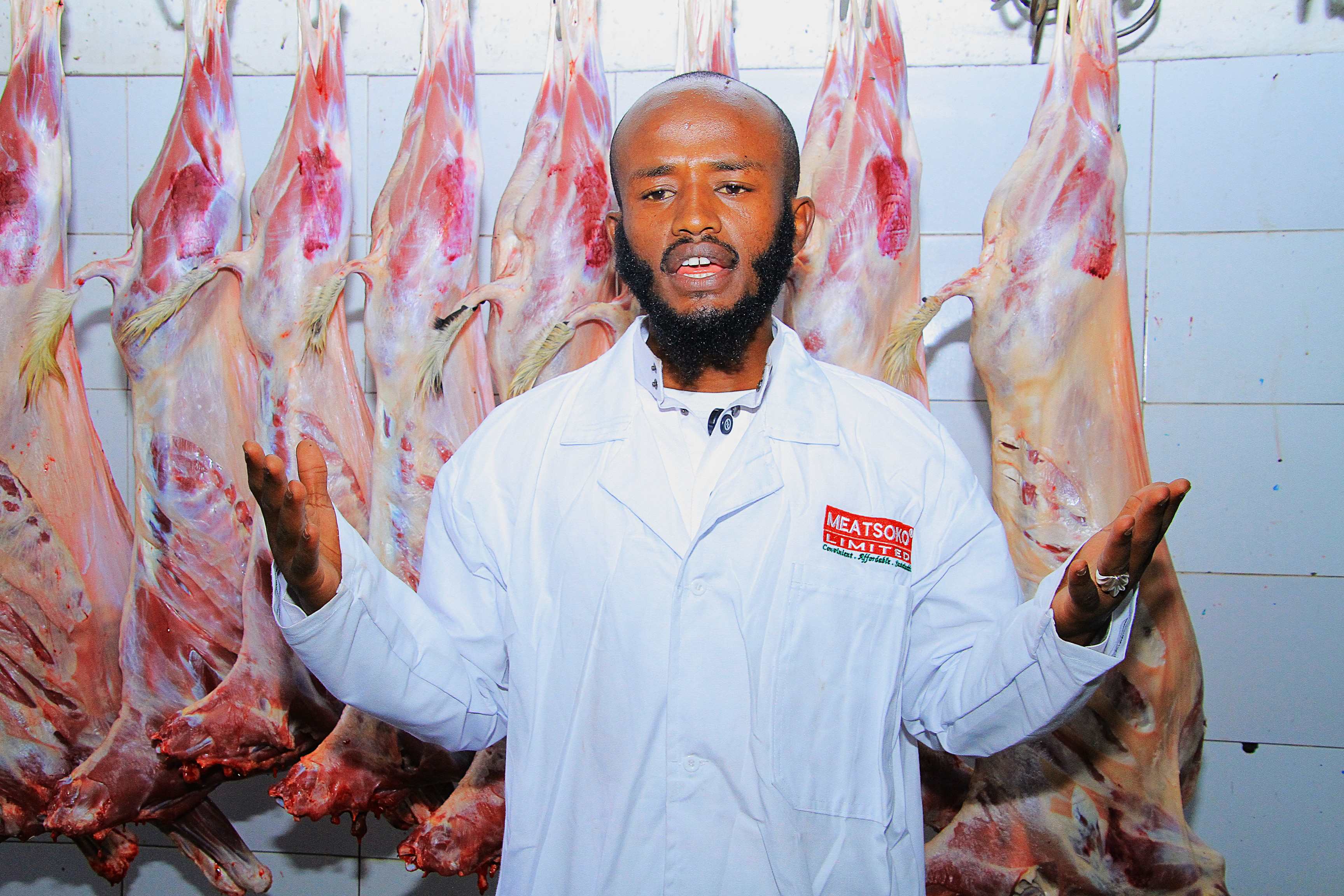
When the Star met him at one of the butcheries in Kiamaiko, his team had just
dispatched a consignment of five tonnes of meat for export.
“That order from
Dubai came through our Meat Soko platform,” he said.
Buja is the founder of Meat Soko
Ecosystems and serves as the group chairperson of Meat Soko.
“At Meat Soko, we are digitising the
entire livestock and meat industry across East Africa, starting with Kenya,” he
stated. Customers now buy meat online.
“We have connected up to 180,000
clients digitally. Previously, Kiamaiko was not online, and the entire supply
chain in Kenya and East Africa was fractured,” Buja said.
"That is why we decided to map it
out and establish a conglomerate of 12 companies—the Meat Soko Ecosystem—with nine
already operational within the livestock and meat industry.”
The Meat Soko platform includes
farmers, traders, butchers and slaughterhouses. They sell livestock and meat
to local consumers and export to destinations such as Dubai, Qatar, and other
parts of the Middle East.
Farmers on the platform deliver
their goats to Kiamaiko, where the animals are assessed for quality before
being sold to customers or slaughtered.
“It’s a process that enhances
convenience, transparency and affordability in the industry,” Buja noted.
Meat
Soko primarily markets its services via social media platforms such as
Facebook, Instagram and TikTok.
“You want to place an order with us?
Simply visit kiamaiko.co.ke to access our products and services.”
Meat Soko collaborates with
livestock farmers across Kenya, Uganda, Tanzania and Ethiopia. Buja is
concerned that Kenya does not currently possess sufficient livestock to meet
the domestic meat demand.
“We are working on establishing our
own ranches. Kiamaiko has been in existence for the past 45 years. I can
confidently say that nobody processes goat and sheep meat in East Africa as
efficiently as Kiamaiko does,” he said.
The growth of the export market has
resulted in higher meat prices locally.
“For example, meat prices can fluctuate
by up to Sh250. On a typical day, goat and sheep meat sells at Sh550 per
kilogramme. When demand exceeds supply, or during imbalances, prices can jump to
Sh750,” Buja said.
“We aim to develop a market like
Kiamaiko—a well-established and stable marketplace—where we can operate ranches
capable of satisfying the rising demand.”
Buja expressed concern that the
government has not taken sufficient measures to safeguard the livestock sector.
He criticised the preference for exporting young male breeds.
“This means we are losing valuable
genetics and breeds. What remains are primarily female and younger livestock.
This has been the trend for the past five years,” he said.
The ongoing conflict in the Middle
East has also impacted Meat Soko’s operations.
“We lost more than Sh80 million
over three days when the airport was shut. We had carcasses in our cold storage
destined for export to Dubai, Oman, and other Middle Eastern countries,” he said.
Due to the war, regional visitor
numbers declined sharply, leading to reduced patronage by restaurants, hotels and recreational venues, which could no longer place regular meat orders.
“It’s a geopolitical issue beyond
our control. Nevertheless, we are now redirecting that export demand to the
local market,” Buja added.
Meat Soko is advocating for the
implementation of the livestock tracking system, known as ANITRAC. This system
traces an animal’s entire life cycle—from birth, through medication, to sale
and slaughter.
“It's crucial. It will open up
export markets in the United Kingdom and the United States, which require
product traceability,” Buja said.
Traceability also promises to
curtail livestock theft, a significant issue within certain sectors of the meat
industry.
Buja revealed that the vast Chinese
market remains largely untapped. The company is currently raising Sh1.9 billion
to expand its operations.
The group employs scouts as far
afield as Ethiopia to source livestock. “In one way or another, Meat Soko has
created employment for many. I hesitate to say a million, but we have employed
a significant number of people. We have 12 companies, nine of which are already
operational,” he said.
Hussein Jamal is one such scout. “I
source livestock from various parts of Kenya and the region, particularly
Ethiopia, Tanzania and Uganda. In Kenya, I focus on semi-arid areas such as
Wajir county, Mandera and Garissa,” he said.
“We buy high-quality goats that are
healthy. I am especially keen on Galla goats—they are healthy due to their
feed, and their meat is tender and delicious.”
Jamal negotiates prices directly
with herders, pays promptly, and transports the livestock to slaughterhouses in
Kiamaiko. Sometimes he works with agricultural or livestock students familiar
with specific areas to assist in locating suitable animals.
“We don’t have enough livestock. Our
sourcing extends across the region, but the local market here is unable to
satisfy demand. Kenya’s livestock numbers are inadequate,” Jamal said.
He attributed this shortage to many
people abandoning farming and migrating to urban centres in search of jobs.
“I would encourage young people who
studied agriculture at high school or university to consider this industry, as
there is a huge demand. Meat is highly consumed globally, with demand in the
US, UK, Russia, and especially the United Arab Emirates,” he added.
Hirbo Dangire has been buying goats
and sheep, slaughtering them, and selling the meat at Kiamaiko for the past
nine years. He credits Meat Soko with transforming his business.
“Meat Soko has made selling meat
much easier. Previously, we would slaughter and wait for customers to come or
go out into the streets to find buyers. Now, with this new system, we can reach
customers anywhere, and we deliver the meat to their homes,” he said.
“Meat Soko content creators use
TikTok or Instagram to showcase our products and prices, which simplifies our
business.”
Beyond the economic benefits, Buja
emphasised that Meat Soko’s success has improved security in the area. “There
were serious security issues here; clients were afraid to visit Kiamaiko
because they risked being robbed,” he explained.
“However, security has significantly
improved. We have worked with the community to address this. We decided to
create economic opportunities through our abattoirs. Each facility employs more
than 30 youths. The insecurity was largely caused by idle young people.”



![[PHOTOS] The new Ngong –Naivasha Road viaduct](https://cdn.radioafrica.digital/image/2026/06/64d4f771-4432-4aee-ba3c-2f304c4436ec.jpg)









![[PHOTOS] 'Mr Speaker Sir' Gen Z protester in court](https://cdn.radioafrica.digital/image/2026/06/b3e62d8e-25c3-4780-90f9-4eb48b1ce8a7.jpg)