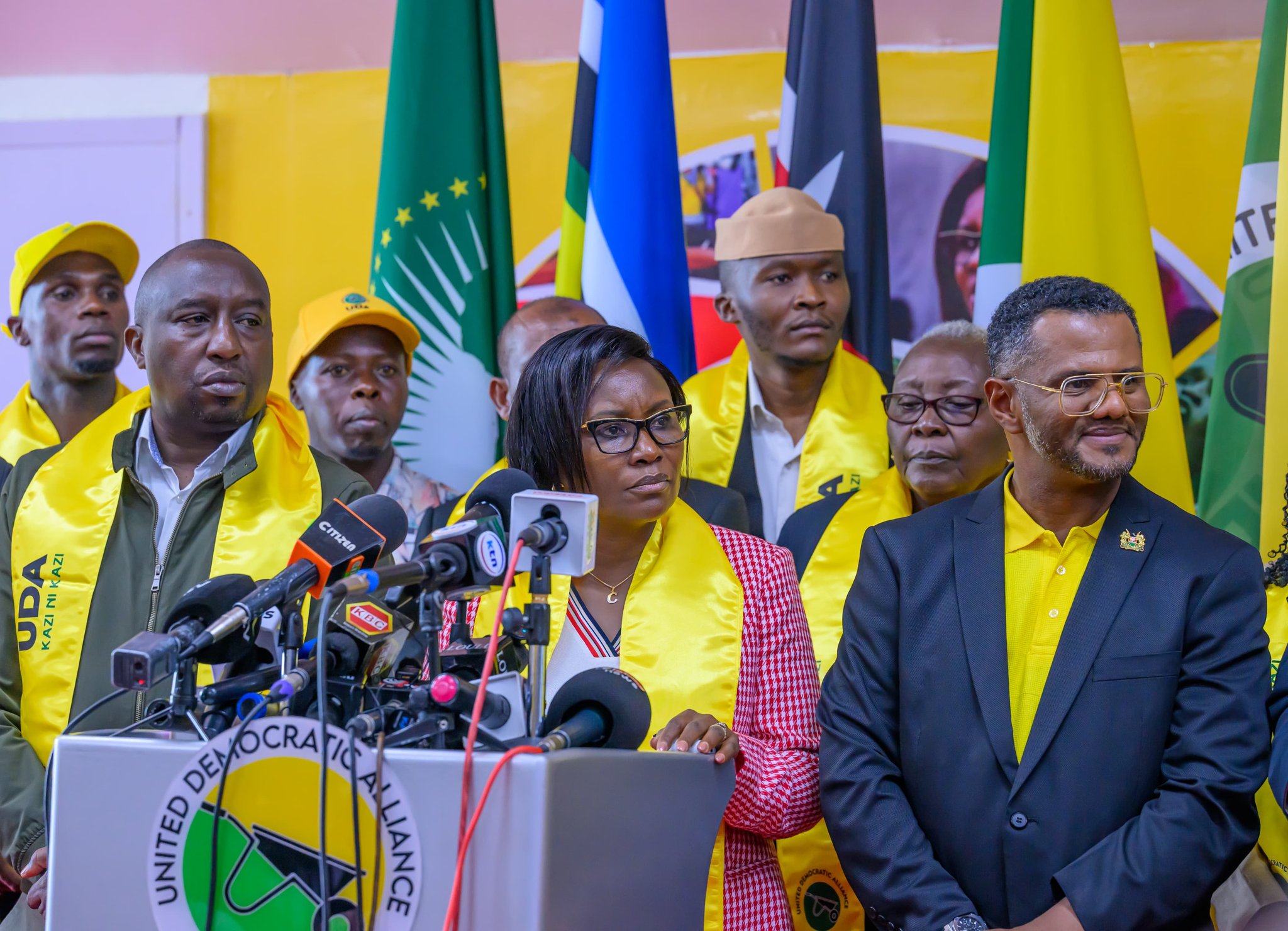
The exercise is expected to draw nearly eight million
participants across more than 9,000 polling centres, with more than 450,000
aspirants contesting for 20 grassroots positions.
“The exercise will produce 182,240 elected grassroots
officials with a direct mandate from the people,” the party said in a statement
released Wednesday.
But beyond the numbers, UDA sources say the elections are
part of a carefully structured national strategy aimed at redefining how political
power is organised and contested, with Nyanza serving as a critical test case.
According to internal party sources, the exercise is anchored
on what it describes as an “organised, credible and replicable process” intended
to demonstrate institutional strength and consistency across regions.
“The idea is to show that the party can run structured,
transparent and large-scale internal elections anywhere in the country,” a
brief obtained by the Star reads.
For UDA, the strategy aligns to what the party has already
conducted in 25 counties, emerging as a strategy that poses a direct challenge
to zoning.
Zoning is the situation where leadership positions are often
informally reserved to maintain regional balance and party unity.
UDA is instead advancing what insiders call “democracy
without gatekeeping,” insisting all positions are open to contest.
The party also argues that leadership should emerge through
competitive processes rather than elite negotiations.
“Leadership is not pre-determined or ring-fenced,” a party
source said.
“We are deliberately creating space for open contestation,
especially in regions where politics has traditionally been managed through
consensus.”
The choice of Nyanza is itself central to the strategy. Party
officials describe the region as symbolically important.
They further note that conducting structured grassroots
elections there sends a signal that no part of the country is politically
exclusive.
“Holding these elections in Nyanza is both practical and
symbolic,” another insider said.
“It is about breaking historical political boundaries and
demonstrating that participation is not confined by geography or legacy
alignment.”
The brief further frames the exercise as part of UDA’s
broader ambition to position itself as a truly national party with grassroots
infrastructure across all regions, including those historically aligned to competing
formations.
Through the elections, the party hopes to build a pipeline of
leaders and supporters capable of sustaining long-term political competition.
“This is about building from the ground up,” the source
added.
“You cannot claim national appeal without real presence at the
grassroots in every region.”
Technology has also been deployed as a key pillar of the
process, with electronic voting tablets used at polling centres and results
expected to be published on a public portal. The steps are part of a broader bid
to enhance transparency and credibility.
UDA officials say the emphasis on systems and openness is
meant to reinforce the party’s image as a modern, forward-looking political
movement.
At the same time, insiders acknowledge the strategy is
designed to tap into growing unease within ODM over zoning and internal
democracy.
ODM in its leadership ranks has protested the zoning idea,
vouching for an internal arrangement with their UDA partners to leave some
regions alone.
While zoning has historically helped ODM maintain a united
front, critics within the party argue it has also limited competition and
locked out emerging leaders.
The vote will be undertaken in Bungoma, Makueni, Machakos,
Kitui, Isiolo, Marsabit, Taita Taveta, Lamu, Tana River, Kilifi, Kwale,
Mombasa, Turkana and Kajiado counties.
UDA is seeking to capitalise on this by presenting itself as
an alternative platform for those frustrated by restricted political space.
“We are opening doors,” a party official said.
“Participation
is not defined by where you come from or who endorses you, but by your
willingness to engage.”
Even so, pundits say Nyanza remains one of the most
politically cohesive regions in the country, with deep loyalty to ODM. Any perceived external invasion could trigger resistance and
reinforce existing alignments.
INSTANT ANALYSIS
UDA has come under sharp criticism from its counterpart, ODM, for staging competition in its traditional strongholds, calling the move a sign of disrespect. Whereas ODM leader Oburu Oginga promised that the issues would be ironed out, UDA appears resolute in its onslaught against the once-hailed Raila Odinga's bases. Opinion is split in the ranks of the broad-based.




![[PHOTOS] The new Ngong –Naivasha Road viaduct](https://cdn.radioafrica.digital/image/2026/06/64d4f771-4432-4aee-ba3c-2f304c4436ec.jpg)






![[PHOTOS] 'Mr Speaker Sir' Gen Z protester in court](https://cdn.radioafrica.digital/image/2026/06/b3e62d8e-25c3-4780-90f9-4eb48b1ce8a7.jpg)