


Kenya’s position as
a regional diplomatic hub and traditional refuge for exiled activists is under
renewed scrutiny following a report by Freedom House placing Nairobi at
the centre of a growing web of cross-border repression in East Africa.
The ‘Collaboration and
Resistance: Tracking Transnational Repression in 2025’ report indicates that governments in
Kenya, Tanzania and Uganda are increasingly collaborating to track, detain and
forcibly return critics beyond their borders, especially during elections
periods.
“In East Africa,
Kenyan, Ugandan, and Tanzanian authorities helped each other track, detain, and
return activists in an effort to impede civic mobilisation ahead of and during
elections,” the report read.
The study
categorises Kenya alongside Afghanistan, Benin, Georgia, Tanzania and Zimbabwe
as six new states identified as using tactics of transnational repression.
As of last year, it reports, at least 54 governments, or more than a quarter of all
countries in the world, have tried to silence dissidents abroad.
This trend is a
noticeable shift from isolated incidents to a more coordinated regional
security approach that risks eroding civil liberties across East Africa,
according to the report.
It indicates that
governments in East Africa increasingly work together to target activists
across borders.
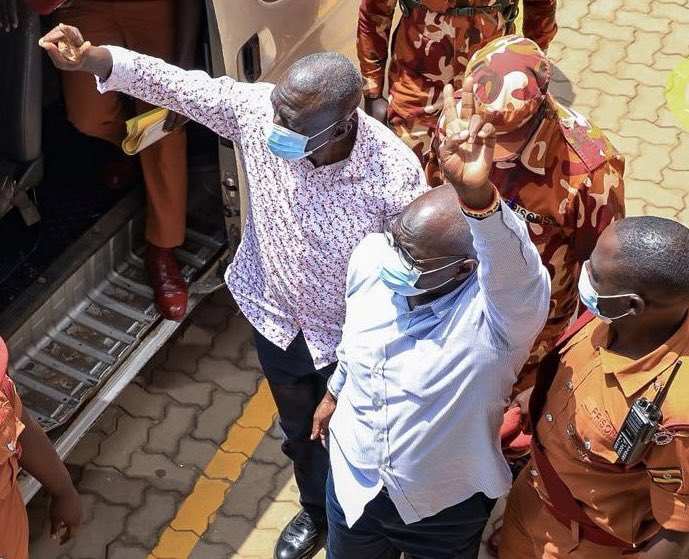
Last May, Foreign
Affairs Cabinet Secretary Musalia Mudavadi admitted that Kenyan security
agencies assisted Ugandan agents in the November 2024 rendition of Ugandan
opposition figure Kizza Besigye.
At the time,
Besigye’s People’s Front for Freedom party was preparing for the 2026 Ugandan
election. It later withdrew from the contest.
Besigye had been in
Kenya to attend the book launch of a local activist when he disappeared.
Initially the
Kenyan government had denied helping with his abduction, but eventually
admitted its role.
Foreign Affairs
officials defended the joint operation by pointing to Nairobi’s “national
interest” and the trade relationship between the two countries. Besigye is
still on trial facing allegations of treason in Uganda.
Again, in
July 2024, vocal activist Mwabili
Mwagodi, who participated in the 2024 Gen Z protests, briefly disappeared in
Dar es Salaam, Tanzania, shortly after criticising Kenyan security forces
online.
“This came only two
months after Tanzanian authorities assaulted and then deported several Kenyan
and Ugandan activists and former government officials who had arrived in
Tanzania to monitor the trial of opposition leader Tundu Lissu,” the report
says.
Kenyan activists
Bob Njagi and Nicholas Oyoo were detained in Uganda for 38 days in October
after attending a rally for opposition leader Bobi Wine.
Ugandan President
Yoweri Museveni confirmed they were arrested by security forces for being
“experts in riots” before their release in last November. They said they were
tortured during their secret detention.
In January last year, Tanzanian activist Maria Sarungi Tsehai — a prominent critic of
President Samia Suluhu Hassan — was allegedly abducted
in Nairobi by armed men believed to be linked to Tanzanian security agencies.
Sarungi, who had
been living in exile in Kenya since 2020, said she was assaulted and
interrogated. She said her attackers attempted to access sensitive information
on her phone.
The 2024 and 2025
developments, Freedom House says, made it clear that Kenyan, Tanzanian and
Ugandan law enforcement and intelligence agencies are increasingly coordinating
to silence dissent.
“This kind of
cross-border intimidation and authoritarian collaboration is dangerous because
it limits opportunities for civic solidarity and can prop up embattled
incumbents,” the report read.
It further
indicated that Kenya has become increasingly unsafe for dissidents from other
countries in East Africa. Amidst its own government crackdown on Gen Z protests
in 2024, the Kenyan government oversaw the forced return of dozens of Ugandan
activists to their homeland.
Once widely seen as
a safe haven for dissidents fleeing repression in neighbouring states, the
country is now listed among governments engaging in transnational repression, a
global category that includes at least 54 states.
One of the most
prominent cases cited in the report is Besigye’s, which has drawn regional
solidarity among activists and lawyers.
Freedom House
argues that the Ugandan opposition leader’s case is not an outlier but part of a
broader pattern of Kenya-Uganda security cooperation aimed at curbing dissent
ahead of Uganda’s 2026 election.
These incidents
point to what the report describes as “authoritarian collaboration”, a system
in which neighbouring governments actively assist each other in suppressing
dissent.
The report also
highlights how global policing tools can be drawn into these dynamics. In one
case, Kenyan authorities briefly detained Sudanese opposition figure Yassir
Arman at Nairobi’s airport based on an Interpol Red Notice issued at the
request of Sudan. He was released after the notice was deemed politically
motivated.
The Freedom House
report echoes findings by the UN that raised concerns over the Kenyan
government’s handling of the demonstrations.
![[PHOTOS] The new Ngong –Naivasha Road viaduct](https://cdn.radioafrica.digital/image/2026/06/64d4f771-4432-4aee-ba3c-2f304c4436ec.jpg)







![[PHOTOS] 'Mr Speaker Sir' Gen Z protester in court](https://cdn.radioafrica.digital/image/2026/06/b3e62d8e-25c3-4780-90f9-4eb48b1ce8a7.jpg)