Appearing before the Senate
Energy Committee, the ports authority distanced itself from the controversial
cargo, saying its role ends once a vessel is safely berthed.
All subsequent discharge
operations, the authority said, fall squarely under the pipeline company.
The authority provided a
detailed timeline of the vessel’s movement, stating the MT Paloma arrived at
the outer port limits on March 27, at 2.30am.
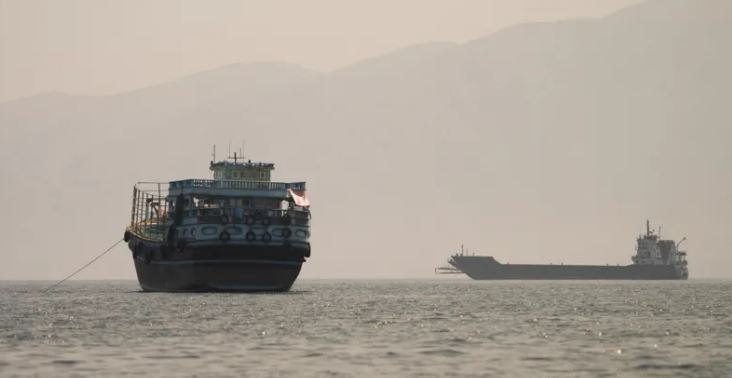
The vessel was carrying
60,200.813 tonnes of Premium Motor Spirit, as declared by Sturrock Shipping
(Kenya) Ltd.
KPA managing director
Captain William Ruto told senators that standard procedures were strictly
followed.
“The pilot boarded the
vessel at 17.50 hours [5.30pm] upon lodgment of the manifest, and the vessel was brought
alongside KOT II at berth No 1 at 20.42 hours [8.42pm],” he said.
KPA emphasised that once
vessels dock at the Kipevu Oil Terminal II, responsibility shifts entirely to
KPC.
“Upon berthing of tanker
vessels at KOT II, cargo discharge and all associated operations are undertaken
by KPC,” Captain Ruto said.
“Accordingly, after
berthing, KPA is not privy to subsequent actions by relevant government
agencies,” the authority said, underscoring that the same protocol applied to
the MT Paloma.
The authority confirmed
that discharge of the vessel was completed on March 30 at 12.12pm, after which
all port charges were settled before the ship departed later that evening.
Despite KPA’s defence,
senators turned their attention to glaring gaps in fuel quality control,
questioning how substandard petroleum products were allowed into the supply
chain.
Nominated Senator Veronica
Maina warned that weak oversight risks exposing Kenyans to poor quality fuel.
“We should stop substandard
products from passing through the Kenya Pipeline system,” she said, while also
questioning what mechanisms KPC has in place to detect contaminated fuel.
She further raised concerns
over policy decisions that could allow substandard fuel into the market, asking
why standards governing petroleum products could be waived.
Senator William Kisang
sought clarification on future supply, pressing KPA to explain how many cargoes
are expected in the coming weeks compared to the same period last year.
In response, KPA general manager
Moses Taiwu assured the committee there is no risk of shortages.
“We have sufficient oil
cargo ships docking in Mombasa in the next 14 days, so we don’t expect fuel
shortages,” he said.
At the same time, lawmakers
called for tighter verification systems.
Senator Danson Mungatana
proposed establishing independent laboratory testing to confirm fuel quality
before distribution.
“Instead of relying on
manifests, can we have an efficient laboratory to verify quality?” he asked.
Appearing before the
committee the day before, KPC acting managing director Pius Mwendwa explained
that the authority maintains stringent quality assurance and control measures
across all its operations.
He said the authority does
not accept, receive or offload substandard petroleum products into its storage
or pipeline systems.
According to Mwendwa, the
owner of the cargo aboard MT Paloma was instructed to remove the product from
the KPC system.
He said any costs
associated with the removal of substandard petroleum products are borne by the
importer responsible for the cargo, in line with established commercial and
regulatory requirements.
Currently, the substandard
fuel is still in KPC system even as discussions are underway to determine
exactly how to implement of the directive.
KPA maintained that port
operations remain efficient, reporting that 19 tanker vessels were handled
between March 1 and April 12, carrying PMS (premium motor spirit, or petrol,
gasoline), automotive gas oil (AGO), and Jet A-1.
Among the vessels processed
were the MT Tortuga, MT Wisteria, MT Lyric Magnolia, MT Lunaria and MT
Constantinos, with shipments ranging from tens of thousands to more than
100,000 tonnes.
The authority said the
volumes included local and transit cargo.
Officials attributed
efficiency to the Kipevu Oil Terminal II, commissioned in August 2022, which
has three berths capable of handling multiple vessels simultaneously,
significantly reducing delays and demurrage costs.
“This addressed delays
previously attributed to the authority. Tanker vessels now berth on arrival,
subject to fulfilling prerequisites set by other government agencies,” Taiwu
said.
KPA reiterated it does not
oversee petroleum supply, licensing, or quality control, emphasising that those
responsibilities lie with other agencies.
“Management of petroleum
cargo supply, licensing and quality checks, as well as the country’s stock
management, is not within our mandate,” Taiwu said, adding that there is
currently no congestion linked to tanker vessels at the port.





![[PHOTOS] The new Ngong –Naivasha Road viaduct](https://cdn.radioafrica.digital/image/2026/06/64d4f771-4432-4aee-ba3c-2f304c4436ec.jpg)







![[PHOTOS] 'Mr Speaker Sir' Gen Z protester in court](https://cdn.radioafrica.digital/image/2026/06/b3e62d8e-25c3-4780-90f9-4eb48b1ce8a7.jpg)