The analysis by
the World Health Organisation in the African region and Gavi also found that,
alongside the 19.5 million measles deaths averted, more than 500 million
children in Africa have been protected through routine immunisation between
2000 and 2024.
Progress on
measles underscores the impact of consistent investment in immunisation.
Since 2000, 44
African countries have introduced a second dose of measles-containing vaccine
into routine immunisation, helping to increase coverage rates from five per cent in 2000 to 55 per cent in 2024.
Supplemental
campaigns have delivered 622 million vaccinations. These efforts collectively
have halved measles deaths in the African region and led to a 40 per cent drop in overall cases.
In Kenya,
measles vaccination coverage remains below the 95 per cent threshold needed to stop transmission.
Recent
estimates show that about 91 per cent of children
receive the first dose, but only around 76 per cent complete the second dose, leaving a significant
immunity gap.
This drop-off
has contributed to recurring outbreaks, with nearly 3,000 cases and multiple
deaths reported between 2024 and early 2025, and low uptake of the second dose
has been identified as a key driver of vulnerability across several
counties.
While the
region has made huge progress towards protecting populations from measles, some
countries have gone further.
In 2023 and
2024, nine countries reported consistently low measles incidence rates (fewer
than five cases per million).
Last year, Cabo Verde, Mauritius and Seychelles became the
first sub-Saharan African countries to achieve measles and rubella elimination
status, the gold standard in protecting against both diseases.
The analysis
also assessed overall progress and challenges in expanding immunisation
coverage against a broad range of diseases, as well as ongoing efforts to reach
the targets of the 2030 Immunisation Agenda—a global strategy to reduce
vaccine-preventable deaths and diseases, expand vaccine access and strengthen
immunisation within primary healthcare.
Routine
immunisation schedules currently protect against 13 vaccine-preventable
diseases, up from eight in 2000; meningitis deaths have fallen by 39 per cent; malaria vaccine has been introduced in 25
countries; and in 2024 alone, at least 1.9 million lives were saved through
vaccination—42 per cent of which were
due to measles vaccination.
“Africa has
made remarkable progress in less than a generation, expanding immunisation and
saving millions of young lives,” Dr Mohamed Janabi, WHO regional director for
Africa, said.
“But the
progress is uneven, and even slowing, leaving too many children unprotected as
key targets are still missed. We must urgently strengthen routine immunisation
to leave no child behind.”
Additionally,
47 sub-Saharan African countries now provide hepatitis B as part of routine
vaccination, with 16 countries providing a birth dose; 33 have introduced the
rubella vaccine; and 29 countries offer the human papillomavirus vaccine, which
protects against cervical cancer.
“This analysis
highlighting 24 years of
remarkable progress on the African continent demonstrates the immense
life-saving power of vaccines when immunisation is prioritised as a matter of
policy,” Dr Sania Nishtar, CEO of Gavi the Vaccine Alliance, said.
“At the same
time, we must acknowledge that these immunisation outcomes reflect very
different realities, and we have more work to do to ensure we are consistently
able to reach children, even in the most fragile and remote contexts.
“Through the Gavi Leap reform agenda, we hope to
unlock further progress through novel, innovative approaches and by working
with countries to build sustainable, self-reliant programmes for the long
term.”
The analysis
by WHO and Gavi plays a critical role in providing evidence to support policy
formulation as well as assessing and understanding the impact of investments
towards Immunisation Agenda 2030 targets in the region.
The
Immunization Agenda 2030 aims for 90
per cent coverage of four key life-stage vaccines: the third dose of the
diphtheria, tetanus toxoid and pertussis vaccine (DTP3); the third dose of the
pneumococcal conjugate vaccine (PCV3); the second dose of the
measles-containing vaccine (MCV2); and one dose of the human papillomavirus
vaccine (HPV).
Although
millions more children are being vaccinated and efforts to reduce the number of
unvaccinated children are proving successful, Africa is off track towards the
90 per cent coverage
target, as immunisation coverage is uneven and a large number of children—often
those that are the hardest to reach—are still being missed, worsening
immunisation equity within countries.
Rapid
population growth, weak health systems, lack of integration of immunisation
programmes in primary health care, as well as the devastating impact of climate
change, humanitarian crises and political instability are some of the major
hurdles to reaching the optimal vaccination coverage.
Continued
investment by countries and strong political commitment are critical to sustain
gains and protect future generations.
Focus on
building or rebuilding resilient immunisation systems at the sub-national level
is central to containing prevalent immunisation inequities and sustaining
coverage at no less than 90 per cent.
WHO, Gavi and
partners are working with governments to widen vaccination coverage as well as
accelerate and scale up the introduction of new vaccines such as those for
malaria and human papillomavirus.


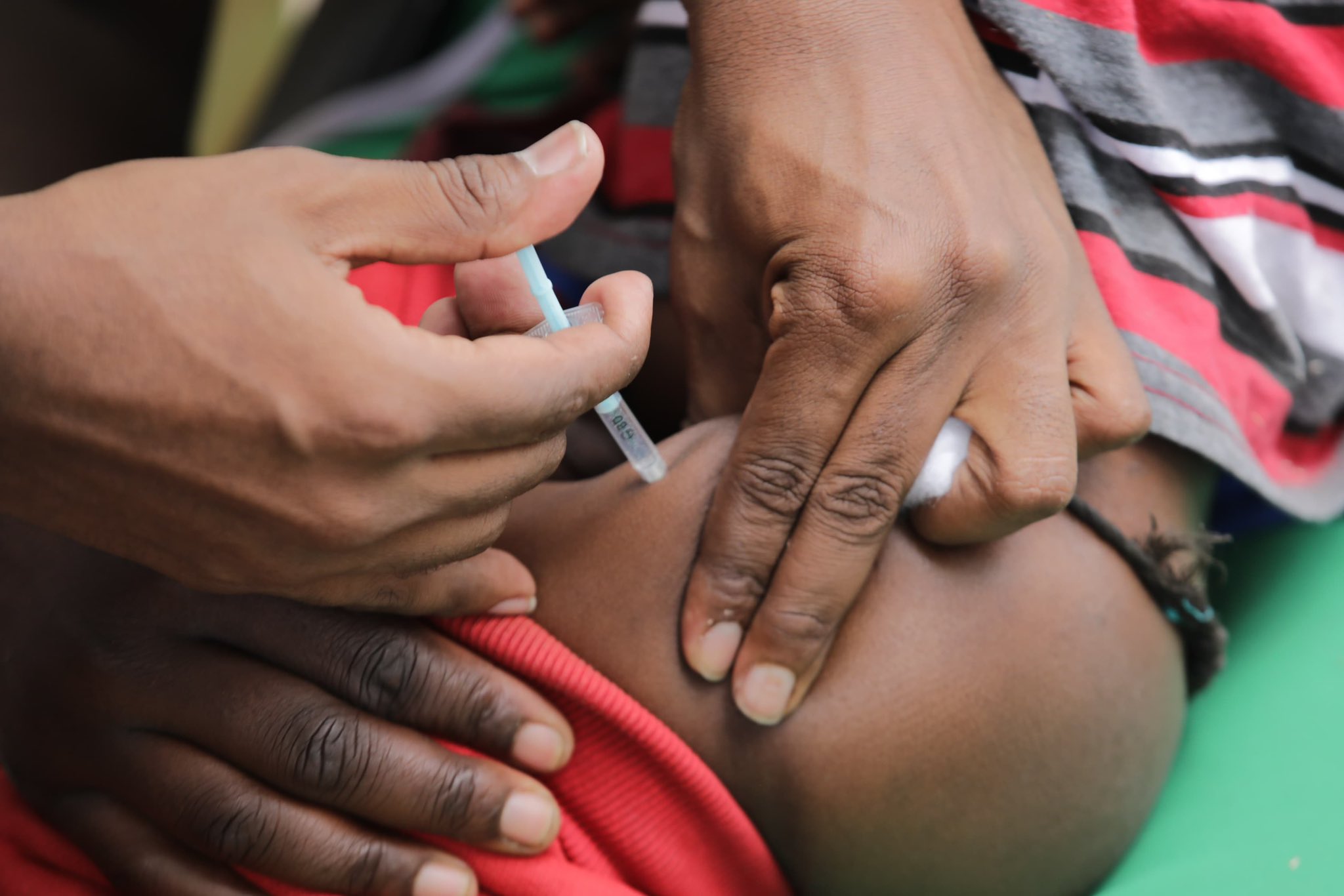 A healthcare worker administers a vaccine to a child during the ongoing Measles-Rubella and Typhoid Conjugate Vaccine (TCV) campaign, July 12, 2025 /MoH
![[PHOTOS] The new Ngong –Naivasha Road viaduct](https://cdn.radioafrica.digital/image/2026/06/64d4f771-4432-4aee-ba3c-2f304c4436ec.jpg)








![[PHOTOS] 'Mr Speaker Sir' Gen Z protester in court](https://cdn.radioafrica.digital/image/2026/06/b3e62d8e-25c3-4780-90f9-4eb48b1ce8a7.jpg)