This is even as it sought to reassure consumers that the
adjustment would be minimal.
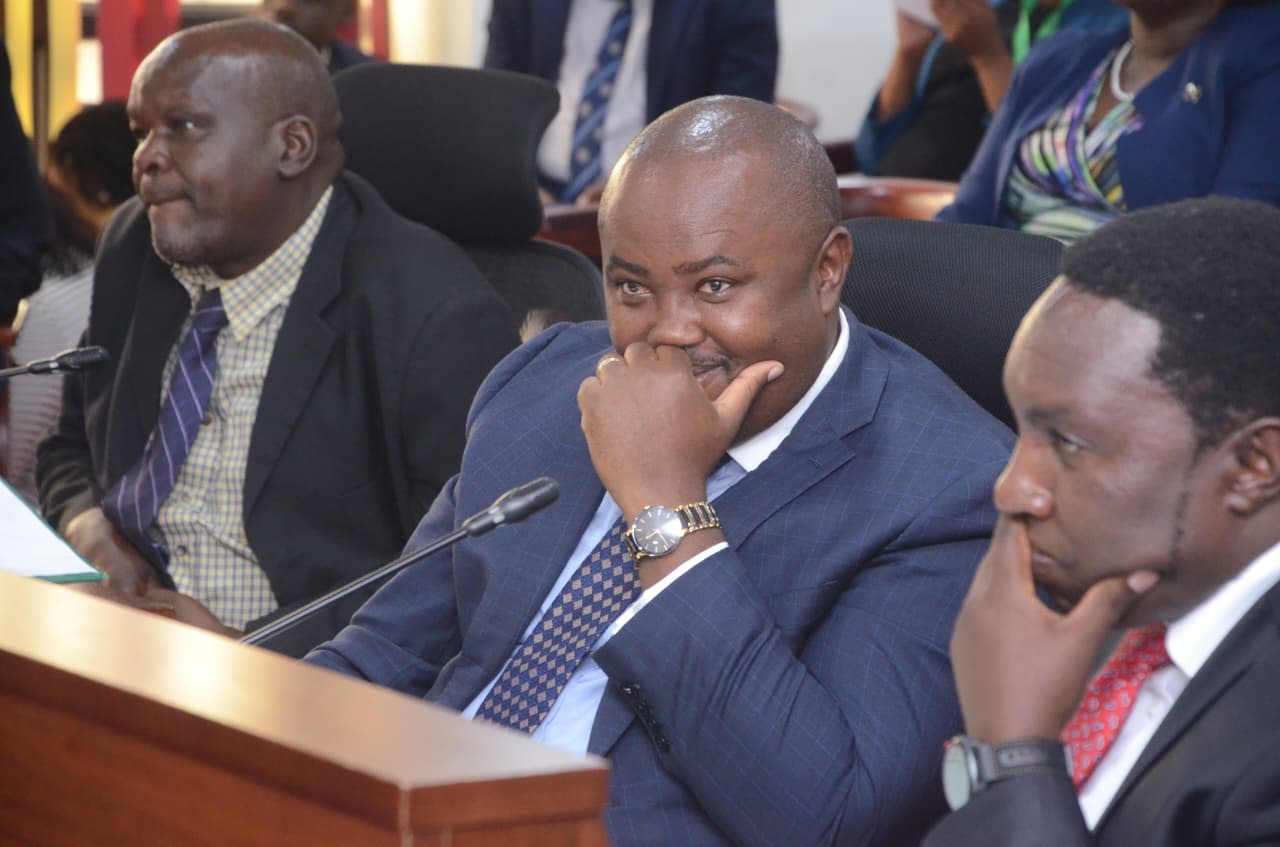
Energy Principal Secretary Alex Wachira told MPs that while
a review of electricity costs is inevitable, the government is taking steps to
cushion households and businesses from a steep hike.
The PS, however, maintained that any increase would be
marginal and justified by prevailing economic conditions in the energy sector.
“Regarding the issue of costs of energy, yes, in your bill
there is a fuel energy charge, and I took my time to explain to you what we are
doing as a state department and as a ministry to ensure the hike that you might
see is marginal,” Wachira said.
“Diesel is the only area where we have had significant
change and because of the spread-through cost across, the marginal costs that
Kenyans are going to see on their power bills are marginal.”
The PS was responding to questions by MPs Wilberforce Oundo
(Funyula) and Marianne Kitany (Aldai) on whether pump prices will affect the
cost of electricity.
“I just received an SMS here from a concerned Kenyan. The
ordinary electricity bills have a matter of fuel component. When you look at
the electricity bill, there is a fuel component. To what extent are Kenyans
likely to be hit? Just tell them the truth, and nothing else but the truth, and
the truth shall set you free,” Oundo said.
Wachira said the government has rolled out a series of
interventions aimed at stabilising electricity prices, including efforts to
diversify energy sources and reduce reliance on expensive thermal power.
The government, he noted, is ramping up power generation
from hydropower and geothermal, which will use little Heavy Fuel Oil (HFO) and
diesel.
The PS appeared before lawmakers a day after Kenyans were
hit with one of the sharpest increases in local pump prices in recent months, compounding
concerns over the rising cost of living.
The Energy and Petroleum Regulatory Authority on Tuesday
announced fuel prices for the April–May cycle, indicating a sharp increase in
pump prices across the country amid rising global oil costs.
“We have calculated the maximum retail prices of petroleum
products which will be in force from April 15, 2026, to May 14, 2026,” EPRA
said in a statement.
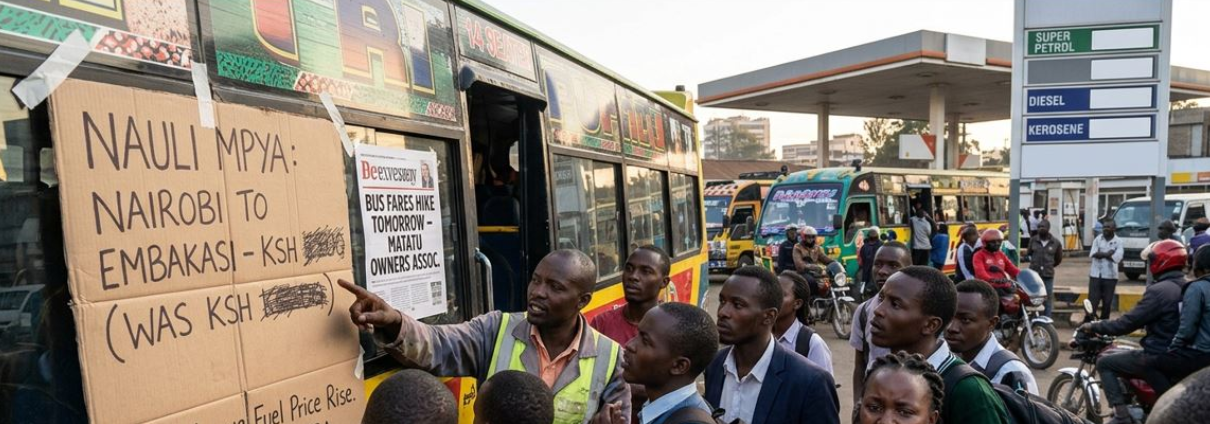
Under the latest review, the price of super petrol increased
by Sh28.69 per litre, while diesel rose by Sh40.30 per litre. The price of
kerosene remained unchanged.
In Nairobi, motorists will now pay Sh206.97 per litre of
super petrol, Sh206.84 for diesel and Sh152.78 for kerosene, marking a steep
jump from the previous cycle.
In Mombasa, pump prices will stand at Sh203.69 for super
petrol, Sh203.56 for diesel and Sh149.49 for kerosene, maintaining slightly
lower rates compared with inland towns due to proximity to the port.
In Kisumu, petrol will retail at Sh209.00 per litre, diesel
at Sh208.87 and kerosene at Sh154.81, reflecting higher transport and
distribution costs to western Kenya.
In Nakuru and surrounding towns, prices will remain
elevated, with petrol retailing at about Sh209 per litre, diesel at about Sh208
and kerosene at about Sh154.
The back-to-back shocks have heightened public anxiety, with
MPs warning that additional electricity costs could further strain households
already grappling with high fuel and food prices.
During the session, legislators also accused the Energy ministry
of politicising rural electrification programmes.
Several MPs claimed that trucks delivering electricity poles
are often withdrawn shortly after high-profile project launches, leaving
communities without actual connections.
“We are concerned because after launching the projects, the
contractors disappear. They even dig the holes for the posts, for mounting the
posts, then they disappear. And it is a real concern in Western Kenya,
especially Busia, Vihiga and Siaya,” Teso South MP Mary Emase said.
“You go somewhere, when the President is visiting, you
mobilise all trucks of REREC and all trucks of the agency to show the public
that there is some work and then, as you take off in your choppers, the trucks
also take off,” added Lugari MP Nabii Nabwera.
Wachira dismissed the allegations, insisting that
electrification projects are guided by technical planning and budgetary
allocations rather than political considerations.
He assured the House that the government remains committed
to expanding electricity access across the country in a transparent and
sustainable manner.
This was even as business leaders warned that the price
hikes would make Kenya uncompetitive.
Kenya Association of Manufacturers CEO Tobias Alando said
the fuel charge (which is Sh3 per kilowatt-hour) will definitely go up.
“The fuel cost component in the cost of electricity is also
expected to go up from the current Sh3.57 per kWh,” the KAM boss said in a
statement.
He added; “The increase in fuel prices is expected to
further drive up the cost of production for manufacturers, resulting in more
pain for consumers who are already struggling to make ends meet.”
Kiharu MP Ndindi Nyoro said taxes were to blame for the
price hikes, dismissing the reduction of VAT by three per cent as a ‘dry joke’.
“Fuel products must be VAT-exempt during the intervening
period. The government must immediately revert the VAT to eight per cent as it
was before 2023,” he said.
The former Budget Committee chairman further asked the Ruto
team to reduce the Sh7 from the fuel levy, reduce VAT by a further five per
cent, and grant Sh5 billion more in subsidy.
He argued that with the move, the current prices would
reduce by Sh27 per litre. “This is not too much to ask,” the lawmaker said,
restating that it would mean a return to the pre-2023 tax regime.
A lobby operating as Green Kenya Congress demanded
transparency on how the fuel subsidies are used.
“For too long, fuel subsidies drained billions from our
national treasury, money that should be building hospitals in Turkana, roads in
Kisumu, and schools in Meru. That era of financial irresponsibility must end.”
INSTANT ANALYSIS
Fuel prices have a significant bearing on the cost of
electricity. The PS told MPs that the government has introduced several
interventions to ensure that Kenyans are not heavily affected by the new
adjustments.




![[PHOTOS] The new Ngong –Naivasha Road viaduct](https://cdn.radioafrica.digital/image/2026/06/64d4f771-4432-4aee-ba3c-2f304c4436ec.jpg)







![[PHOTOS] 'Mr Speaker Sir' Gen Z protester in court](https://cdn.radioafrica.digital/image/2026/06/b3e62d8e-25c3-4780-90f9-4eb48b1ce8a7.jpg)