DORCAS Moraa, her teenage daughter and two
grandchildren waited for the rain pounding Nairobi to subside. But it did not.
As the night wore on, rainwater began
streaming into their mabati house in Lunga Lunga slum. Before long, their
entire home was flooded. The family was terrified.
“Many of my household items, such as seats,
electronics, bedding and children's books were destroyed. We moved out that
night and stayed with a kind neighbour for three days before returning to clean
up,” Moraa told the Star on Friday.
The family was fortunate. The devastating
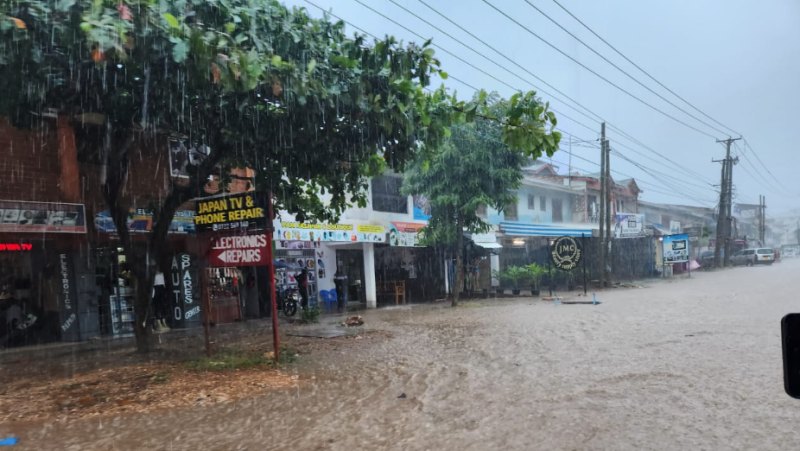
downpour on March 6 claimed the lives of at least 33 people, most of whom were slum
dwellers. Vehicles were swept off the roads, and property was destroyed. City
residents heading home spent part of the night in traffic.
“I haven't carried out any repairs yet
because I lack the funds,” said Moraa, 55, who has lived in the slum since her
teenage years. This means that if the rains return, her family will be in
trouble again.
A day before Moraa shared her story,
President William Ruto painted a disturbing picture of Nairobi, East Africa’s
largest metropolis, in a historic speech to the Nairobi City County
assembly.
“Over 60 per cent of residents live in
informal settlements. Access to piped water remains inadequate and unreliable.
Sanitation and sewerage systems are under severe strain," he said.
"Mobility is hindered
by congestion and insufficient transport infrastructure. Environmental
degradation and encroachment have intensified flooding. Spatial inequality,
unemployment, and exclusion continue to fuel insecurity and vulnerability in
parts of the city.”
The President described Nairobi as a city
of immense potential, trapped by chronic dysfunction.
“A city of extraordinary
promise suffocated by disorder, delayed by indecision, undermined by poor
planning, and held hostage by interests that profit from chaos.”
This is why families like Moraa’s have
never experienced dignified living in Nairobi.
“A capital city where flooding
still claims lives. A capital city where garbage too often defines
neighbourhoods. A capital city where roads are congested, drainage is broken,
sewerage is overstretched, planning is weak, and basic order is often absent. A
capital city where too many residents live without dignity in the very city whose
labour, talent and enterprise sustain our national economy,” Ruto said.
Governor Johnson Sakaja appeared to despair
over the city’s dysfunction.
“There is no quick fix for this city; it is not
possible… We are dealing with a generational infrastructure deficit, drainage
built for 500,000 people, planning and development control for a city smaller
than the one we have today,” he said following the floods.
“The drainage system we have is not
designed for this amount of rain… The capital cannot be organised based on the
share of revenue it receives, like other counties.”
The President agreed. “From fewer than
300,000 people in 1960, Nairobi has grown into a city of nearly five million, swelling further during the day. However, this growth has not been
matched by the necessary infrastructure, systems, planning discipline, and
service delivery required of a modern metropolis,” he said.
On February 17, Governor Sakaja signed a
cooperation agreement with President Ruto to transform Nairobi into a
functional city. The city MCAs approved the deal on March 3.
Under this framework, an initial Sh80
billion has been allocated for critical infrastructure projects.
“We are delivering a safer city through the
installation of 50,000 street lighting points, including the revival of 40,000
existing lights and the installation of 10,000 new solar and smart
streetlights. Fabrication is already underway and installation will commence
this month,” the President told MCAs.
“By the end of May, Nairobi will begin to
see visible improvements across key corridors and neighbourhoods, and within
six months, the city will be noticeably brighter, safer, and more secure.”
The government will extend electricity via
last-mile connectivity in informal settlements, starting this month in Hospital
ward, and progressing into Kibra, Korogocho, Mathare and Kamukunji within the
next 90 days.
Water supply is being expanded through
strategic interventions, including the Ng’ethu-Gigiri waterworks, which will
add 50,000 cubic metres of water daily.
The Gigiri–Shauri Moyo evacuation
corridor is also being advanced to stabilise supply in high-demand areas,
including those supporting affordable housing development.
As part of the Nairobi Rivers Regeneration
Programme, two parallel 27km trunk sewers are under construction along the
Nairobi River corridor. The project includes building a 60,000 cubic metre per
day treatment plant, expanding last-mile sewer connectivity, and supporting the
long-term expansion of sewerage systems in the city.
Under the cooperation agreement, 247km of
roads will be constructed.
“The first phase of 63km is already underway and
expected to be completed by June 2026. Another 58km began this month, with
subsequent phases funded to start without delay," the President said.
"This will be complemented by
drainage interventions in flood-prone hotspots so that we stop managing floods
as annual surprises and start treating them as infrastructure failures that
need fixing.”
Nairobi generates about 3,000 tonnes of
solid waste daily, and waste management remains one of the city’s key
challenges. The processes are being overhauled.
The city county government will allocate
100 acres for a material recovery facility and multiple transfer stations
across the city. Work is already underway in Dandora, where 40 trucks are
clearing old waste, and additional capacity is being mobilised.
“Within three months, we expect the core
system to be operational. Within six months, Nairobi should experience a
functioning waste management system befitting a serious capital city,” Ruto
stated.
As part of the Nairobi Rivers Regeneration
Programme, the first phase of the Gikomba riverfront markets is underway, with
further phases planned to reorganise and upgrade one of the country’s most
important trading hubs. Additional investments are being made to support
traders affected by flooding, including new garage markets and trading
spaces.
The President also announced the
establishment of a Nairobi Metropolitan Police Unit to support coordinated,
responsive, and effective security management across the capital.
The greater Nairobi Metropolitan region is
home to 93 Affordable Housing Programme projects, encompassing houses, markets,
and institutional accommodation.
President Ruto said these projects will
deliver more than 180,000 housing units and market stalls, with more than 112,000
already underway and nearly 70,000 more in the pipeline.
In terms of investment, this amounts to
more than Sh220 billion in ongoing projects and another Sh139 billion in planned
developments, bringing the total housing-related pipeline in Nairobi alone to
well over Sh360 billion.
Nairobi will benefit from other mega
projects, such as the completion of the Raila Odinga International Talanta Sports Stadium for the 2027 AFCON tournament and the Bomas
International Convention Complex.
Plans are also underway to expand the Jomo
Kenyatta International Airport and reinforce Nairobi’s role as the aviation
gateway to the region as well as the construction of Nairobi Railway City.
When these projects are realised, Moraa’s
family and other residents of Nairobi will live in a city of order, dignity,
hope, and opportunities for all.

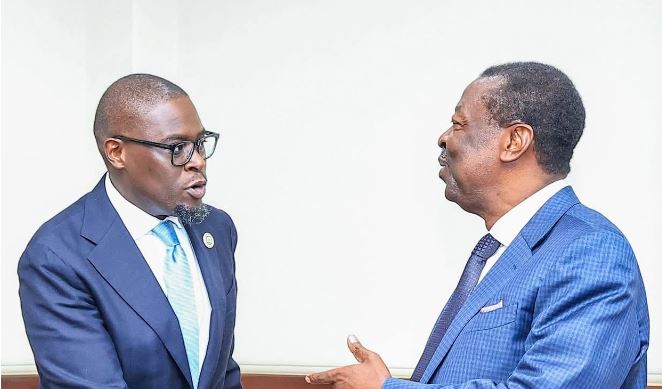
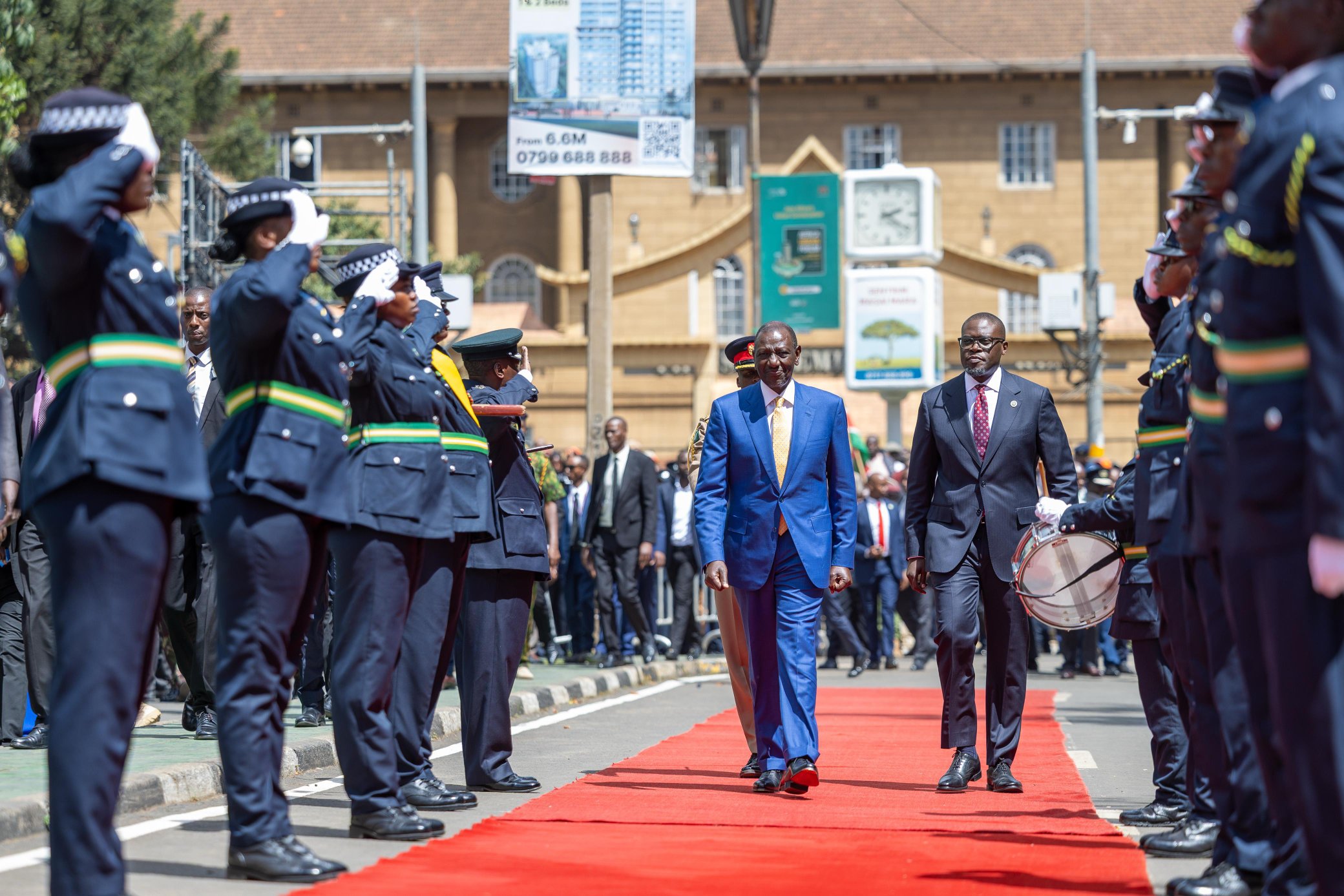 President William Ruto and Nairobi Governor Johnson Sakaja/PCS


![[PHOTOS] The new Ngong –Naivasha Road viaduct](https://cdn.radioafrica.digital/image/2026/06/64d4f771-4432-4aee-ba3c-2f304c4436ec.jpg)



![[PHOTOS] 'Mr Speaker Sir' Gen Z protester in court](https://cdn.radioafrica.digital/image/2026/06/b3e62d8e-25c3-4780-90f9-4eb48b1ce8a7.jpg)