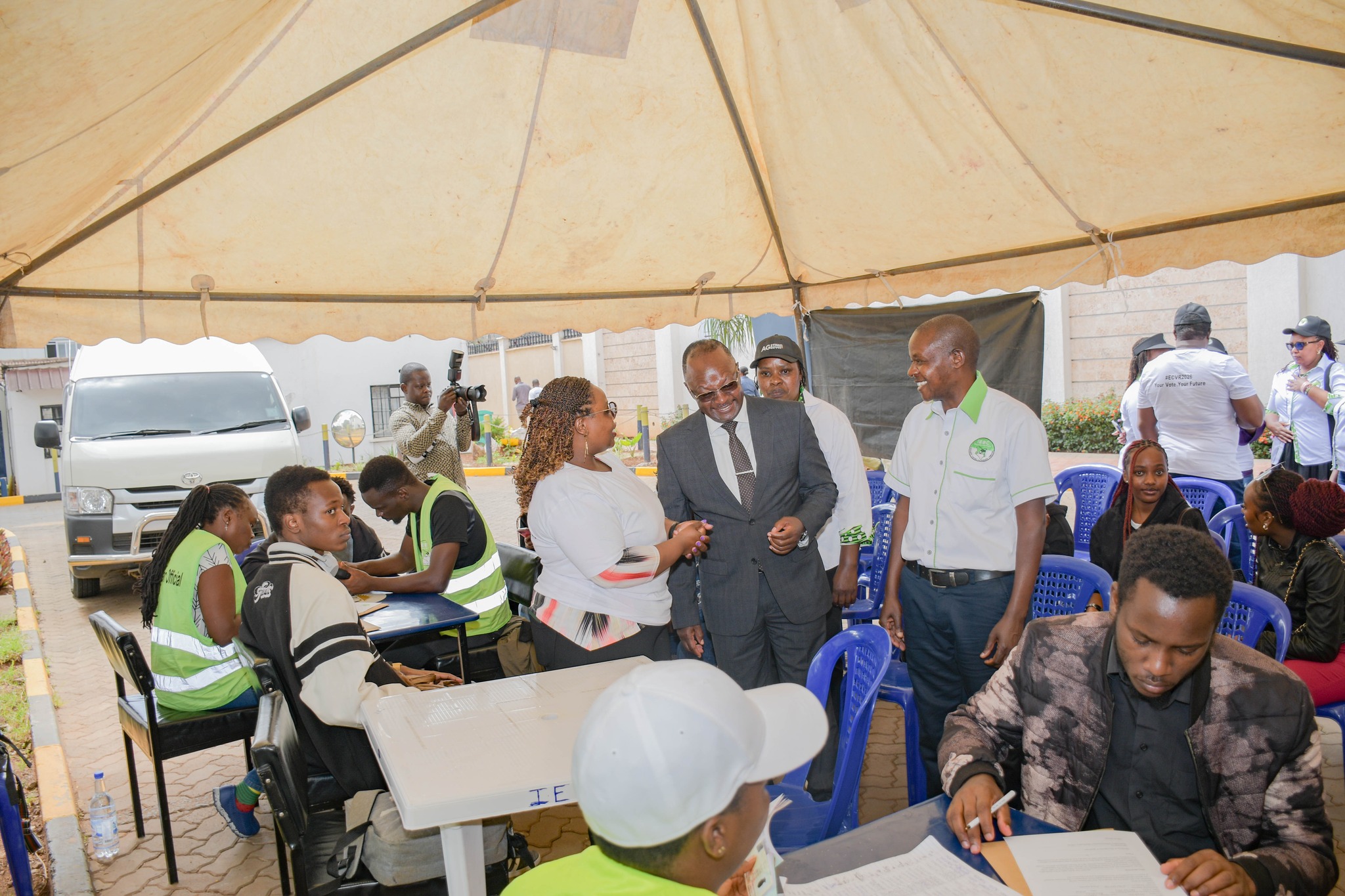
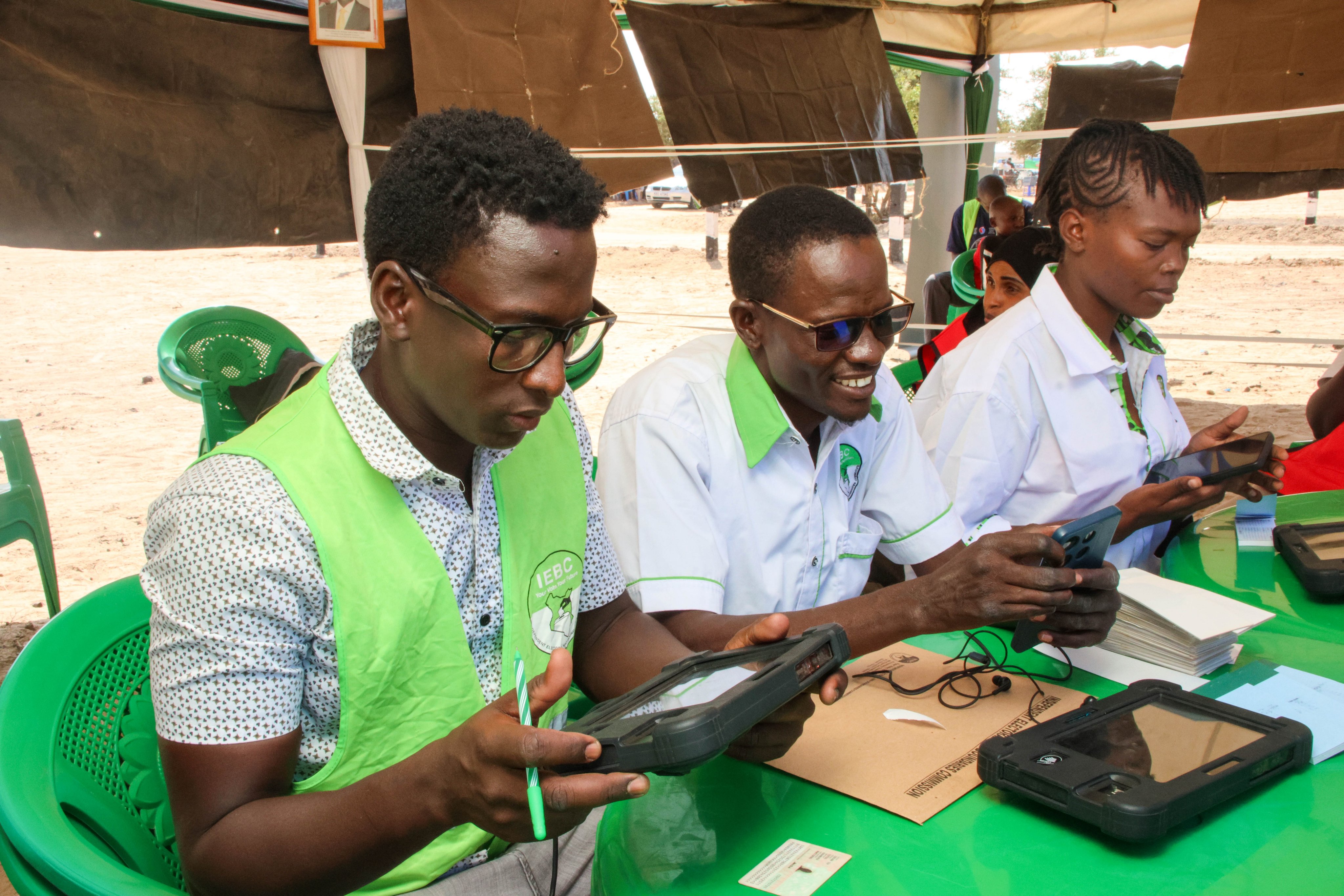
IEBC figures show that while the surge has been
dominated by urban and high population counties, smaller and historically marginalised regions’ gains could prove critical in a tight contest.
Counties in North Eastern, parts of the Coast, and the northern
Rift Valley are registering thousands of new voters in the ongoing mass voter
registration.
Latest IEBC data shows Turkana recorded a 10.5 per cent
increase in its voter roll in just 10 days, adding 25,012 new names to its
voter roll.
Samburu grew by 8.3 per cent to register 8,319, West
Pokot by 6.5 per cent (14,279), Tana River by 6.4 per cent (9,063), Isiolo by
6.0 per cent (5,379), and Lamu by 5.9 per cent (4,810).
Garissa added 11,156 new voters, Taita Taveta (10,266),
Wajir 9,477, Mandera 7,337, while Marsabit recorded 9,829 new voters.
When placed against their relatively small 2022 voter
bases, the increases stand to give the regions significant say in the upcoming
election.
For instance, Wajir’s 9,477 new voters build on a base
of just over 207,000, while Mandera’s 7,337 adds to roughly 217,000 registered
voters.
Central Kenya, a region long considered the kingmaker
in the country’s politics, comparatively punches below its potential.
Counties in the Mt Kenya bloc, including Kiambu,
Murang'a, Nyeri, Kirinyaga and Meru, recorded lower percentages in the first
two weeks of the listing drive.
Kiambu, which is the biggest with 1.27 million voters,
added 46,265 new voters, translating to a growth rate of just 3.6 per cent.
Murang'a registered 20,194 new voters – a growth of 3.3
per cent, Nyeri’s 18,839 translates to 3.9 per cent, Kirinyaga at 4.1 per cent (15,474
new voters) and Meru at 3.6 per cent (27,502).
Embu and Nyandarua fared even worse, posting growth
rates of just 2.7 per cent (9,154 voters) and 2.2 per cent (7,906)
respectively, and are among the lowest in the country.
Even so, the Kiambu's 46,265 new voters are nearly
double Turkana's 25,012, albeit marginalised counties are growing two to three
times faster in percentage terms.
While Nairobi added the most new voters in raw numbers, the
arid and semi-arid counties of Turkana, Samburu, West Pokot, Tana River and
Isiolo are also growing fast.
Compared with the 2022 voter register, Samburu grew by 8.3
per cent with its new 8,319 voters, West Pokot by 6.5 per cent (14,279), Tana
River by 6.4 per cent (9,063) and Isiolo by 6.0 per cent (5,379).
The 875,501 new voters registered in the mass listing
account for a national average growth rate of about 4 per cent. Nairobi, for
all its 96,897 new voters, also grew at only 4 per cent.
For decades, marginalised counties have been treated as
electoral afterthoughts, with their small voter bases viewed as unlikely to
swing a national election.
Collectively, the sampled counties grew at an average of
10 per cent growth, in what observers hold changes that calculation. Some
quarters cite an accelerated ID registration program.
Since taking office, President William Ruto has invested
heavily in the northern and arid regions, key among them restoring peace in
most parts that were disturbed ahead of 2022.
His administration's ‘Huduma Mashinani’ and drought
response programmes, alongside frequent presidential tours to Turkana, Marsabit
and Garissa, are cited as bearing fruit.
For Ruto, who faces the challenge of defending his
coalition while keeping his Rift Valley base intact, the marginalised counties
offer a valuable addition.
“The government's inclusive development agenda has
brought the hitherto marginalised region into the centre of planning, decision-making,
and development,” UDA Secretary General Hassan Omar said.
As such, UDA believes that if Ruto can convert even a
portion of the new voters into actual turnout and support, they could cushion
against losses at some of the core bases.
Pundits further hold that in working with ODM, of which
the regions have been traditional strongholds, the president appears to have an
upper hand.
In previous elections, the Raila party relied on
overwhelming support in Nyanza, parts of Western and the Coast to counter
Ruto's Rift Valley and Mount Kenya numbers.
Even so, his bases need to work harder. Turkana’s growth
has beaten Homa Bay's 2.6 per cent, which listed 14,269 new voters or Kisumu's 16,549,
which translates to 2.7 per cent.
Other traditional strongholds in Nyanza, like Siaya, registered 15,706 new voters, Migori (16,547), but fared lowly compared with Mombasa
(21,258) and Kilifi’s 23,980 new voters.
To understand the stakes, the 2022 numbers come into
sharp focus. In the then presidential election, the margin between Ruto and Raila
Odinga [deceased] was about 230,000 votes nationally.
Turkana's 25,012 new voters alone represent more than 10
per cent of that margin.
If you add Samburu's 8,319, West Pokot's 14,279, Tana
River's 9,063 and Isiolo's 5,379, and the total comes to about 62,000 new
voters, which is more than 25 per cent of the 2022 margin.
And that is before counting Marsabit, Garissa, Lamu and
Taita Taveta, all of which grew at nearly 6 per cent if juxtaposed against the
2022 figures.
The IEBC, in its press release on the figures, noted
that the current registration exercise has proceeded smoothly in most areas,
with only isolated security incidents.
“Registering as a voter is the first and most vital step
in deepening our democratic roots and ensuring sound, accountable leadership
for the next generation,” IEBC chair Erastus Ethekon said.
IEBC targets a total of 2.5 million voters at the end of
the exercise, and reported an increase of 531,185 new voters between the first
and second week of the listing.
A total of 49,502 voters transferred to new polling
stations while another 1,066 changed their particulars. The commission has
asked those who were not in the biometric register to enlist.
“By registering today, you are not just getting a card;
you are securing a seat at the table where Kenya’s future will be decided,”
Ethekon said.
He went on, “Let us demonstrate our love for Kenya by
turning out in even larger numbers in the coming days.”
Historically low voter turnout continues to be a concern
in many of the far-flung counties, by virtue of their being cut off from supplies
and other necessities.
Logistical hurdles, insecurity in some areas and limited
access to polling stations have in the past suppressed participation in
elections.
The grand question, therefore, is whether the registration
gains will translate into actual votes cast, considering the internal migration
patterns.





![[PHOTOS] The new Ngong –Naivasha Road viaduct](https://cdn.radioafrica.digital/image/2026/06/64d4f771-4432-4aee-ba3c-2f304c4436ec.jpg)






![[PHOTOS] 'Mr Speaker Sir' Gen Z protester in court](https://cdn.radioafrica.digital/image/2026/06/b3e62d8e-25c3-4780-90f9-4eb48b1ce8a7.jpg)