The
boy is barely five. He shifts in discomfort, too tired to cry. She adjusts his
blanket, checks the line and reaches for a notebook to track his medications.
No
one trained her to do this. Yet each day at Kenyatta National Hospital’s
children’s cancer ward, she has learnt to act as a nurse, counsellor and
caregiver, all at once.
This
scene repeats itself across the paediatric oncology ward. Mothers carry the
weight of their children’s illness in ways that stretch far beyond love and
duty.
A
new study shows that as these children fight cancer, these mothers are quietly
becoming patients too, worn down by stress, exhaustion and the unending demands
of care.
Researchers
are now demanding that these mothers should get legally paid leave from their
workplaces.
They
found that one in 10 caregivers at the KNH are married women aged 20 to 40
years, mostly taking care of young boys.
Many
take on roles that include clinical care without formal training, adding to the
strain they already face.
Doris
Machaki, lead researcher and an oncology nurse at Aga Khan University Nairobi,
and her colleagues said their findings point to a hidden crisis within the
health system.
“Our
study found that most primary caregivers of children with cancer were
middle-aged, married mothers, caring for boys aged one to five diagnosed mainly
with haematologic (blood) cancers,” they said.
“The burden of care on caregivers of children
with cancer is significant and has a negative impact on their quality of life.”
Their
report is titled ‘Burden and quality of life among caregivers of children
diagnosed with cancer at Kenyatta National Hospital, Kenya.’ It was published
in Palliative Care and Social Practice last month.
Machaki
and her colleagues examined the experiences of select caregivers at KNH
paediatric wards.
They
found that the caregivers not only assist with daily living activities but also
perform both clinical and non-clinical care duties, sometimes carrying out
responsibilities typically reserved for trained healthcare professionals. These
include providing comprehensive nursing care often without formal training.
“These
responsibilities have been shown to result in psychological and economic
challenges, including job loss, emotional distress and increased anxiety, all
of which add to the caregiver’s burden and negatively affect their quality of
life,” they said.
They
interviewed 124 caregivers between October 2023 and January 2024, using
standard tools to measure caregiver burden and quality of life. Caregivers with
their own histories of mental illness or cancer were excluded to ensure clear
findings.
Nearly
half of the caregivers reported mild to moderate burdens, while a quarter
experienced moderate to severe burdens, and others faced severe levels.
Their
quality of life was also affected, with many reporting disrupted routines,
mental strain and uncertainty about the future.
Machaki’s
team explained that most participants felt abandoned by friends and neighbours.
“Support
from family members is essential for caregivers during the diagnosis and
treatment of childhood cancer, as it provides psychological and financial
support as well as care for other children at home,” they said.
“Most
participants indicated a lack of support from family members, which could
negatively affect caregivers’ well-being during the caregiving period.”
About
3,000 Kenyan children are currently living with cancer, according to the
Ministry of Health’s Kenya Cancer Policy 2019-30.
Many
come from families already facing financial hardship and limited access to
health and social services.
The
study also found that employment had a complex effect. Caregivers who were
employed reported lower levels of burden, likely due to financial support.
However, their overall quality of life was lower, as they struggled to balance
work and caregiving.
“Juggling
two demanding, full-time roles — as an employee and caregiver — results in
severe time constraints and work-care conflict,” the report read.
“Employed
caregivers frequently sacrifice time needed for self-care, sleep, leisure, and
personal appointments. This chronic time poverty directly lowers their quality
of life in the physical, psychological and social domains,” Machaki’s team
said.
The
other researchers are Samwel Gatimu from the Diabetes Foot Foundation, and Albanus
Mutisya, Jostine Mutinda and Sherry Oluchina, all from Jomo Kenyatta University
of Agriculture and Technology.
Another
key finding was that children undergoing multiple forms of treatment placed
greater strain on caregivers.
Combined
treatments such as chemotherapy and surgery increased the demands of care and
added to emotional and physical stress.
The
study was conducted in a single hospital, which may limit how widely the
findings apply across the country.
The
National Cancer Institute (NCI) said the survival rate for such children in
Kenya is between 15 per cent and 45 per cent.
“This
compares to a survival rate of more than 80 per cent in high-income countries,”
it said.
“We
continue to raise awareness about childhood cancer and express support for
children and adolescents with cancer, survivors and their families,” NCI said.
“This is in line with WHO’s Global Initiative
on Childhood Cancer, which aims to reach at least a 60 per cent survival rate
for children with cancer by 2030.”
Machaki’s
study calls for measures such as flexible work arrangements and paid family
leave so that caregivers can balance employment with hospital responsibilities.
It
also highlights the need for psychoeducation, meaning caregivers should be
trained and guided on how to manage their child’s condition and treatment at
home.
“The
burden of care on caregivers of children with cancer is significant and has a
negative impact on their quality of life. To help reduce this burden and
enhance caregivers’ well-being, we recommended interventions such as flexible
work arrangements, paid family leave, psychoeducation, and accessible respite
care.”

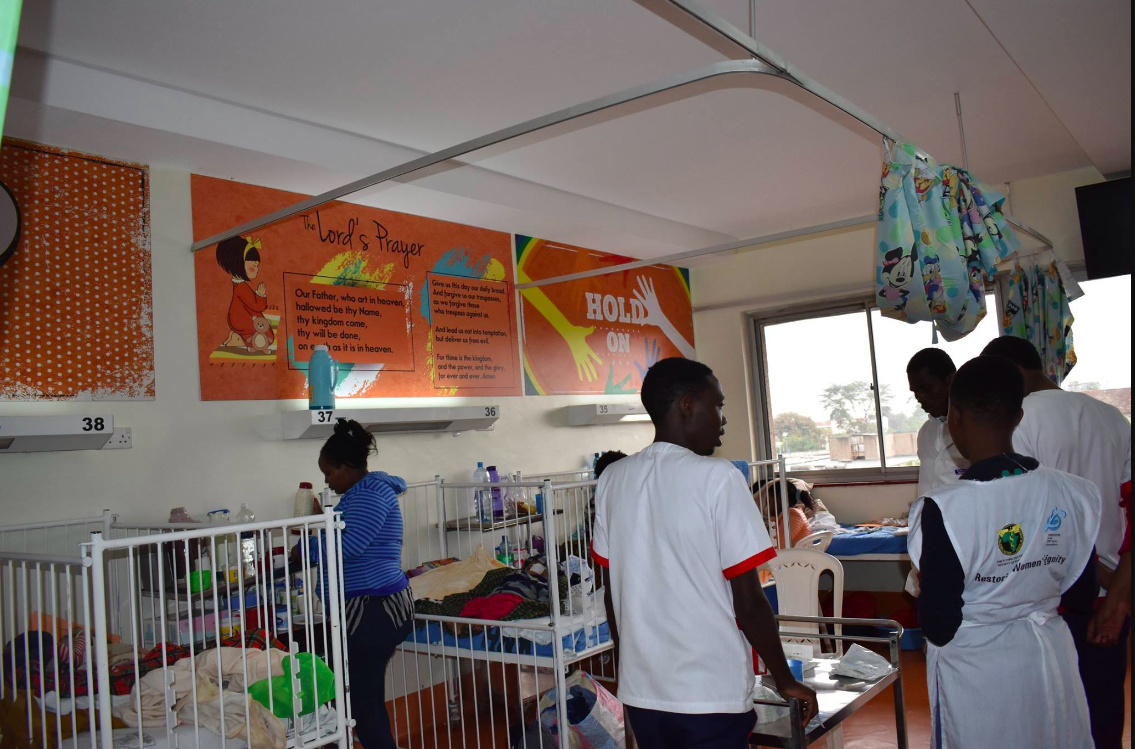 KNH Children cancer ward





![[PHOTOS] The new Ngong –Naivasha Road viaduct](https://cdn.radioafrica.digital/image/2026/06/64d4f771-4432-4aee-ba3c-2f304c4436ec.jpg)






![[PHOTOS] 'Mr Speaker Sir' Gen Z protester in court](https://cdn.radioafrica.digital/image/2026/06/b3e62d8e-25c3-4780-90f9-4eb48b1ce8a7.jpg)