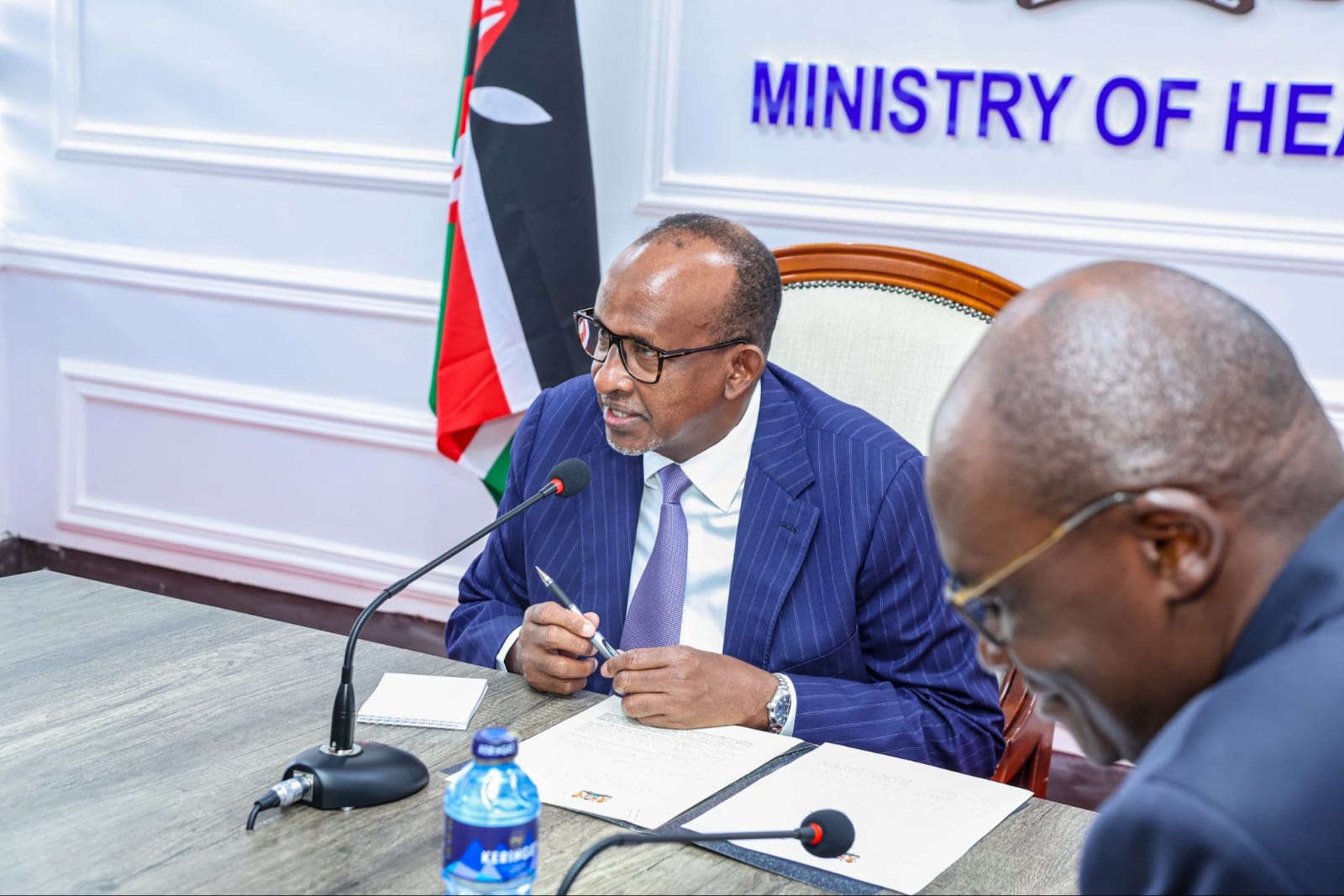
Kenya has stepped up efforts to position itself at the centre of global eye health discussions, as Nairobi prepares to host high-level eyesight summit.
Health Cabinet Secretary Aden Duale on Tuesday met international eye care partners to review preparations for the 2030 In Sight Live Conference in June, which is expected to bring together global leaders, practitioners and innovators.
The conference, organised by the International Agency for the Prevention of Blindness, will take place from June 4 to 6 and is aimed at accelerating efforts to eliminate avoidable blindness by 2030.
It will also lay the groundwork for the Global Summit for Eye Health scheduled for November in Antigua and Barbuda.
Duale emphasised the importance of partnerships in transforming eye care services in the country and beyond.
“The critical role of partners including development agencies, professional associations, civil society, faith-based organisations and the private sector in advancing eye health through collaboration,” he said.
The CS said Kenya has made notable strides in reducing blindness over the years. According to government data, the prevalence of blindness has dropped significantly from 0.7 per cent in 1990 to 0.37 per cent in 2023.
This progress has been driven by expanded cataract surgical services, improved distribution of specialists across 40 out of 47 counties and strengthened school-based eye health programmes.
Kenya has also recorded success in eliminating trachoma in several regions, marking a major milestone in public health.
However, Duale acknowledged that the country still faces several challenges that could slow down progress if not addressed.
“Shortages and uneven distribution of skilled personnel, particularly in underserved and Asal areas, as well as financial and geographical barriers to access,” he said, remain key obstacles in delivering equitable eye care services.
To address these gaps, the government is leveraging ongoing health reforms, including the rollout of services under the Social Health Authority (SHA).
Duale said eye care services have already been included in the programme, with optical and specialised care packages currently under review.
“Through the Social Health Authority (SHA), eye care services are included, with optical and specialised care packages under review,” he said.
The Nairobi conference is expected to provide a platform for partners to share innovations, mobilise resources and strengthen collaborations that will help countries meet global eye health targets.
Kenya, Duale said, remains firmly committed to achieving the World Health Organization 2030 targets.
These include increasing effective cataract surgical coverage by 30 per cent and expanding refractive error coverage by 40 per cent.
The government plans to achieve this through strengthening workforce capacity, improving infrastructure, ensuring sustainable financing and enhancing multi-sector collaboration.


![[PHOTOS] The new Ngong –Naivasha Road viaduct](https://cdn.radioafrica.digital/image/2026/06/64d4f771-4432-4aee-ba3c-2f304c4436ec.jpg)






![[PHOTOS] 'Mr Speaker Sir' Gen Z protester in court](https://cdn.radioafrica.digital/image/2026/06/b3e62d8e-25c3-4780-90f9-4eb48b1ce8a7.jpg)