Many residents of Murang’a fondly
refer to the town as Fort Hall, unaware that the name commemorates its first
colonial administrator, Francis Hall.
Appointed in 1900, Hall was among
the earliest settlers in Kenya. Unlike many colonial adventurers, he arrived
with a clear plan: to find fertile land and establish a lasting settlement.
Born on October 11, 1860, to a
British army officer stationed in India, Hall had a restless spirit.
After completing basic education in
England, he left for South Africa in 1880, quitting a clerical job at the Bank
of England at just 20 years old.
With only a few pounds and a letter
of introduction, he navigated odd jobs—from clerking in Port Elizabeth to
joining the white-settler South African army, serving as assistant postmaster,
and even attempting farming.
In 1891, he got disillusioned and briefly returned to England before being drawn back to Africa.
Kenya, then a British protectorate
under the Imperial British East Africa Company, offered Hall a fresh start.
He arrived in Mombasa in 1892,
quickly mastering Swahili and adapting to local conditions.
Initially stationed at Fort Smith in Kabete,
Hall spent seven years learning the rhythms of the land and its people.
In 1900, after a reconnaissance
tour, he identified a fertile area south of Mount Kenya—between the Mathioya
and Maragua rivers, with a clean stream running through it, now known as Murari
Stream.
He described the locals, the
Agikuyu, as far more peaceful than those in Kabete and envisioned a new station
near Sagana to maintain links with Nairobi.
Hall was deployed to Mbiri
(modern-day Murang’a) on September 17, 1900, with 300 Swahili porters who
settled at what is now the Mjini informal settlement.
They built the historic Mjini
Mosque, a structure that still stands as a testament to the town’s layered
history.
Hall established his fort atop a
hill—constructed from mud and local materials with grass-thatched roofing—to
oversee the area. His home, now the county government offices, and the nearby
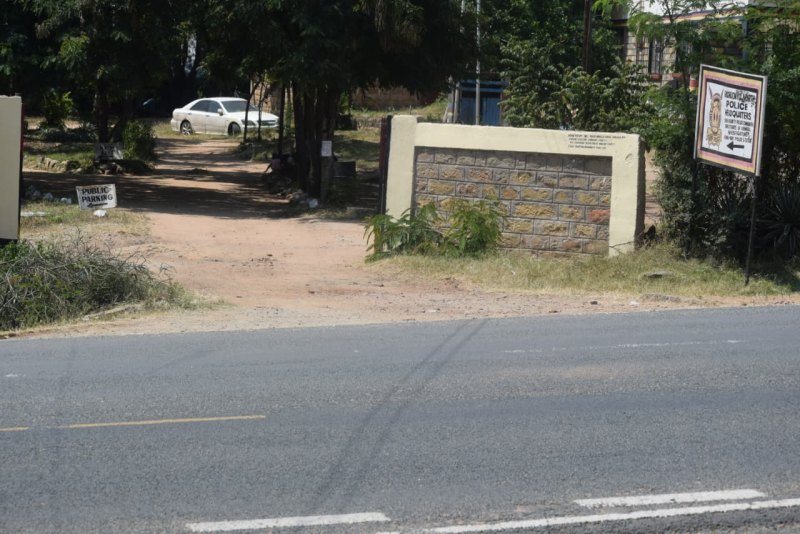
guards’ camp, now Murang’a police station, became administrative landmarks.
During his brief tenure, Hall also
appointed Wangu wa Makeri, one of the few female chiefs of the colonial era.
Tragically, malaria claimed his life
on March 18, 1901, just six months into his administration. He was buried at
Murang’a ACK Cathedral, and the colonial government later renamed the station
Fort Hall in his honour.
The town’s modern name, Murang’a, is
believed to derive from the Swahili word mlaghai (fraud), after a Maasai
trader was cheated by a Kikuyu merchant at Sagana.
The fort later served as a Kenya
Wildlife Service outpost until 1996 and was gazetted as a national monument in
2012. Despite rehabilitation, years of neglect have damaged parts of the mud
walls.
Today, the building hosts county
offices, preserving the memory of Hall’s short yet impactful stay.
The descendants of the original
Swahili porters in Mjini, however, have long struggled with poverty.
For decades, the
settlement—characterised by mud-walled, grass-thatched homes and dusty roads—lagged
behind Murang’a town’s growth. Crime, poor sanitation, and lack of land
ownership documents limited residents’ opportunities, forcing many to travel to
neighbouring towns such as Kenol or Sagana for commerce and social activity.
Recent years have seen deliberate
efforts to uplift the area.
Tarmac roads and street lighting now
define the streets, and the county government has initiated a process to issue
land ownership documents to residents.
“Once these documents are issued,
the local economy will improve, allowing people to access finance, build
permanent homes, and boost businesses,” says area chief Adams Kariuki.
Social challenges, including high
teen pregnancy rates among girls from impoverished households, have also been
addressed.
Security interventions have
successfully deterred predatory practices, allowing girls to continue their
education.
“We have arrested and prosecuted
many offenders, which has reprieved our girls and given them hope for the
future,” Kariuki adds.
Education has also seen
progress.
The local primary school, once
serving fewer than 400 pupils due to hunger and poverty, now benefits from a
consistent school feeding program, supported by MP Ndindi Nyoro and
well-wishers including Communications Authority of Kenya chairperson Charles
Karondo.
Lawrence Mwangi, chair of the Mjini
Residents Association, notes that the programme has improved both retention and
academic performance.
Despite challenges, Murang’a remains
a town steeped in history, its streets echoing tales of colonial ambition and
resilience.
Hall’s brief yet impactful presence
laid the foundation for a town that has evolved over a century, balancing its
colonial legacy with the struggles and aspirations of its people.
Today, while Fort Hall is a name
largely relegated to memory, the stories of Mjini, its mosque, and its
residents continue to shape the identity of Murang’a county.
From colonial forts to modern county
offices, from Swahili porters’ mud homes to tarmac streets and planned land
ownership, Murang’a’s history is a reminder that communities can endure, adapt,
and thrive—even in the shadow of a foreign administrator’s fleeting visit.

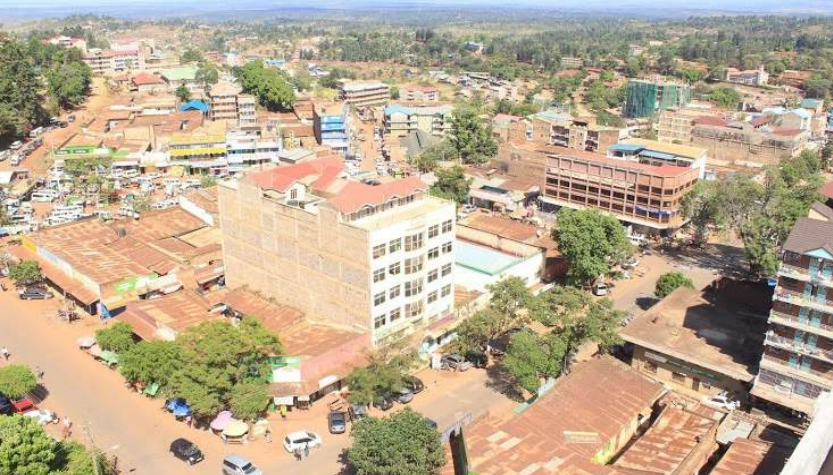 An aerial view of Murang’a town /ALICE WAITHERA



![[PHOTOS] The new Ngong –Naivasha Road viaduct](https://cdn.radioafrica.digital/image/2026/06/64d4f771-4432-4aee-ba3c-2f304c4436ec.jpg)






![[PHOTOS] 'Mr Speaker Sir' Gen Z protester in court](https://cdn.radioafrica.digital/image/2026/06/b3e62d8e-25c3-4780-90f9-4eb48b1ce8a7.jpg)