BWIRE: Why our votes must break the poverty curse in 2027
Poverty in Kenya, and mainly the Global South is the lived reality of those who have been systematically excluded from opportunity.
by VERA BWIRE
Audio By Vocalize
Once we as citizens accept that poverty is
created by systems, and not by people who live in it then we might make better voting
decisions come 2027.
Just to paint a brief image of this: when facilities in
schools and hospitals are not equal; when infrastructure in certain areas is way
better than others in one country, then certainly, poverty is by design and not
by default.
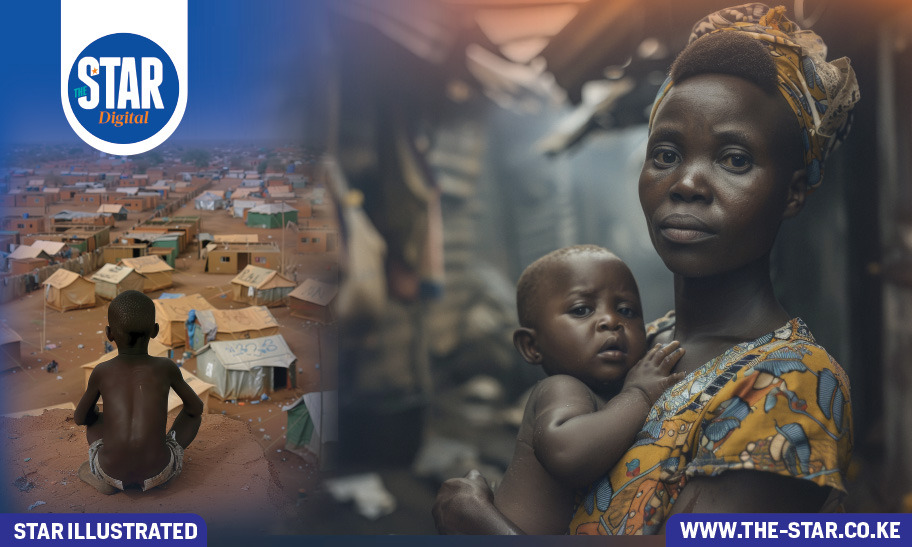
At no point does poverty ever look good. For instance, go to a five-star
hotel in the Coast, by the beach, while you have to pass through shanty
villages as you drive or you are driven in, is when you will feel the guilt of
living in an unequal society.
Kenya’s latest data shows that
the national poverty headcount index stands at about 39.8 per cent, meaning roughly four in every
10 Kenyans are living
below the national poverty line, a stark reminder of how widespread deprivation
remains.
This reality stands in direct contrast to United Nations Sustainable
Development Goal 1, which calls for the complete eradication of poverty in all
its forms everywhere.
Yet, for far too long, countries like Kenya have remained
recurring case studies in global poverty reports, where statistics that are
analysed, cited and
discussed, but rarely transformed into lasting structural change.
In the book Corruptible, the author
gives the example of a former
leader of Madagascar who rose from poverty to presidency, only to forget
where he came from by making policies that were against the very low-income
areas and people he once belonged to. This is how easily power can disconnect
leaders from the lived realities of the people they are meant to serve.
Just like the Madagascar, we have
leaders in Kenya, who come from very humble backgrounds. These same leaders,
forget their background and the promises made during campaigns and go into
wealth accumulation sprees.
See another example of Félix
Tshisekedi, who even went ahead to publicly invite the United States to access
DR Congo’s vast mineral wealth, stating in essence that American partnership
was welcome to “benefit from our resources”, a declaration that sounded like a
presidential decree of sorts, made without broad consultation; the promise may
not have been actualised, but who knows.
Bottom line, only a few might benefit
from the deal, with majority in DRC remaining in poverty. This in essence is
poverty by design.
What we have been witnessing over
the years in Kenya, since independence, is not accidental. We have certain
areas mainly occupied by the poor, for many years on end, like slums, so bad
that our slums are tourism spots.
These slums pre- and post independence, have been
structured, maintained and, in many ways, protected by the owners of the houses
as well as a politically guarded business community.
If you look across the major
cities in Kenya, there is another unfortunate quiet violence in inequality that
we have normalised. A child in one part of the country walks into a classroom
with cracked walls, outdated textbooks and an overworked teacher.
Another, just
miles away, sits in a well-equipped classroom, with access to technology,
numerous mentorships and opportunities that they can choose from.
I personally
believe even school exam failure or success to some extent may be by design.
These differences may have been born out of fate; but they are also the result
of choices, meaning policy choices, budgetary priorities, and most definitely political
will.
The same structured poverty can
be said of healthcare. In some places, a mother must travel miles on rough
roads to reach a facility that may not even have medicine.
In others, care is
immediate, dignified and well-resourced. Yet both citizens vote, both pay taxes
and both are told they are equal under the law. Where, then, does this
inequality come from?
These examples unfortunately come
from systems that decide who matters more, and we need to remind ourselves
this, all the time to make better voting decisions.
Poverty, therefore, is not necessarily
laziness or lack of effort. Poverty in Kenya, and mainly the Global South is the lived reality of those who
have been systematically excluded from opportunity.
It is the consequence of
being born into areas that have been historically neglected, where development
is promised every election cycle but rarely delivered. Those who break the
poverty cycle in our very promising countries have to try very hard.
And perhaps the most painful part
of poverty is how we have been conditioned to blame the victims. We point
fingers at the poor, questioning their choices, their work ethic, their
ambition, while ignoring the structures and election decisions that have
limited those very choices in the first place.
Nevertheless, awareness is
powerful and poverty should not be permanent. The moment we Kenyans will
blatantly see poverty as a policy failure is the moment we will begin to demand
better.
It is the moment we start asking harder questions of those who seek our
votes and ignore the tribal nuances and empty promises we have forever been
sold to. Come 2027, the ballot must
become more than a ritual. It must become a reckoning.
This is premium content
Subscribe to Continue Reading
Help us continue bringing you unbiased news, in-depth investigations, and diverse perspectives. Your subscription keeps our mission alive and empowers us to provide high-quality, trustworthy journalism. Join us today to make a difference!


![[PHOTOS] The new Ngong –Naivasha Road viaduct](https://cdn.radioafrica.digital/image/2026/06/64d4f771-4432-4aee-ba3c-2f304c4436ec.jpg)






![[PHOTOS] 'Mr Speaker Sir' Gen Z protester in court](https://cdn.radioafrica.digital/image/2026/06/b3e62d8e-25c3-4780-90f9-4eb48b1ce8a7.jpg)