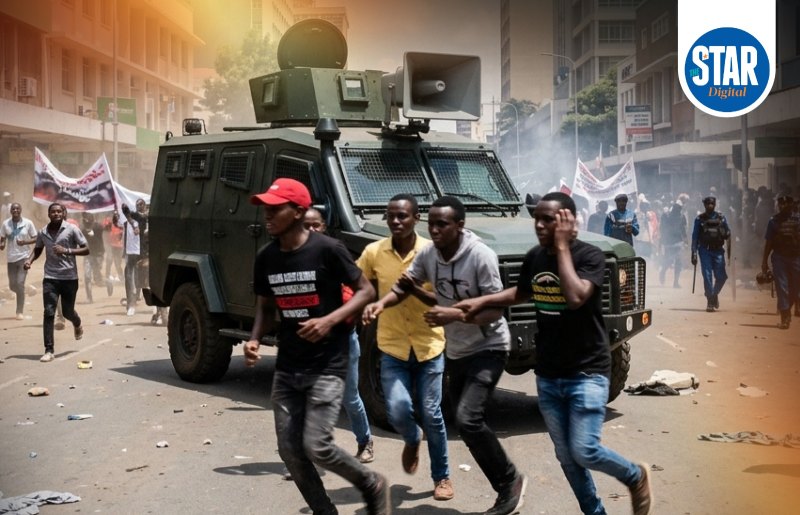
The National Assembly approved the mini-budget on Thursday,
boosting allocations to the Kenya Defence Forces (KDF), the National Police
Service and the National Intelligence Service (NIS).
A line-by-line examination of the supplementary estimates
shows the national security apparatus emerging as the biggest beneficiary, with
dramatic increases across multiple agencies.
The NIS recorded one of the sharpest jumps, with its
allocation rising by Sh10 billion, that is, from Sh51.4 billion to Sh61.4
billion.
The raise represents nearly a 20 per cent increase for an
agency whose operations remain largely shielded from public scrutiny.
The Ministry of Defence received an additional Sh24.4
billion, largely earmarked for salary adjustments, pushing its current year
budget to Sh226 billion.
The Budget and Appropriations Committee chaired by Alego
Usonga MP Samuel Atandi, described the increment as part of “efforts to
strengthen defence capabilities.”
The National Police Service was allocated an extra Sh7.5
billion to meet operational needs, including insurance costs for officers.
Its total budget stands at Sh135 billion.
The Internal Security and National Administration department
received Sh3 billion to cater for personnel emoluments and ongoing security
operations.
In addition, an earlier Sh5.5 billion had already been
released under emergency provisions to support security activities.
In total, the defence and national security sector absorbed
about Sh50 billion in additional funding, more than the combined supplementary
allocations for health (Sh21 billion) and agriculture (Sh23 billion).
The adjustments have seen the security sector budget
increase to Sh515 billion, dwarfing the health budget, which now rises to Sh164
billion.
The security sector budget is just Sh200 billion shy of the
total education budget which stands at Sh752 billion.
MPs further approved Sh8 billion for State House, Sh2
billion for DP’s office and Sh6.9 billion for Immigration Services.
Other notable increments were to the Independent Electoral
and Boundaries Commission (Sh3.7 billion), office of the Director of Public
Prosecutions (Sh1.4 billion) and Sh2.7 billion for the National Land
Commission. IEBC's total budget for the year now stands at Sh13 billion.
The timing of the increased allocations is also politically
significant, coming as the country edges into the early preparatory phase of
the 2027 General Election.
With heightened political activity expected, the state
appears to be moving to bolster intelligence gathering, internal security
operations and policing capacity.
This is especially with projections showing the trend is
likely to persist in the 2026-27 budget, which MPs are due to consider before
June 30. Security has a sizeable chunk of the projected allocations.
The security windfall came at the expense of oversight
institutions and development spending.
The Kenya National Commission on Human Rights saw its budget
reduced by Sh9 million, while the Witness Protection Agency lost Sh50 million.
Development programmes suffered deeper reductions,
particularly those reliant on donor funding, amid project reprioritisation.
ICT infrastructure projects lost Sh4 billion, water and
sanitation programmes were cut by Sh3.9 billion and energy sector initiatives
were reduced by Sh3.5 billion.
The Committee on Energy flagged the contraction in the
sector, saying the Sh3.56 billion reduction in the energy budget would affect
projects drastically.
The lawmakers warned the cuts could delay transmission
projects and slow progress towards national connectivity targets.
In contrast, the forestry sector recorded notable gains.
The State Department for Forestry received an additional
Sh2.16 billion in recurrent expenditure and Sh2.85 billion in capital spending.
The adjustments are largely tied to President William Ruto’s
administration’s tree-growing campaign and rangeland restoration efforts.
However, MPs proposed reallocating Sh460 million from tree
planting to forest access roads and fencing of the Mau forest.
They argued that improved access and protection of
rehabilitated areas should take precedence.
Despite the cuts in development spending, education emerged
as the single largest beneficiary outside security.
The sector received an additional Sh43.5 billion, with the
Teachers Service Commission allocated Sh21.2 billion.
TSC is set to use the money to address shortfalls in
personnel emoluments and employer contributions to compulsory health insurance
schemes.
The Higher Education department was allocated Sh15.4
billion, largely to support Helb, the University Funding Board and Moi
University (Sh1 billion).
A total of Sh100 million would go to the Garissa University
library project and Sh300 million for Koitalel Samoei University infrastructure
upgrade.
Agriculture received Sh17.8 billion, driven mainly by a Sh10
billion allocation for the fertiliser subsidy programme and Sh7.8 billion for
sugar sector reforms.
The health sector was allocated an additional Sh16 billion.
However, lawmakers cautioned against persistent challenges,
including recurrent budget cuts and delayed reimbursements under the Social
Health Authority.
However, lawmakers cautioned against persistent challenges,
including recurrent budget cuts and delayed reimbursements under the Social
Health Authority.
MPs held that the funding hitches continue to strain health
agencies, affecting salaries and statutory obligations.
The Supplementary Appropriation Bill raises total government
spending from Sh4.30 trillion to Sh4.62 trillion, significantly widening the
fiscal gap.
At the same time, tax revenues have underperformed, falling
Sh155 billion below target.
As a result, the fiscal deficit has expanded to Sh1.186
trillion, up from Sh933 billion in the original estimates, forcing the National
Treasury to borrow.
Of the Sh1.15 trillion in new borrowing, Sh924 billion will
be sourced from the domestic market, with the remainder expected from external
financing.
The Budget and Appropriations Committee warned that the
growing dependence on local borrowing carries substantial risks for the
economy.
“The increased reliance on domestic borrowing to finance the
widened deficit raises important macro-fiscal concerns,” the Atandi-led team
said in its report tabled on Wednesday.
“Elevated domestic borrowing may exert pressure on local
financial markets and crowd out private-sector access to credit.”
“This would thereby constrain investment, dampening economic
activity and potentially increasing borrowing costs in the medium term.”
Lawmakers also raised concerns about the government’s use of
emergency spending provisions, even as they approved the supplementary budget.
The National Assembly rejected only a small portion of the
Sh245.9 billion spent without prior parliamentary approval. A total of Sh185.8
billion had already been disbursed.
Among the expenditures was Sh144.4 billion used for the
buyback of government bonds, one that lawmakers said did not meet the threshold
of an unforeseen emergency.
The Budget Committee noted that several of the expenditures
could have been included in the original budget or deferred to the next
financial year.
Some of these expenditures, the committee observed, “were
not truly unforeseen and could have either been incorporated in the original
estimates at the start of the financial year or scheduled for inclusion in the
next financial year’s budget.”
Underlying the supplementary budget is a weakening revenue
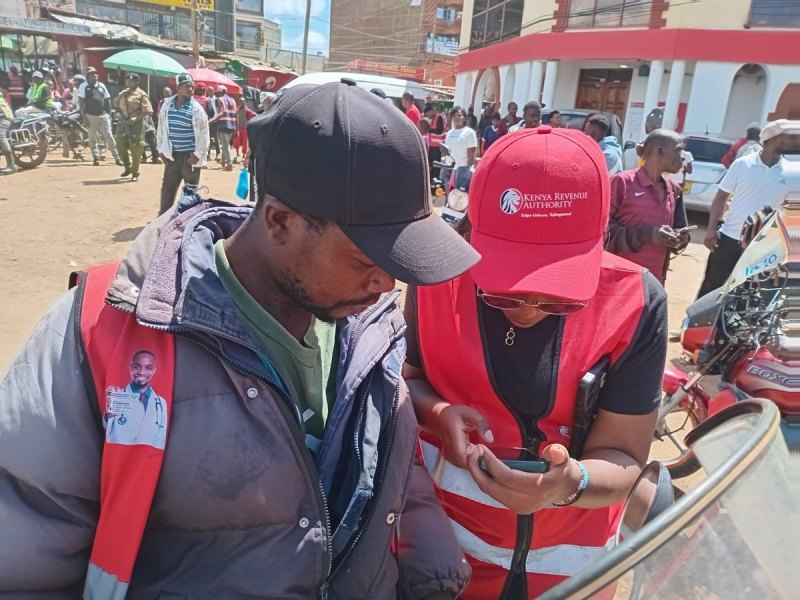
position, with MPs putting KRA on the spot over the complicated fiscal
planning.
Majority leader and Kikuyu MP Kimani Ichung’wah attributed
the failed revenue targets to ineptness on the part of the taxman.
“We have a revenue authority that is either lazy or riddled
with corruption, where people are collecting bribes instead of collecting
revenue, or because we have an inefficient system,” Ichung’wah said.
By the end of February 2026, total revenue collection stood
at Sh1.98 trillion, missing the target by Sh155.2 billion.
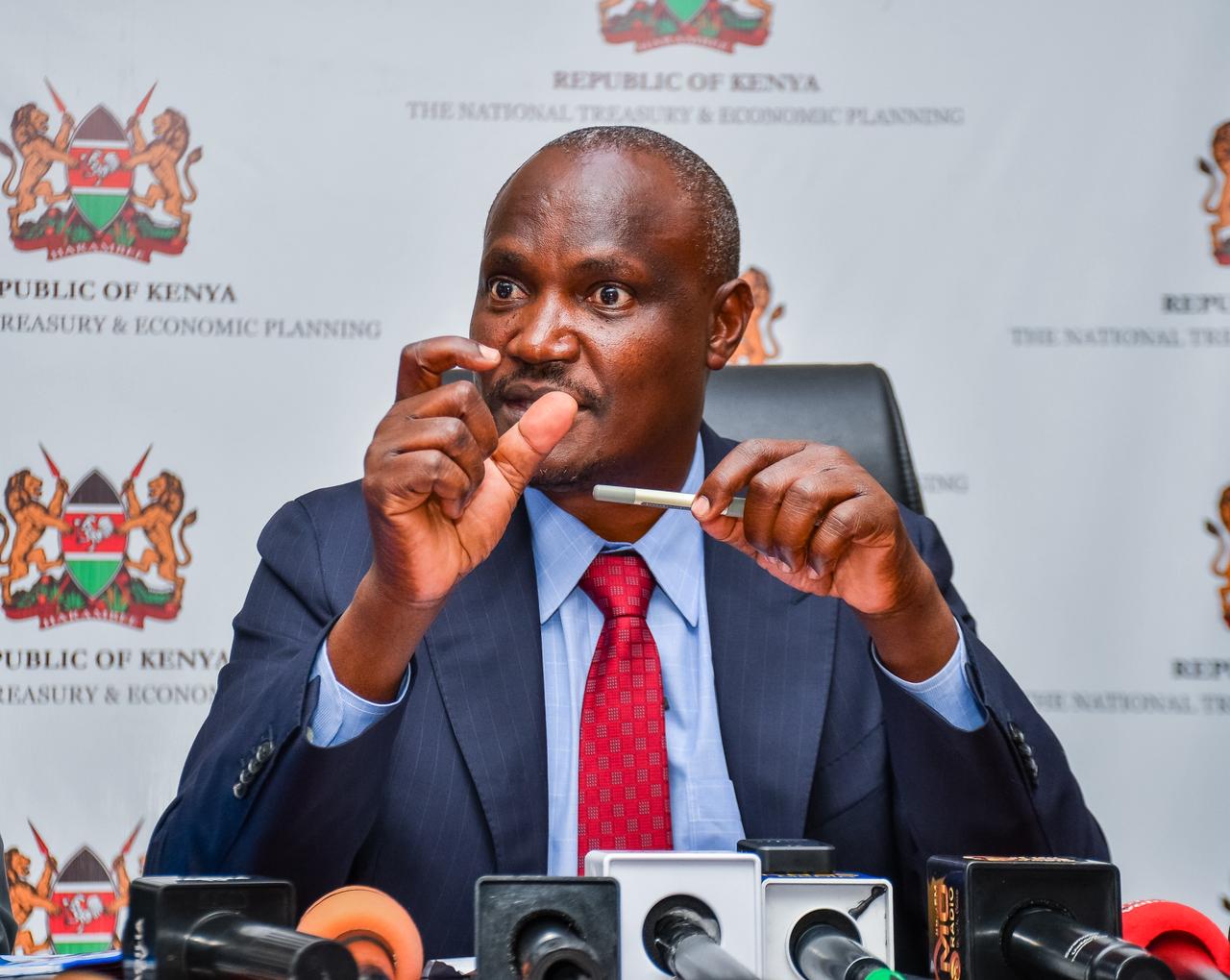
The John Mbadi-led National Treasury has expressed optimism
the situation will improve.
Income tax underperformed by Sh103.5 billion, VAT by Sh40.5
billion and excise duty by Sh18.6 billion, shortfalls that underscore
persistent challenges in revenue mobilisation.
Finance committee chairman (Molo MP) Kuria Kimani said,
“Only 20 per cent of Kenyans pay 80 per cent of our taxes.”
“What we are telling KRA is that we cannot continue to
burden this 20 per cent. To achieve a fairer system, they must digitise their
operations,” the MP said.
The National Treasury has revised its ordinary revenue
projection upward by just Sh29.7 billion, from Sh2.754 trillion to Sh2.784
trillion.
The increase pales in comparison to the Sh316.7 billion rise
in total expenditure.
“The moderate upward revision in ordinary revenue of Sh29
billion contrasts with the Sh316.7 billion increase in total expenditure,” the
committee noted.
Treasury officials have indicated the full-year fiscal
deficit is likely to exceed six per cent of GDP, surpassing the original
consolidation target.
Experts hold that while the government has pointed to
relatively stable inflation and easing interest rates as signs of resilience,
the growing reliance on domestic borrowing raises questions about fiscal
sustainability.
"As at the end of February, we were short of revenue by
Sh150 billion, hence we are expected to collect the total expected amount plus
the additional Sh29 billion. As of now, we are negative by Sh150 billion. The
question is: how realistic are these figures?” Kitui Central MP Makali Mulu, an
economist, asked.



![[PHOTOS] The new Ngong –Naivasha Road viaduct](https://cdn.radioafrica.digital/image/2026/06/64d4f771-4432-4aee-ba3c-2f304c4436ec.jpg)


![[PHOTOS] 'Mr Speaker Sir' Gen Z protester in court](https://cdn.radioafrica.digital/image/2026/06/b3e62d8e-25c3-4780-90f9-4eb48b1ce8a7.jpg)