The finding suggests the need for regular testing, treatment and
consistent use of protection among sex workers and their clients to stop the
infections from spreading.
Researchers tested 647 stored blood samples collected
between 2013 and 2019 from people enrolled in the Sex Worker Outreach Programme
(Swop) in Nairobi.
Most of those sampled were female sex workers (FSW), with a
smaller group of men who have sex with men. The results showed that 11.1 per
cent had antibodies for syphilis, meaning they had been infected at some point.
Researchers found older sex workers (above 45 years) were
more likely to have syphilis compared to younger ones.
“We report a higher seropositive rate than in previous
studies in Kenya. As the test does not differentiate between active or prior
infection, the seropositivity in the 45-54 and older age groups may reflect the
increased amount of time in sex work, leading to more potential syphilis
exposures as compared to a younger person,” the researchers said.
Their report is contained in an unpublished paper titled
“Seroprevalence of syphilis among sex workers in Nairobi, Kenya.”
Nearly all women accessing antenatal care in Kenya are
tested for syphilis and in 2023, fewer than one in ten (0.95 per cent) tested
positive.
This places the burden of syphilis on sex workers at
probably the highest levels of any subgroup in Kenya.
“The high rate of syphilis positivity in FSWs is
particularly concerning, given the possibility of congenital syphilis. For
women who become pregnant, this can lead to serious complications, including
low birth weight, premature delivery, and stillbirth,” the authors said.
Swop clinics are clinics that provide free
services like HIV and STI testing, treatment, and counselling, mainly for sex
workers and other people in high-risk activities. They sometimes store blood
samples to test for infections later, monitor trends over time, and
support research.
The analysis also found a strong link between syphilis and
HIV, with infection rates significantly higher among people living with HIV.
Syphilis is a sexually transmitted infection that can be
easily treated, but it becomes dangerous when it is missed or ignored. It can
damage vital organs such as the brain and heart, and in pregnant women, it can
be passed to the baby with severe consequences.
“When untreated, syphilis can eventually lead to several
complications, including congenital syphilis in pregnant women, cardiovascular
lesions, and dementia,” the study notes.
The risks are even more serious for babies. Infection during
pregnancy can lead to miscarriage, stillbirth, premature birth or lifelong
illness.
The high rate among female sex workers raises concern
because it increases the chances of infection during pregnancy if testing and
treatment are missed.
“The high rate of syphilis positivity in FSWs is
particularly concerning, given the possibility of congenital syphilis,” the
researchers said.
The authors are from
the University of Nairobi, Public Health Agency of Canada, University of
Alberta, University of California at Los Angeles, University of Manitoba,
Cadham Provincial Laboratory (Canada), the University of Kinshasa, DR Congo, and the National Institute of Biomedical Research.
Kenya has made progress in testing pregnant women, with most
screened during antenatal visits. Treatment, however, still lags behind.
The study notes that only 44.3 per cent of women who test
positive during antenatal visits receive treatment. This gap leaves many women
and their babies at risk.
The findings also show that Kenya’s testing strategy may be
missing key populations. Most surveillance focuses on pregnant women, yet
infections are clearly higher in groups such as sex workers.
“Surveillance that is conducted is generally done on
antenatal populations… this brings the risks of missing syphilis in other
high-risk populations,” the study says.
Stigma and discrimination make the situation worse. Many sex
workers and sexual minorities face barriers when trying to access healthcare,
which means infections can go untreated and continue to spread within
communities.

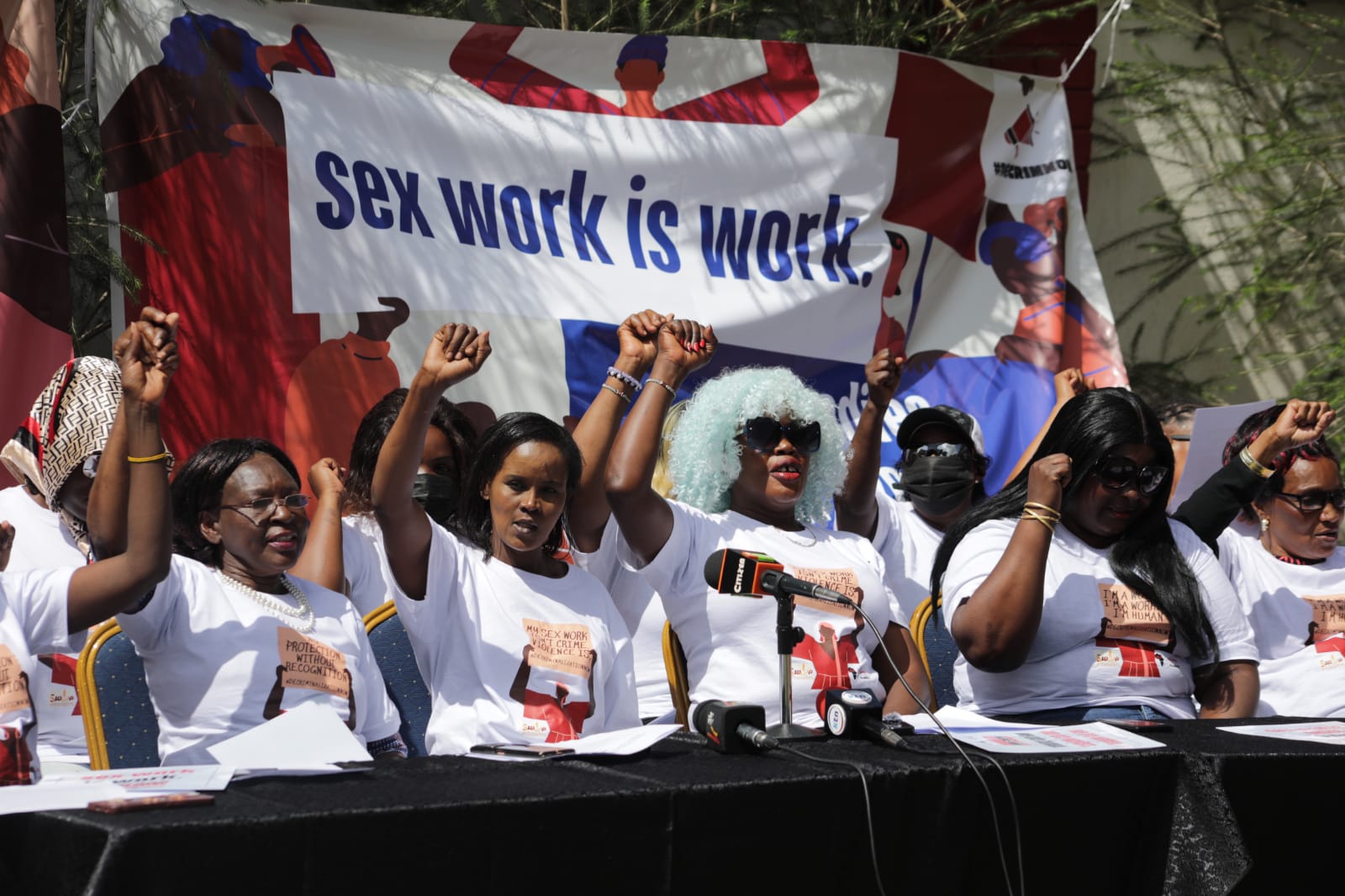
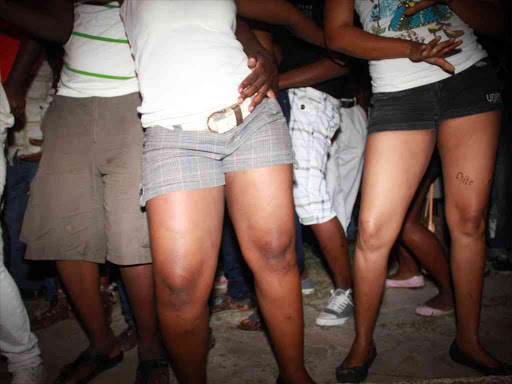 Sex workers in Nairobi./FILE




![[PHOTOS] The new Ngong –Naivasha Road viaduct](https://cdn.radioafrica.digital/image/2026/06/64d4f771-4432-4aee-ba3c-2f304c4436ec.jpg)









![[PHOTOS] 'Mr Speaker Sir' Gen Z protester in court](https://cdn.radioafrica.digital/image/2026/06/b3e62d8e-25c3-4780-90f9-4eb48b1ce8a7.jpg)