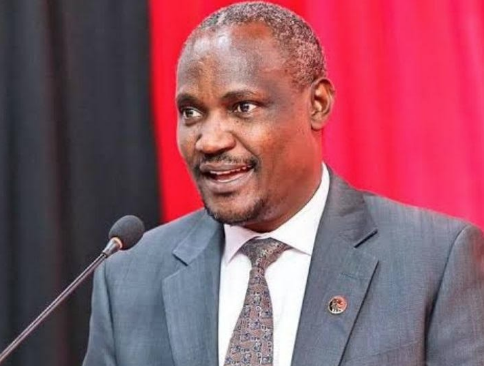
 Treasury PS
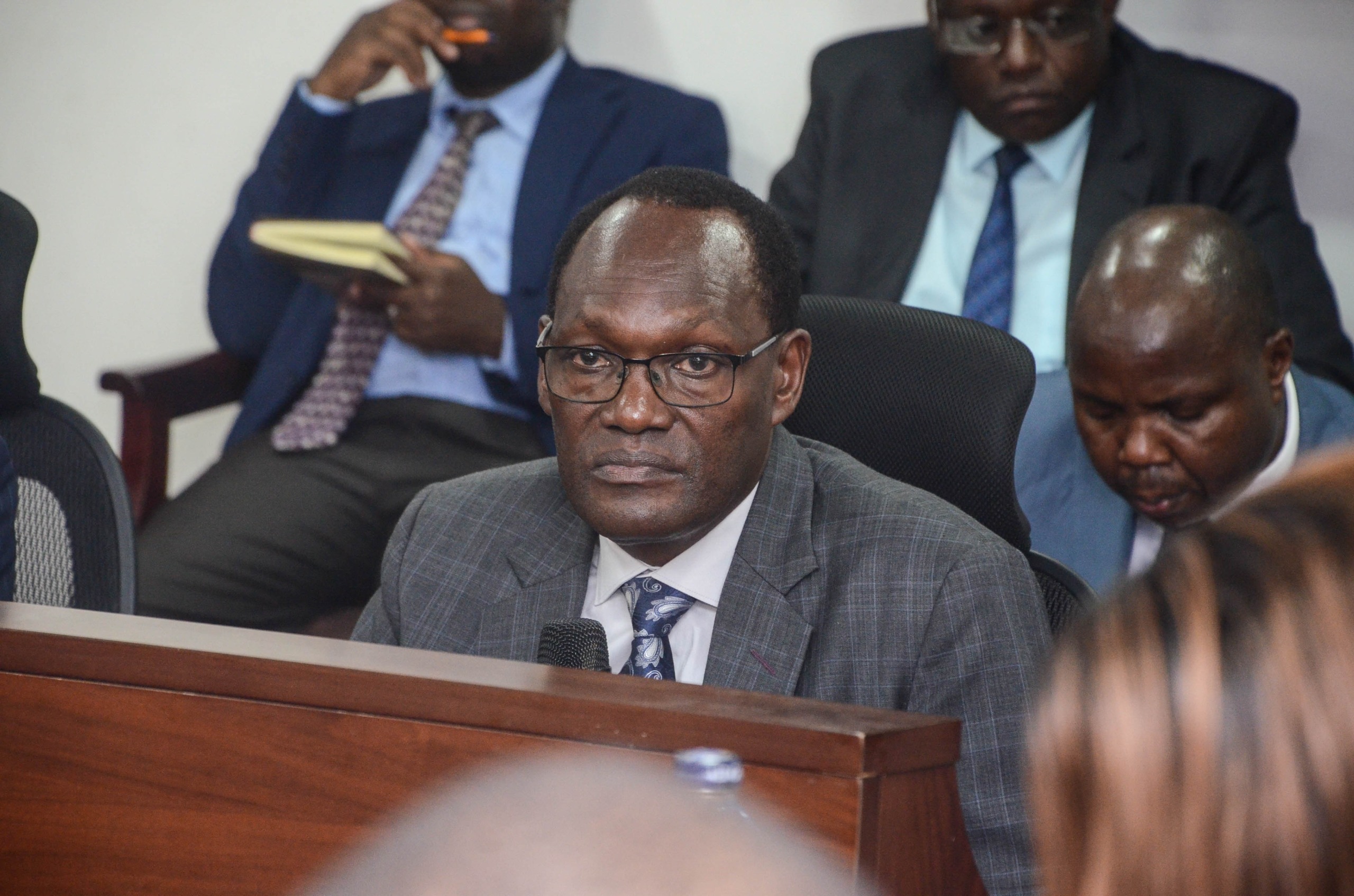
Chris Kiptoo
before the
National
Assembly’s
Public Debt and
Privatisation
committee
at Parliament
Buildings
yesterday
/DOUGLAS
OKIDDY
Treasury PS
Chris Kiptoo
before the
National
Assembly’s
Public Debt and
Privatisation
committee
at Parliament
Buildings
yesterday
/DOUGLAS
OKIDDY
Borrowing to finance the budget
might not be sustainable, as the budget deficit is set to hit Sh1.12 trillion, the National Treasury has warned.
Appearing before the National Assembly’s Public Debt and Privatisation
Committee, Treasury PS Chris Kiptoo disclosed that the budget
deficit is projected to hit Sh1.12 trillion. That is a significant increase from the
Sh901 billion approved in the June 2025 budget.
Kiptoo cautioned that continued borrowing to plug the budget
shortfall poses risks to the country’s fiscal stability, even as the government
struggles to balance rising expenditure demands with limited revenue growth.
“Borrowing is not sustainable. We are working hard, but
without achieving fiscal consolidation, it is going to be very difficult going
forward," Kiptoo said.
He vouched for fiscal consolidation to ensure the country
remains stable.
“We want the burden of taxation to go to everyone, not only
those who are complying. Those who are bearing the burden are the compliant
ones, but many are not yet,” the PS noted.
“The National Treasury continues to make efforts aimed at anchoring
fiscal consolidation and maintaining debt sustainability without undermining
the country’s development needs. ”
Kiptoo was appearing before the oversight committee on the
consolidated fund services expenditures under supplementary estimates No. 1 for the financial year 2025/2026.
He said the Kenya Revenue Authority will be empowered to ensure it expands the tax
base as ‘Kenyans do not want to hear about more taxation’.
The Treasury plans to finance the deficit largely through
domestic borrowing, which will account for Sh924.5 billion, while net foreign
financing is expected to contribute Sh229.8 billion.
The heavy tilt towards domestic borrowing is likely to
intensify competition for credit between the government and the private sector,
potentially crowding out businesses and slowing economic growth.
At the same time, increased external borrowing, though comparatively
lower, adds to Kenya’s debt obligations amid concerns over rising debt
servicing costs.
The latest disclosures come even as the government remains under pressure to rein in public spending, enhance revenue collection, and
reduce reliance on debt to sustain its budget.
Lawmakers sitting in the committee chaired by Balambala MP
Abdi Shurie attributed the country’s huge public debt to fiscal indiscipline at
the National Treasury, especially over-projection of revenues, whose shortfall
necessitates increased borrowing.
“When revenues are not increasing, who would you consider
spending more?” Shurie posed.
The PS also informed the committee of a significant increase
in the wage bill as a result of the salaries for constitutional and independent
offices.
The budget allocation for salaries
and allowances is projected at Sh5 billion, denoting an increase of Sh431
million from the approved estimates of Sh4.6 billion.
“The increase is primarily attributed to the enhanced
remuneration and benefits for state officers arising from the implementation of
the third remuneration review cycle,” Kiptoo noted.
“Additional expenditures are also attributed to service
gratuity for exiting state officers and the anticipated expenditure on the
appointment of judges in the judicial department.”
The PS also informed the committee that the budget for pensions
will remain unchanged at Sh234 billion.
INSTANT ANALYSIS
The Treasury plans to finance the deficit largely through domestic borrowing, which will account for Sh924.5 billion, while net foreign financing is expected to contribute Sh229.8 billion. The heavy tilt towards domestic borrowing is likely to intensify competition for credit between the government and the private sector, potentially crowding out businesses and slowing economic growth.
![[PHOTOS] The new Ngong –Naivasha Road viaduct](https://cdn.radioafrica.digital/image/2026/06/64d4f771-4432-4aee-ba3c-2f304c4436ec.jpg)










![[PHOTOS] 'Mr Speaker Sir' Gen Z protester in court](https://cdn.radioafrica.digital/image/2026/06/b3e62d8e-25c3-4780-90f9-4eb48b1ce8a7.jpg)