On March 20, chilling reports emerged from Kericho that should shake the
conscience of any nation that claims to value life. Government vehicles were
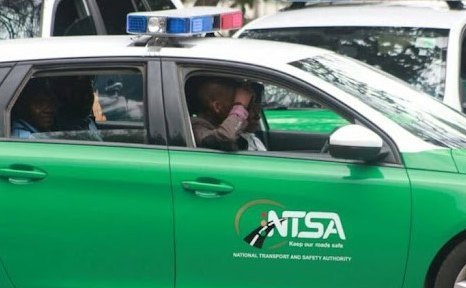
allegedly spotted at Kericho Cemetery.
In a disturbing turn of events, local
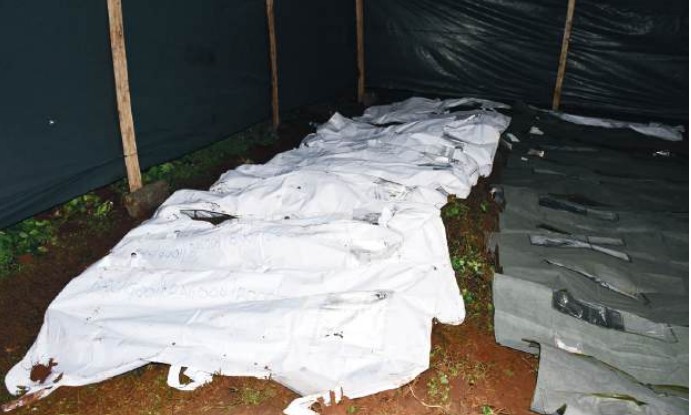
young men were reportedly hired to dig what would later become a mass grave.
Soon after, bodies were brought and dumped into the freshly dug pit. Preliminary
reports indicate that up to 14 bodies were interred at that site.
If this were an isolated incident, it would still be horrifying. However, it is
not. According to the same young men who operate around the cemetery,
such burials are not new. They spoke of previous occasions - quiet, unmarked, and
unaccounted for - where bodies were buried in groups.
Unconfirmed accounts
point to one grave containing seven bodies and another holding as many as 16. These are not mere statistics; they are human beings - lives lived,
stories untold, families left in anguish.
Perhaps most disturbing of all is the realisation that this is becoming a
pattern in Kenya. We have seen this before. Last year, the country was
confronted with the horrifying reality of the Kwa Binzaro mass graves, where
over 30 bodies were exhumed under disturbing circumstances.
In 2024, Kenyans
woke up to the grotesque discovery at Kware dump site in Eastlands, Nairobi,
where dismembered bodies of women were recovered. Police reports indicated that
at least 42 women had been murdered and discarded like waste in this case.
Just a year earlier, in 2023, the nation was plunged into shock by the
Shakahola massacre, where over 400 followers of a cult died from starvation in
what remains one of the darkest chapters in our recent history. In 2022, the
Yala River bodies scandal saw at least 30 bodies retrieved from the river - many
bearing signs of torture.
Each of these incidents, on its own, should have triggered a national
reckoning. Together, they paint a terrifying picture that Kenyans are dying
in unexplained circumstances and their bodies are mutilated, hidden or dumped
in the most inhumane ways imaginable. Mass graves are quietly being dug,
filled, and forgotten. The sanctity of life, the very foundation of any
civilised society, has been eroded to alarming levels.
We are becoming a nation where
death is normalised, where horror no longer shocks and where the dignity of the
human person has been stripped away.
As a country, we are
traumatised.
We are constantly being treated to gruesome, real-life stories of
dismembered bodies, secret burials, and unexplained deaths. Families are left
searching for loved ones, often only to find them in morgues, rivers, forests or
shallow graves. The psychological toll of this reality cannot be overstated. It
is a collective wound that continues to deepen with every new revelation.
Yet, in the face of all this,
the silence from those entrusted with our security is deafening. Where are the
answers to these heinous acts? Where is the accountability?
In any functioning democracy,
each of these incidents would have triggered immediate investigations, public
disclosures and most importantly, consequences. Senior officers would have
resigned.
Others would have been dismissed. Institutions would have been forced
to account. But alas, not in Kenya.
Here, the pattern is painfully
predictable: shocking revelations, brief public outrage, promises of
investigations and then silence. No answers.
No accountability. No justice. This
raises a troubling question: is it negligence, indifference, or something far
more sinister?
The continued failure to hold
security agencies, including the police, accountable suggests either a lack of
political will or, worse, complicity. It suggests that those in positions of
power are either unwilling or unable to confront the rot within our
institutions. In that failure, the burden shifts to the people.
Kenyans are being left to fend for themselves in a system that no longer
guarantees their safety or dignity. When the state abdicates its responsibility,
the people must rise. We must refuse to be numb. We must demand answers. Not
tomorrow, not eventually, but now.
Who are these bodies in Kericho? Where did they come from? Who authorised their burial? Why
are mass graves becoming a recurring feature in our country? These
are not optional questions. They are urgent demands.
We must also demand independent
investigations into all these incidents from Kericho to Kwa Binzaro to Kware to
Shakahola and to Yala River> We must ensure that those responsible,
regardless of their rank or position, are brought to justice.
As a people, we must become our
brothers’ and sisters’ keepers. We must speak out, organise, and push back against a system that
has grown comfortable with death and silence.
Civil society, the media,
religious institutions and every concerned Kenyan must come together to demand
accountability if we do not, we risk becoming a nation that buries its dead not
just in the ground, but in secrecy and impunity.



![[PHOTOS] The new Ngong –Naivasha Road viaduct](https://cdn.radioafrica.digital/image/2026/06/64d4f771-4432-4aee-ba3c-2f304c4436ec.jpg)



![[PHOTOS] 'Mr Speaker Sir' Gen Z protester in court](https://cdn.radioafrica.digital/image/2026/06/b3e62d8e-25c3-4780-90f9-4eb48b1ce8a7.jpg)