The convergence of key campaign agenda solidifies earlier signals that the Edwin Sifuna-James Orengo axis could soon merge with the Kalonzo, Gachagua United Opposition.
Last month, Sifuna hinted at the formation of a grand alliance whose sole agenda is unseating President William Ruto in the 2027 General Election
Speaking at Ufungamano House during a parallel National Delegates Conference, the Sifuna, Orengo axis tore into the electoral commission, calling for radical reforms
“The electoral commission is not a people’s commission but one of a few
people. Every commissioner has a patron,” Orengo said, calling for sweeping
reforms to guarantee credibility in future elections.
This was the same argument fronted by the United opposition when they flatly rejected the nomination of all the commissioners.
The courts rejected that argument.
Orengo went further, introducing a new flashpoint by rejecting the
involvement of Smartmatic, the technology firm handling the electoral
processes.
“Smartmatic from Venezuela….we will not have an election with Smartmatic as
the vendor,” he said.
His sentiments tapped into a growing narrative among opposition figures
who have questioned the transparency of election technology providers.
Both Kalonzo and Gachagua allies have called for a complete audit and
possible overhaul of the electoral infrastructure before the next polls.
Besides the concerns about poll management, it is in the political
alliances and tactics that the convergence is most pronounced.
In a blunt declaration, Sifuna ruled out any possibility of ODM working
with Ruto or his United Democratic Alliance (UDA).
In this, the Nairobi Senator drew a clear line that mirrors the hardline
stance taken by both Kalonzo and Gachagua.
“We reject any calls to join forces with William Ruto,” Sifuna said.
The remarks place the Orengo–Sifuna faction within the camp of leaders
opposed to any rapprochement with State House.
The position puts them at odds with the majority of ODM which is part of the broad-based government.
Kalonzo has consistently rejected overtures to work with Ruto, insisting
that the opposition must remain intact to offer an alternative government.
Gachagua, meanwhile, has repositioned himself as a critic of the
administration he once served.
In his activities, he has been rallying support around what he terms the
defence of democracy and electoral justice.
The Orengo–Sifuna axis is further embracing mass action, which is yet another
tool increasingly favoured within opposition ranks.
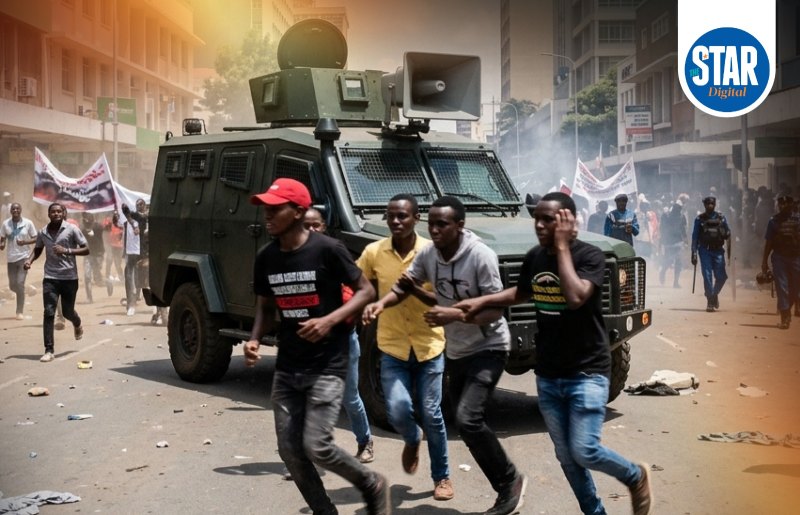
Orengo signalled plans for street protests to mark the anniversary of the
June 2024 demonstrations.
He called on Kenyans to return to the streets both to honour those who
died and to pile pressure on the government.
“On June 24, are we going to charge to commemorate those who died in the
struggle?” he posed.
“We must go out to make sure those who died for us are remembered in
honour and victory.”
In more pointed remarks, he framed protests as a legitimate means of
political pressure.
“I am tired of waiting,” Orengo said.
His message aligns with recent calls by sections of the opposition for
sustained civic action.
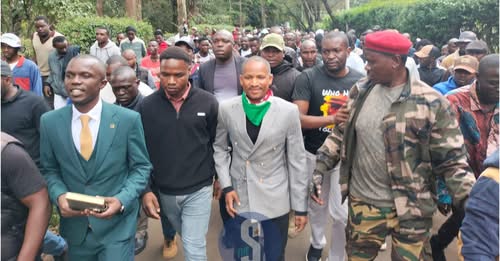
Friday’s “People’s NDC” at Ufungamano House, held amid heavy police
presence, signalled the crystallisation of a potential coalition.
Police attempted to block access to the venue before Orengo and his
allies forced their way in and proceeded with their deliberations.
Inside, leaders framed their gathering as a defence of ODM’s founding ideals,
even as they aimed at the Oburu-led faction.
Suba South MP Caroli Omondi and Vihiga Senator Godfrey Osotsi both hinted
at a looming political realignment.
Osotsi predicted a “Senegal moment”, a reference to a youth-driven
political upheaval, as was seen in Senegal’s 2024 elections.
“Change is coming to Kenya, and it will be driven by the young people,”
Osotsi said.
Embakasi East MP Babu Owino positioned the faction as a people-centred
movement focused on jobs and justice.
“We are not the enemy of the government or the state… they may have the
party, but we have the people,” he said.



![[PHOTOS] The new Ngong –Naivasha Road viaduct](https://cdn.radioafrica.digital/image/2026/06/64d4f771-4432-4aee-ba3c-2f304c4436ec.jpg)



![[PHOTOS] 'Mr Speaker Sir' Gen Z protester in court](https://cdn.radioafrica.digital/image/2026/06/b3e62d8e-25c3-4780-90f9-4eb48b1ce8a7.jpg)