It is also ranked third in Africa in the number of
new cases. Kenya recorded 78 cases and four deaths between early February
and mid-March, according to the World Health Organization.
The organisation’s latest situation report states:
“Seventeen countries in Africa reported active transmission of mpox in the last
six weeks (1 February – 15 March 2026), with 907 confirmed cases, including
seven deaths; the highest number of confirmed cases over the last six weeks
were reported in Madagascar (368 confirmed cases), the Democratic Republic of
the Congo (288), Kenya (78), Burundi (34), and Liberia (24).”
Kenya had the highest number of Mpox deaths over
that period, followed by Madagascar.
The global health body warned that the disease
continues to spread in communities and could worsen if not controlled quickly.
“Transmission of mpox continues mostly within
sexual networks, affecting both women and men, followed by household
transmission, and in some historically endemic areas, affecting all age groups.
“All clades of monkeypox virus (MPXV) continue to
circulate. Unless mpox outbreaks are rapidly contained and human-to-human
transmission is interrupted, there is a risk of sustained community
transmission in all settings,” WHO said.
Mpox remains a public health concern globally, and
the WHO reported that from January 2025 to February 2026, there were 56,356
confirmed cases and 227 deaths across 100 countries.
In February this year alone, 46 countries reported 1,184 cases and four
deaths. Africa carried the biggest burden, accounting for more than half of
these infections.
While some regions are seeing a drop in cases,
others are reporting increases.
“Four WHO regions – the Region of the Americas and
the African, South-East Asian and Western Pacific regions – reported a decline
in confirmed cases in February, compared to January 2026, while the European
Region reported an increase in confirmed cases. The Eastern Mediterranean
Region reported the same monthly case count in January and February 2026,” WHO
said.
Across Africa, the disease is still spreading in
many countries, though overall numbers have started to fall slightly in recent
weeks.
WHO reported: “From January 1, 2025, to March 15,
2026, 30 countries in Africa reported 46, 476 confirmed mpox cases, including
214 deaths. In the last six weeks, 17 countries reported active transmission of
mpox with 907 confirmed cases, including seven deaths.”
It adds that recent data should be treated with
caution as cases may be underestimated.
“Overall, reported confirmed cases have continued
to decline on the continent to fewer than 200 cases per week.
“Data for recent weeks should be interpreted with
caution, as reporting delays often lead to retrospective adjustments.
Furthermore, with a reduction in surveillance activities, the number of cases
may be underestimated.”
The report highlights how the virus is spreading in
different ways, including through close contact and within households.
It said transmission continues mostly within sexual
networks, affecting both women and men, followed by household transmission.
Experts say this pattern means the disease can move
quickly within families and communities if not controlled early.
The WHO also said that different strains of the virus are
circulating at the same time, which may affect how outbreaks behave in
different places.
“Although there is currently no documented
difference in inherent transmissibility of different MPXV strains to date, some
strains are affecting different populations in different settings, resulting in
distinct outbreak dynamics.”
It said the clade 1b, which was common in Africa
last year, is now dominant even in Europe. WHO said several countries are now
reporting local transmission of this strain without links to travel.
“Outside Africa, community transmission of clade Ib
MPXV continues in the WHO European Region, with Austria, Belgium, Portugal,
Spain, and the United Kingdom of Great Britain and Northern Ireland reporting
community transmission, including in sexual networks of men who have sex with
men.”
WHO urged countries to strengthen surveillance,
testing, and public awareness to control the outbreak. It is also supporting
vaccination efforts and research into better diagnostics and treatment.

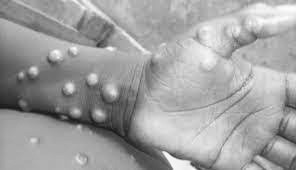 An Mpox patient /FILE


![[PHOTOS] The new Ngong –Naivasha Road viaduct](https://cdn.radioafrica.digital/image/2026/06/64d4f771-4432-4aee-ba3c-2f304c4436ec.jpg)





![[PHOTOS] 'Mr Speaker Sir' Gen Z protester in court](https://cdn.radioafrica.digital/image/2026/06/b3e62d8e-25c3-4780-90f9-4eb48b1ce8a7.jpg)