When I joined the University of Nairobi, I carried with me the excitement of stepping into one of Africa’s most respected institutions, a place admired worldwide for its academic excellence.
I imagined hostel life to be modern, comfortable, and equipped with all the basic amenities that would make student life easier.
Water, I thought, would never be a problem. But reality has been painfully different. Since the beginning of the second semester in January, water shortages have turned hostel life into a daily struggle, reshaping my university experience into one of endurance rather than learning.
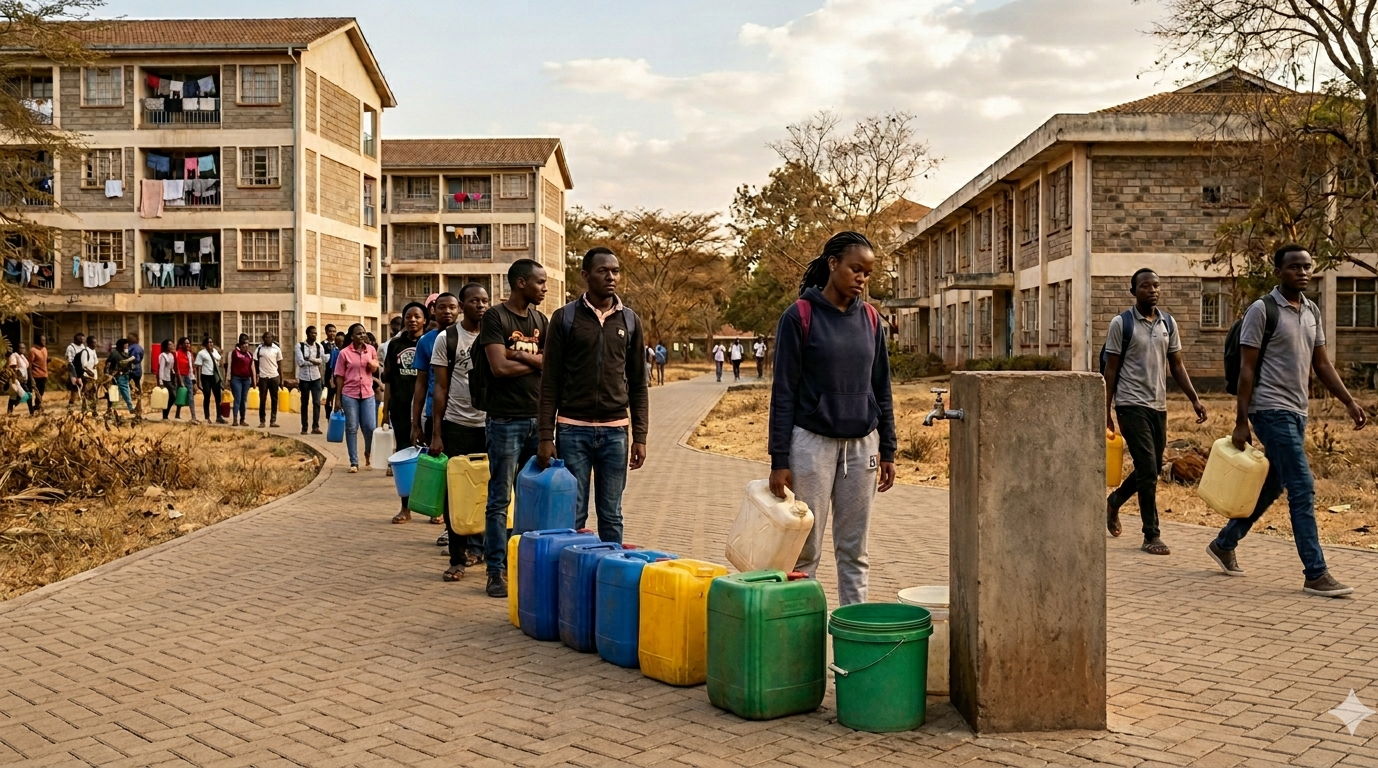
Living in one of the hostels on the main campus, has exposed me to the harsh reality of dry taps.
I stay on the fourth floor, and with no lift in the building, every drop of water fetched from outside must be carried up heavy stairs.
Sometimes the water available is dirty and unsafe for drinking, forcing me to spend money on bottled water. What should be a simple necessity has become a punishing routine.
Bathing, washing clothes, and even maintaining hygiene have become uphill tasks. For girls, the challenge is compounded by the need for privacy and safety. Carrying heavy containers up four flights of stairs is exhausting, and the physical toll is immense.
The shortage has been most severe this semester, stretching for about a month without relief. Emotionally, it is draining to wake up each morning knowing the day begins with a struggle for water.
Physically, the exhaustion of hauling containers daily is overwhelming. Academically, time lost fetching water eats into study hours, leaving me juggling coursework with survival.
The crisis is not confined to Ronald Ngala Hall. At Hall 20, students have endured over a month without consistent water supply.
Frustrations boiled over when residents announced a protest scheduled for March 22, 2026, at 11:00 a.m.
The demonstration began outside Hall 20 and proceeded to the Student Welfare Authority (SWA) offices at Hall 9. Protesters, mostly female students, carried placards and chanted under the slogan #Siri Ni Numbers, demanding urgent action. They described waking up as early as 4:00 a.m. to access washrooms at Hall 13 or fetching brown water at dawn to prepare for classes.
The public notice for the strike dated March 22 clearly outlined the questions that stand: Who is responsible for ensuring reliable water supply in hostels? What measures are being taken to prevent future shortages? When will students finally enjoy the basic amenities they pay for? Where should accountability lie—within the university administration or external service providers? And most importantly, how long must students endure before the taps run again? These questions are not just rhetorical—they reflect the frustrations of students who feel neglected despite paying full accommodation fees.
Two days later, on March 24, 2026, Vice Chancellor Margaret Jesang Hutchinson addressed us during the strike.
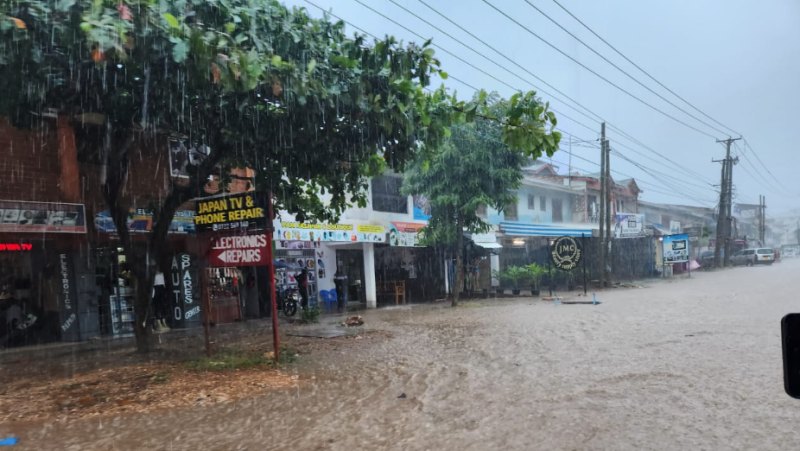
She explained, “The reason is that the floods have damaged quite a number of our pipes. But we are also ensuring that now we have water in certain areas.”
Her words acknowledged the severity of the problem and promised gradual restoration. Yet, for many of us, the comments offered little comfort after weeks of hardship.
For now, resilience and teamwork remain our survival tools. We share the little water we fetch, pool money to buy drinking water, and support one another through the struggle.
Water is not a luxury; it is a necessity. Until the pipes are repaired and supply restored, hostel life at the University of Nairobi remains incomplete, defined by the weight of containers carried up staircases and the endless search for a resource that should never be scarce.
This is my reality. This is our reality. And until the taps run again, our education will continue to be overshadowed by the daily struggle for water.

![[PHOTOS] The new Ngong –Naivasha Road viaduct](https://cdn.radioafrica.digital/image/2026/06/64d4f771-4432-4aee-ba3c-2f304c4436ec.jpg)





![[PHOTOS] 'Mr Speaker Sir' Gen Z protester in court](https://cdn.radioafrica.digital/image/2026/06/b3e62d8e-25c3-4780-90f9-4eb48b1ce8a7.jpg)