The Independent Electoral and Boundaries Commission faces a crucial test
ahead of the 2027 polls: registering at least 2.5 million new voters within 30
days.
The mass
listing is coming amid worrying signs that young Kenyans, who form the bulk of
the population, are not turning up for the exercise.
In an
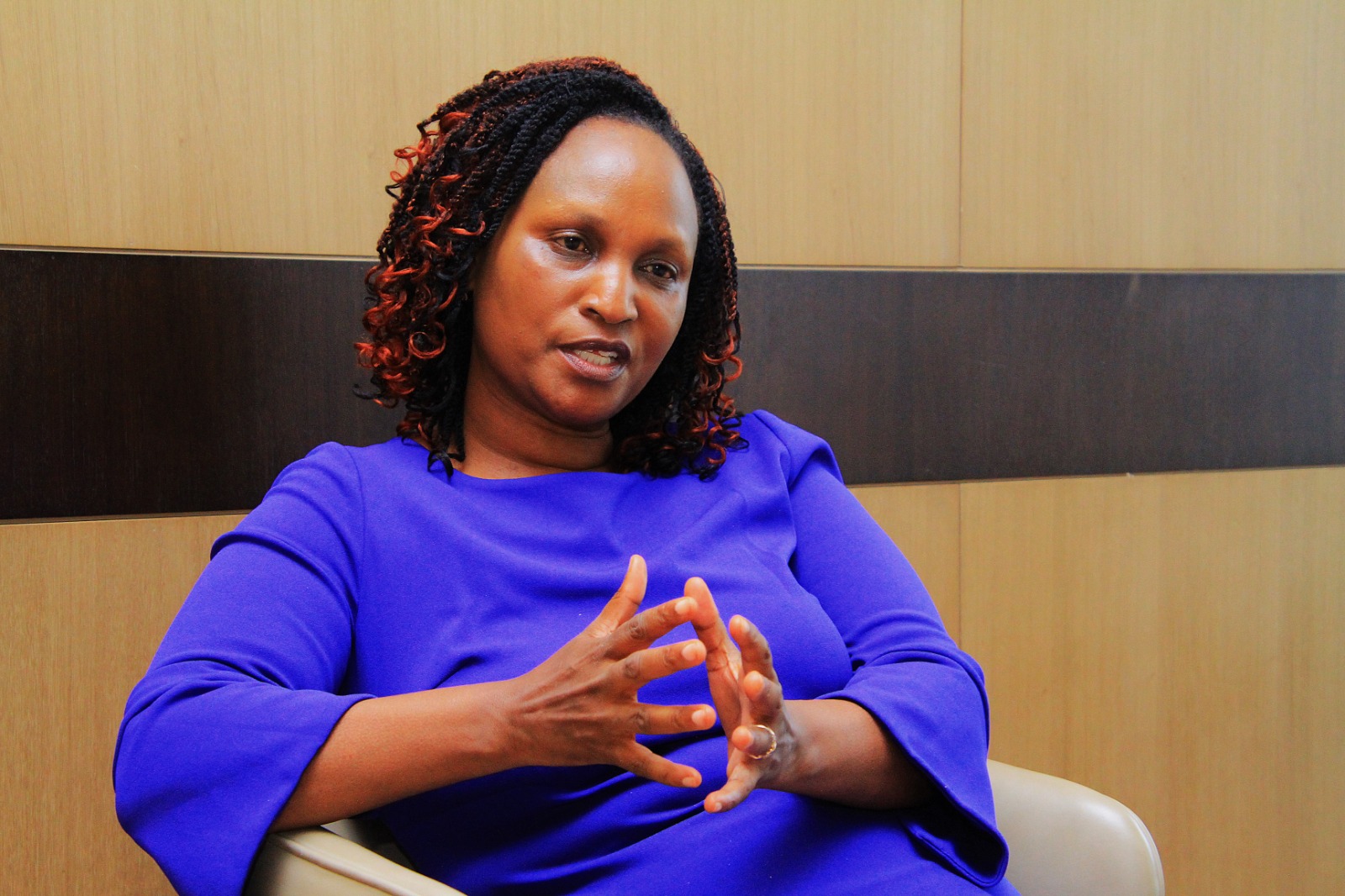
exclusive interview with the Star, IEBC commissioner Ann Nderitu laid bare an ambitious nationwide plan to roll
out what the commission calls Enhanced Continuous Voter Registration (ECVR).
ECVR is a mass
mobilisation exercise that will take registration kits out of offices and into
villages, churches, mosques and marketplaces. One would only require an
original ID or a valid passport to enlist.
The drive, set
to begin March 30 with a launch in Kwale county, is designed to aggressively hunt for eligible voters wherever
they are.
Remote
pastoralist routes in arid lands, as well as urban youth clusters, will be
targeted using more than 12,000 personnel and 5,600 biometric kits.
But even as
the commission ramps up logistics and spending Sh1.1 billion on the month-long
exercise, a troubling trend looms.
In the listing
that started last September, only 32 per cent of the 230,000 Kenyans registered
are youth, far below the expected 70 per cent.
As time ticks,
with the commission eying 6.3 million new voters before 2027, the success of
the mass voter registration could hinge on whether the youth can be persuaded
to show up.
Below are the excerpts of the interview:
Give us a
general overview of the planned registration.
For nearly two
years, there was no registration because there was no commission in
place. We thus resumed continuous voter registration on September 30,
2025, immediately after the commission was sworn in. Since then,
registration has been ongoing at constituency offices across all 290 constituencies,
supported by gazetted registration and deputy registration officers,
coordinated by county election managers. We are now rolling out the ECVR,
which Kenyans commonly call mass voter registration. This is where we move out
of offices and go directly to the people, down to the ward and polling station
level. We plan to launch this exercise on March 30 in Kwale, before
scaling it across the country with decentralised mobilisation led by county and
constituency teams.
You have 5,600
kits and over 12,000 officers. How will this work?
Each kit will
be operated by two clerks working together, one handling data capture and the
other supporting processes like photography and form filling to make the
process efficient. We also have voter registration assistants (VRAs) at
the ward level who will supervise operations, coordinate schedules and ensure
data flows from the ward to the constituency level for
uploading. Additionally, each constituency will have an ICT officer on
standby to address any technical issues in real time. We will assign
targets to each constituency, each kit, and each clerk. Everyone must
contribute to achieving our overall goal.
What are your
targets for this exercise?
Our broader
target before the next general election is to register at least 6.3 million
voters. For this specific ECVR phase, we are targeting a minimum of 2.5
million voters within 30 days. That is the baseline, but we hope to exceed it.
How long will
the exercise run?
About 30 days, starting March 30.
Will every
ward or polling station have a kit?
Not
necessarily. Distribution is guided by population density, geographic size and
infrastructure challenges. For example, if a river cuts off a community,
we must allocate a kit to that side to ensure access. We also consider roads,
terrain and mobility patterns. Kits will move according to structured
schedules. Clerks may be assigned multiple villages and expected to rotate,
say, one village per day. We also take advantage of gathering points:
churches, mosques, markets, women’s meetings and chiefs’ barazas. With
permission, we set up registration points at such events to capture as many
eligible voters as possible.
How will you
reach remote or mobile populations?
We are
particularly focused on ASAL (arid and semi-arid land) areas where
pastoralists are constantly on the move. We are mapping their migration
patterns and will follow them to ensure they are not left out. This is about
reaching the unreached, wherever they are.
You’ve flagged
low youth turnout. What’s the concern?
Since
September, we have registered about 230,000 people, but only 32 per cent are
youth. That is a concern. Based on Kenya’s demographics, we expect youth to
account for over 70 per cent of new registrations. The country has a very young
population, and many are first-time voters heading into 2027. Youth are
continuously transitioning into eligibility - turning 18 and acquiring IDs, so
they represent the largest potential pool of voters. If they all register, they
will form the majority of the voting population.
Will IEBC tap
into youth-led campaigns like #NikoKadi?
Any Kenyan has
the right to mobilise others for voter registration. It is a constitutional
right. For us, it does not matter who mobilises, as long as eligible voters
come forward and register. We encourage all initiatives, including civil
society, religious groups and individuals, to help bring people to registration
centres.
What is the
budget for the exercise?
We will spend
about Sh1.1 billion over the 30 days. Around 60 per cent goes to personnel,
that is, paying clerks and registration staff, while about 20 per cent is for
logistics, including transport and distribution of kits. Roughly 85 per cent of
the total budget is therefore tied to personnel and logistics. The remaining 15
per cent supports voter education, stakeholder engagement and technical
backstopping.
What is your
message to Kenyans?
This is a
national effort. We are calling on every Kenyan to mobilise others. If you know
a neighbour who is not registered, encourage them. If you are a parent with
children who have turned 18 and have IDs, ensure they register. Religious
institutions, civil society and the media all have a role to play. We must make
this investment count by achieving strong registration numbers.
What are the
requirements for registration?
You need
either a valid national ID or a valid passport, just one of them. You must
appear in person. Your biometric data will be captured, including fingerprints,
facial image and iris. You will fill in Form A, after which your details will
be processed and uploaded into the system. It takes about 15 days for your name
to appear in the voter register. We also have an online ‘Verify’ portal where
Kenyans can check their registration status.
Why include
iris scanning?
Some people’s
fingerprints fail during capture. The iris and facial recognition provide
alternative biometric identifiers. Our goal is to minimise reliance on manual
registers and move towards fully digital identification, which has an audit
trail and verifiability.
How are you
addressing concerns about data security?
Kenyans should
not be worried. The data we collect is used strictly for its intended purpose.
IEBC is a registered data controller and processor under the Office of the Data
Commissioner, and we comply fully with data protection laws. Data security is
assured.



![[PHOTOS] The new Ngong –Naivasha Road viaduct](https://cdn.radioafrica.digital/image/2026/06/64d4f771-4432-4aee-ba3c-2f304c4436ec.jpg)



![[PHOTOS] 'Mr Speaker Sir' Gen Z protester in court](https://cdn.radioafrica.digital/image/2026/06/b3e62d8e-25c3-4780-90f9-4eb48b1ce8a7.jpg)