Counties long dismissed as rural backwaters are turning the
tables on the ‘giants’ in the race to raise their own source revenue.
The revelation exposes inefficiencies and
weaknesses in some of the country’s most resource-endowed devolved units.
A new report by Controller of Budget Margaret Nyakang’o
reveals a striking trend where smaller counties with modest economic bases are
outperforming city and urban counties in OSR.
The trend, captured in the County Governments Budget
Implementation Review Report for the first half of the financial year, has
triggered questions about management, systems and accountability in OSR
collection in the big counties.
According to the report, counties such as Homa Bay, Nyeri,
Makueni, Laikipia, Embu and Kitui posted impressive revenue figures, eclipsing
established urban economies like Kisumu and Uasin Gishu.
Kisumu, one of the oldest cities, collected Sh383.45 million
against an ambitious annual target of Sh3.54 billion.
Uasin Gishu, home to the newly elevated Eldoret City,
generated Sh277.41 million against a target of Sh1.3 billion.
In contrast, Homa Bay — largely rural and with fewer
conventional revenue streams — collected Sh625.26 million over the same period.
The county outperformed Kisumu by Sh239.81 million and Uasin
Gishu by Sh347.38 million.
Nyeri also posted strong numbers, collecting Sh633.51
million, while Kisii got Sh676.77 million, further widening the gap
between rural performers and urban laggards.
Embu, despite its small size and limited asset base, raised
Sh419.55 million, comfortably beating both Kisumu and Uasin Gishu.
Kitui collected Sh389.60 million, while Murang’a generated
Sh506 million, reinforcing the trend of rural dominance.
Even counties neighbouring major cities are struggling to
keep pace.
Kajiado, which borders Nairobi and benefits from proximity
to the capital’s economic activity, collected just Sh360.27 million.
Bungoma, another county with a large urban population, also
posted underwhelming returns.
The report attributes this paradox to systemic
inefficiencies rather than a lack of opportunity.
Under Article 209(3) of the Constitution, counties are
empowered to raise revenue through property rates, business permits, parking
fees, health services, market charges, liquor licensing and other streams.
Urban counties, with their dense populations, thriving
businesses and extensive infrastructure, are theoretically better positioned to
maximise these sources.
Yet, the data shows otherwise.
“Even the big counties you hear about, as much as they are
collecting more, their systems are still not optimal,” Commission on Revenue
Allocation (CRA) chairperson Mary Chebukati told senators last month.
She cited weak systems, overreliance on manual
processes and lack of integration across revenue streams as key factors
undermining performance.
“These gaps create opportunities for pilferage and
inefficiency,” she said.
The CRA estimates that counties could collectively generate
up to Sh261 billion annually from their own sources. However, current
collections remain far below this potential.
In the six months under review, all 47 counties raised a
combined Sh26.94 billion against an annual target of Sh99.73 billion — less
than a third of the expected figure.
Nairobi, the country’s economic hub, emerged as the top
collector but still fell short of expectations.
The city raised Sh5.22 billion against a target of Sh21.17
billion, underscoring the scale of the challenge even in the most resource-rich
county.
Narok delivered one of the most remarkable performances,
collecting Sh2.55 billion — beating major counties such as Nakuru (Sh1.38
billion), Mombasa (Sh2.04 billion), Kiambu (Sh1.76 billion) and Machakos
(Sh1.21 billion).
However, Narok’s strong showing is largely attributed to
tourism revenues from the Maasai Mara Game Reserve, highlighting the role of
unique local assets in boosting collections.
Elsewhere, disparities remain stark.
Kilifi collected Sh746.87 million, significantly
outperforming its coastal neighbour Kwale, which managed only Sh180.73 million.
Kericho, despite its vast tea plantations and expanding
urban centres, raised just Sh231.1 million.
Migori, often compared to Homa Bay, collected Sh261.52
million, while Kirinyaga generated Sh328.36 million.
The report also highlights performance variations relative
to targets.
Samburu led in this category, achieving 79 per cent
of its OSR target, driven largely by tourism revenues.
Garissa followed at 71 per cent, boosted by strong
performance in Facility Improvement Financing (FIF), which exceeded its target.
West Pokot posted a 54 per cent performance rate, also
supported by solid FIF collections.
At the other end of the spectrum, several counties recorded
dismal performance.
Turkana achieved just eight per cent of its target, while
Siaya (10 per cent), Kisumu (11 per cent), Kericho (14 per cent), Kiambu (18
per cent) and Kwale (20 per cent).
According to the CRA, some counties are spending up to Sh8
to collect Sh3, a situation that underscores inefficiency and poor revenue
management.
“This leads to budget deficits, negatively affecting
implementation of planned activities and contributing to the accumulation of
pending bills,” the commission warned.
The findings paint a picture of counties struggling not with
a lack of revenue sources, but with how to effectively harness them.
Nyakang’o has urged county governments to adopt innovative
approaches to revenue collection and strengthen administrative systems.
“They are encouraged to adopt innovative strategies to
expand the revenue base and recover outstanding revenue arrears,” she said.
Outstanding arrears stood at Sh143.04 billion as of December
31, 2025, pointing to a massive pool of uncollected revenue.
The CRA has also challenged counties to rethink their
approach by broadening revenue bases instead of increasing tax rates, which
often burden residents without necessarily improving collection efficiency.
Property rates, in particular, remain largely untapped due
to outdated valuation rolls, making it difficult for counties to accurately
assess and collect dues.
As the numbers reveal, the narrative that cities naturally
outperform rural counties is rapidly unravelling. Instead, the emerging reality
is that efficiency, innovation and accountability — rather than size or
economic endowment — are increasingly determining success in revenue
collection.
INSTANT ANALYSIS
Rural counties are outperforming major urban centres in own
source revenue collection, exposing inefficiencies in city counties despite
their larger economic base. A report by Controller of Budget Margaret Nyakang’o
shows counties like Homa Bay, Nyeri and Embu surpassing Kisumu and Uasin Gishu.
Experts, including CRA chairperson Mary Chebukati, blame weak systems, manual
processes and unrealistic targets. Counties collected Sh26.94 billion against a
Sh99.73 billion target, far below the estimated Sh261 billion potential,
highlighting massive untapped revenue capacity.


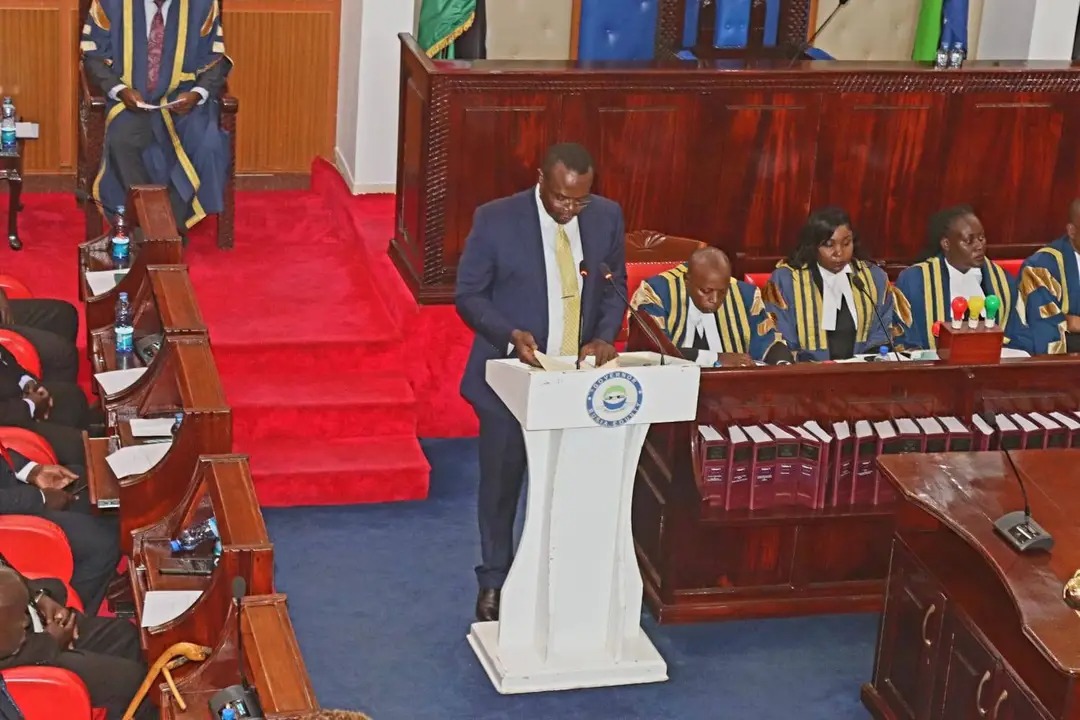
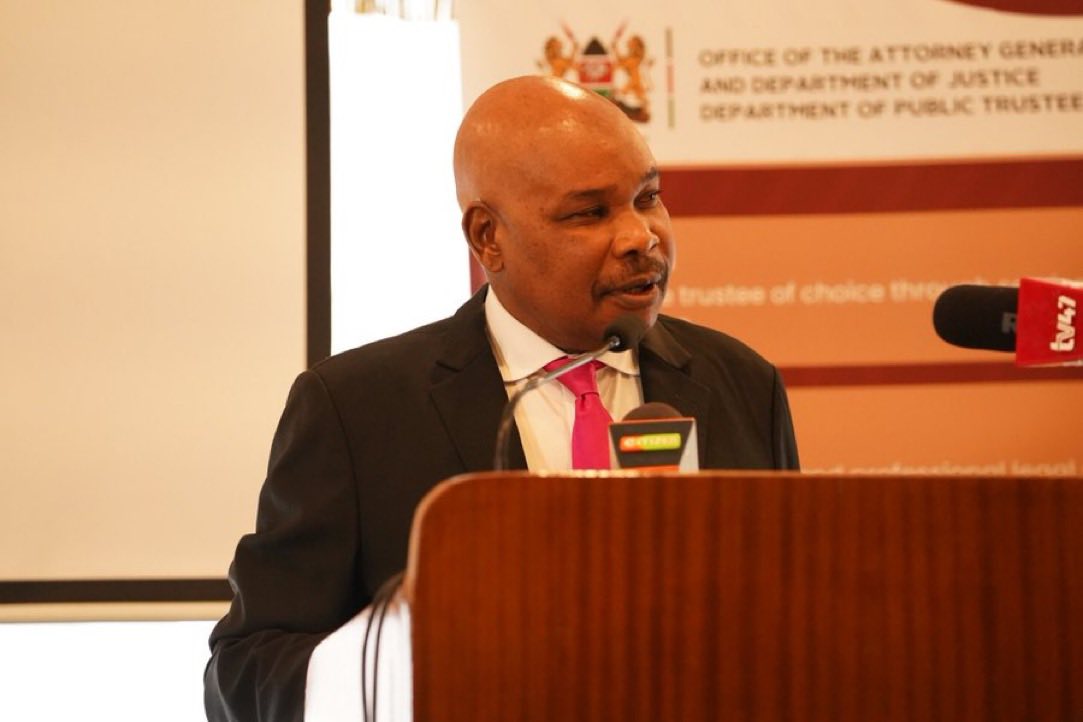
 Controller of Budget Margaret Nyakang’o /FILE






![[PHOTOS] The new Ngong –Naivasha Road viaduct](https://cdn.radioafrica.digital/image/2026/06/64d4f771-4432-4aee-ba3c-2f304c4436ec.jpg)







![[PHOTOS] 'Mr Speaker Sir' Gen Z protester in court](https://cdn.radioafrica.digital/image/2026/06/b3e62d8e-25c3-4780-90f9-4eb48b1ce8a7.jpg)