If realised, it would mark a nearly nine-fold increase from
current earnings of approximately Sh40 billion.
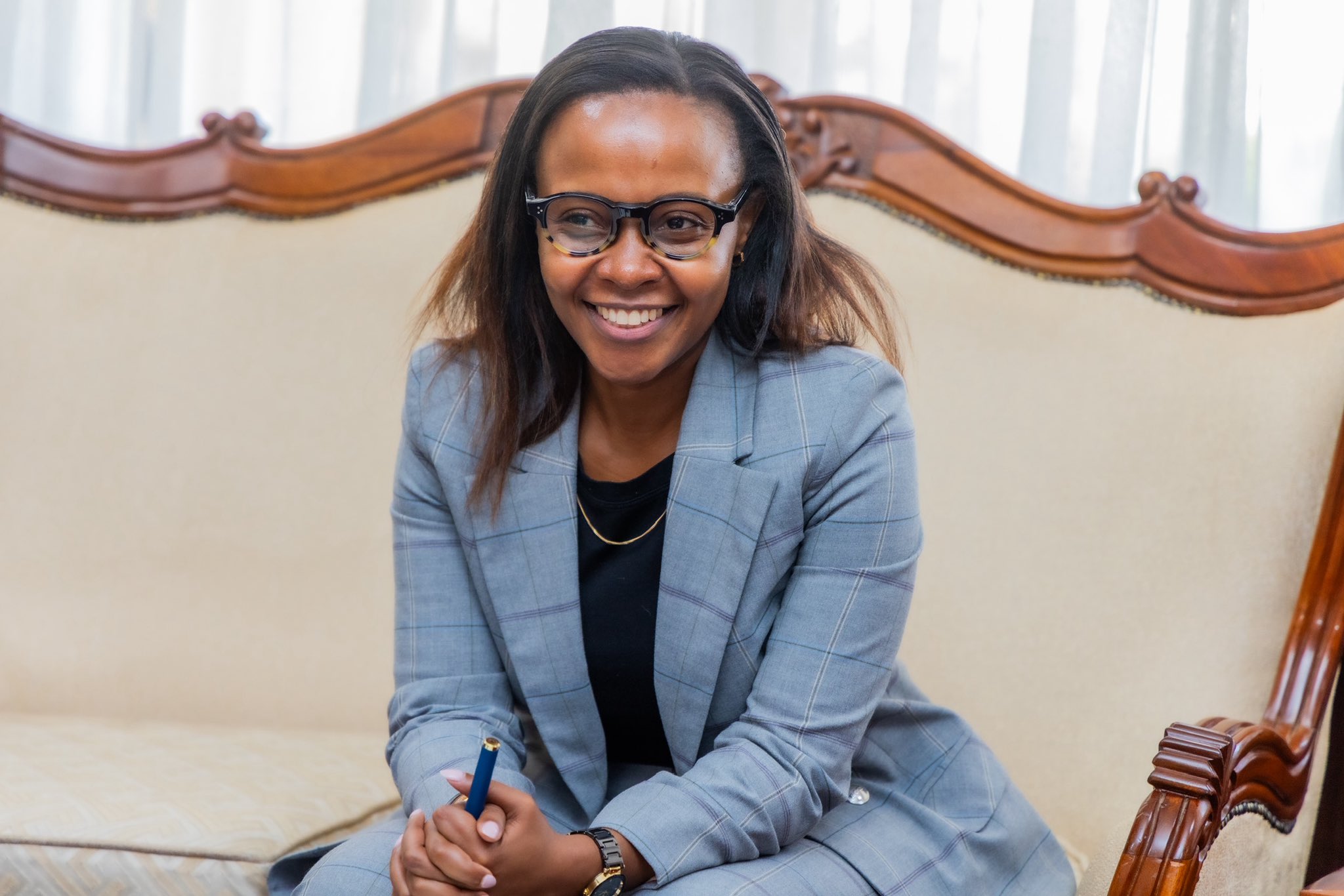
In an exclusive interview with the Star, Blue Economy and
Fisheries Principal Secretary Betsy Njagi outlined this ambitious vision.
She emphasised that President William Ruto’s administration
is on track to deliver the blue economy promise.
The PS noted that fisheries and aquaculture currently
contribute about 0.6-0.7 per cent of national GDP.
She said total fish production in 2024 reached 168,424
tonnes valued at Sh39.6 billion.
Njagi hailed the sector's critical role in employment and
livelihoods, saying it currently supports roughly 69,900 capture fishers and
over 65,452 fish farmers directly.
An estimated 1.2-1.5 million people are engaged across the
value chain, the Fisheries PS said.
When upstream and downstream activities are included,
approximately four million Kenyans depend on fisheries for their livelihoods.
The government has set targets to boost annual sector
earnings to Sh350 billion by 2030.
She cited deep-sea fishing, mariculture, aquaculture, fish
landing sites, cold-chain infrastructure and port modernisation as the way out.
Fish production is projected to increase from 168,000 tonnes
to over 450,000 tonnes, with aquaculture serving as the main growth engine.
Njagi highlighted reforms, including community-based Beach
Management Units and enforcement against illegal fishing.
She said operationalisation of the Kenya National Shipping
Line and environmental initiatives such as mangrove restoration are also
prioritised.
Kenya aims to position itself as a regional maritime hub,
significantly elevating the blue economy's GDP contribution by 2030, the PS
quipped.
Below are excerpts from the interview:
Q: The Blue Economy
has been described as Kenya's next frontier. What does this mean for ordinary citizens,
and how is the maritime sector contributing to the government's broader
economic transformation agenda?
A: Referring to the Blue Economy as Kenya’s next frontier
means it is a sector with huge untapped potential which, when sustainably
harnessed, can transform the economy. This is through jobs, affordable seafood
for food security, tourism revenue and resilient coastal infrastructure. This
directly boosts household incomes under BETA and increases exports. The
maritime sector is targeting between Sh150 billion and Sh300 billion annually
through fisheries, aquaculture and shipping, supported by reforms such as
fisheries regulations, green shipping and improved port efficiency.
Q: Kenya has long
spoken about unlocking ocean-based wealth. What factors have slowed progress in
the past, and how is your office addressing them?
A: Past slowdowns stemmed from policy gaps, illegal,
unreported and unregulated (IUU) fishing, port delays and low investment. We
are accelerating progress through the 2023–27 Strategic Plan, the National Blue
Economy Strategy (2025–30), and aquaculture expansion. Measures include vessel
monitoring, regulatory streamlining and community patrols through Beach
Management Units. We are also transforming 445 BMUs into cooperatives and
supporting deep-sea fishing through the provision of vessels. The National
Mariculture Resource and Training Centre provides the capability for the
production of marine fish seed, training for the farmers and an innovation and
demonstration farm for different research interventions for different marine
species.
Q: How are Kenya's
major ports performing in terms of efficiency and competitiveness?
A: Mombasa is handling rising cargo volumes with improved
global rankings, while Lamu is expanding as a transhipment hub. Both ports are
becoming more competitive through digital systems. Reforms such as KRA-KPA
decongestion, dedicated container terminals and transparent cargo dwell times
are reducing delays and attracting investors.
Q: Kenya has depended
heavily on foreign shipping lines. Are there plans to strengthen local
capacity?
A: Kenya now benefits from an operational national shipping
line, which we are strengthening through fleet expansion, modern vessels and
strategic routes to reduce reliance on foreign operators. We are supporting
local ship owners through incentives, training and financing, alongside port
reforms such as digital customs clearance. These measures are expected to cut
the cost of doing business by 20-30 per cent and build maritime self-reliance.
Q: Coastal and inland
fishing communities often feel excluded. How are you addressing this?
A: We are prioritising them through value chain programmes
such as Kenya Marine Fisheries and Socio-Economic Development and Aquaculture
Business Development Programme. Others are restocking of Lake Naivasha and
co-management models to ensure equitable benefits. IUU fishing is being tackled
through surveillance technology, enforcement and alternative livelihoods. The
Kenya Fisheries Service is working closely with BMUs to strengthen community
stewardship.
Q: How many jobs has
the Blue Economy generated, and what opportunities exist for youth and women?
A: The sector has generated thousands of jobs in
aquaculture, sustainable fishing, blue carbon initiatives and tourism.
Programmes such as the Africa Enterprise Challenge Fund’s Investing in Women in
the Blue Economy target 1,490 jobs for women. Youth can access opportunities
through maritime training in shipping, logistics and sustainable technologies.
We are also preparing to launch the Women’s International Shipping and Trading
Association to strengthen women’s participation in the sector.
Q: What measures are
in place to address climate change and environmental threats?
A: We have rolled out nature-based solutions, including
pollution response plans, plastic bans and climate-resilient aquaculture. These
are complemented by marine protected areas, ecosystem restoration and green
technologies. Initiatives such as mangrove conservation and coral reef restoration
are helping protect biodiversity while supporting fisheries and eco-tourism.
Q: Is Kenya
attracting investment into the Blue Economy, and what role do partnerships
play?
A: Yes, we are attracting foreign direct investment through
investor-friendly policies and public-private partnerships, particularly in
ports, infrastructure and aquaculture. The fisheries sub-sector alone
contributed Sh37 billion in 2025, demonstrating tangible progress. We are
strengthening investor confidence through fish stock assessments, safety
standards, regulatory frameworks and infrastructure development in key counties
such as Homa Bay, Turkana, Kilifi, Lamu and Mombasa.
Q: How is Kenya
strengthening maritime security and positioning itself as a regional hub?
A: Kenya remains a leader in regional anti-piracy efforts,
with the navy and coast guard actively patrolling our waters. We are
implementing governance reforms to improve coordination among maritime
agencies, alongside regional cooperation frameworks such as the Djibouti Code
of Conduct. These efforts enhance security, support trade and position Kenya as
a maritime hub in East and Central Africa.
Q: What is your
long-term vision for the sector?
A: The focus is on moving from rhetoric to reality by
delivering tangible assets such as operational landing sites, sustainable
exploitation of marine resources and a commercialised aquaculture and seaweed
industry. Over the next five years, we aim to build a robust, investment-ready
Blue Economy that significantly contributes to GDP. Plans such as the
Sustainable Ocean Plan and Marine Spatial Plan will guide growth, reduce
conflicts and ensure conservation.
Q: What progress has
been made in ensuring jobs on vessels for Kenyans?
A: So far, 72 fishers trained as ship crew have been
employed and regulations now require that at least 45 per cent of crew on
locally registered vessels be Kenyan.
Q: How has the
department mitigated losses from illegal fishing?
A: We have enhanced surveillance and enforcement through
partnerships with global monitoring platforms, vessel tracking systems and
automatic identification systems. All vessels entering Kenya’s Exclusive
Economic Zone are now subject to monitoring, significantly reducing illegal
fishing activities.





![[PHOTOS] The new Ngong –Naivasha Road viaduct](https://cdn.radioafrica.digital/image/2026/06/64d4f771-4432-4aee-ba3c-2f304c4436ec.jpg)




![[PHOTOS] 'Mr Speaker Sir' Gen Z protester in court](https://cdn.radioafrica.digital/image/2026/06/b3e62d8e-25c3-4780-90f9-4eb48b1ce8a7.jpg)