More than 43,000 teachers could be rendered jobless following a court ruling
that declared their engagement under internship terms unlawful.
The Teachers Service Commission (TSC) says it is
now faced with two stark options: terminate the contracts or seek additional funding to absorb them on permanent, pensionable terms.
The commission has described the landmark decision as one that has plunged it
into a major policy and financial dilemma.
The Court of Appeal ruling, delivered on
February 27, was intended to secure better employment terms for teachers.
The
judges found that treating qualified teachers as interns—earning lower pay than
their permanently employed counterparts—amounts to discrimination.
The court
consequently ordered TSC to stop hiring trained and registered teachers under
the internship programme.
In a statement to Parliament, TSC indicated the interns are now staring at possible job losses, even as MPs push for
their absorption through additional funding from the National Treasury.
However, employing all 43,000 teachers carries significant budgetary
implications, a challenge compounded by the country’s tight fiscal space.
For
instance, the government allocated Sh4.8 billion in January 2025 to recruit
20,000 intern teachers.
Appearing before the National Assembly’s
Education Committee, TSC warned that complying with the ruling in its current
form could disrupt learning across the country, given the critical role interns
play in addressing teacher shortages.
“It is true that on February 27, the Court of
Appeal declared the internship programme illegal and unconstitutional,” TSC director of legal services Cavin Anyuor told the committee chaired by Tinderet
MP Julius Melly.
He was responding to Kitutu Masaba MP
Clive Gisairo, who had sought clarity on whether the court granted the
commission a transition period to comply with the directive.
Anyuor said the ruling leaves TSC
with only two options, though consultations are ongoing before a final decision
is made.
“We have two options, to terminate the
contracts or confirm into permanent and pensionable, which means we must look
for additional budgetary allocations,” Melly said.
“We are consulting and the commission will
announce the way forward.”
He spoke while accompanying TSC acting chief executive officer Evaleen Mitei during consideration of the 2025-26
Supplementary Budget Estimates I.
Absorbing the teachers would require billions
of shillings in additional funding, likely piling pressure on the national
budget and setting the stage for a potential standoff with the National
Treasury.
On the other hand, terminating the contracts risks worsening already
strained teacher-to-student ratios, particularly in rural and underserved areas
where intern teachers form a significant share of the workforce.
Stakeholders have already raised concerns that
the uncertainty could destabilise the education sector, urging the government
to intervene and provide a sustainable solution.
Committee chairman Melly backed the absorption of
the interns, warning against any move that could affect those already engaged.
“The best thing you can do is to request
National Treasury for additional funding to absorb the interns,” Melly said.
The commission further revealed it has
suspended future recruitment of teachers under the internship programme unless
the appellate court decision is overturned.
“There will be no future engagement of interns
in Kenya unless the judgment is overturned,” Anyuor said.
The teacher internship programme, rolled out
by TSC, was designed to give graduates classroom experience and a pathway to
permanent and pensionable employment.
For many young teachers, it had offered a
rare opportunity in a job market that has struggled to absorb trained
educators.
In its judgment, the Court of Appeal upheld a
decision by the Employment and Labour Relations Court declaring the policy
unconstitutional.
“Only to that extent does the appeal succeed.
We uphold the declaration by the ELRC that Circular
TSC/DS/RECRUIT/ADVER/18A/VOL II dated January 4, 2023, and the subsequent
internship contracts contravened the provisions of the constitution,” the
ruling reads.
INSTANT ANALYSIS
With the Court ofAppeal ruling in place, the government
faces a harsh reality—it may not have the financial muscle to immediately
absorb all the interns into permanent and pensionable terms. Without additional
budgetary allocation, the only remaining option could be termination of
contracts.


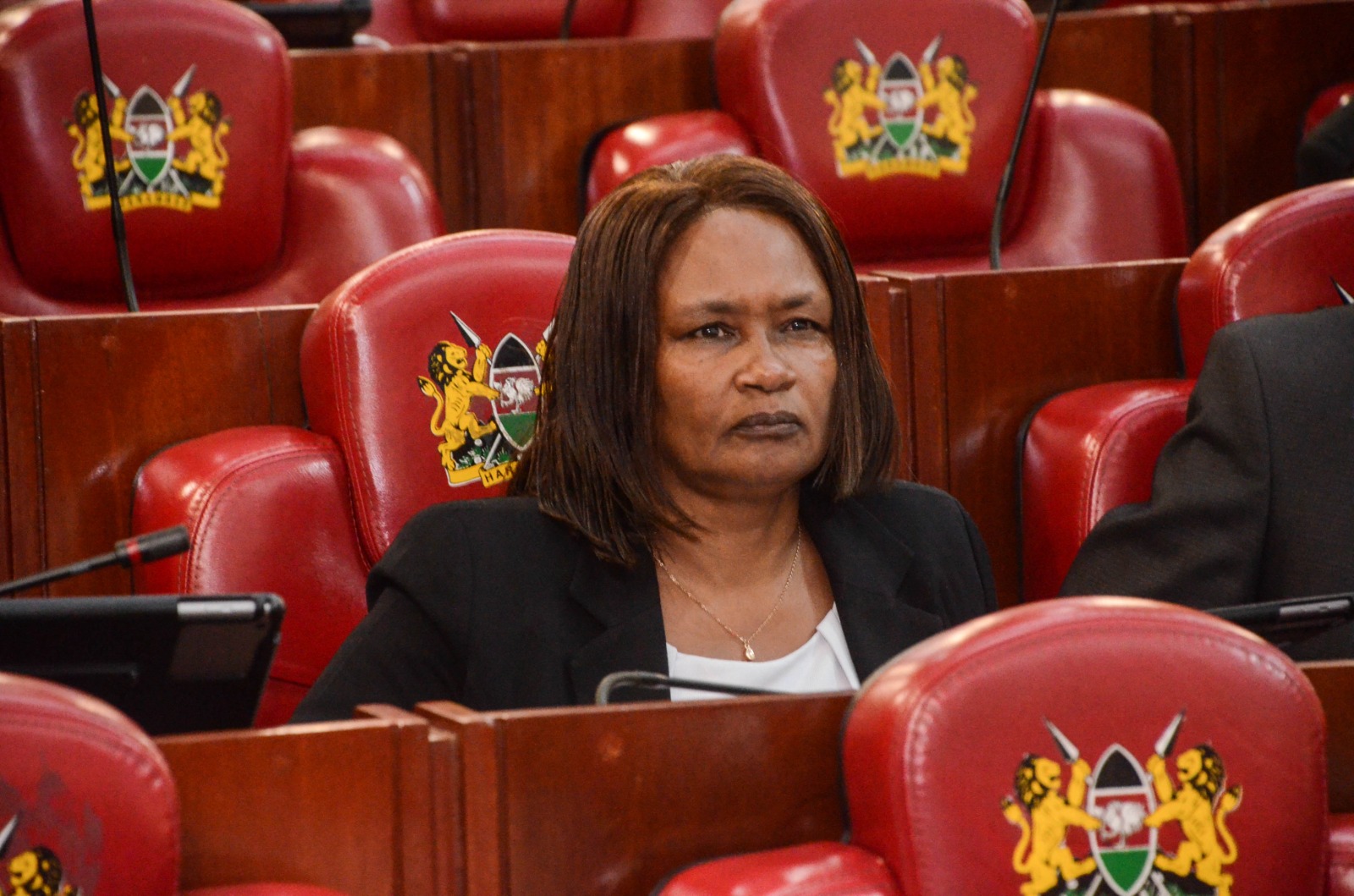 TSC’s acting Chief Executive Officer (CEO) Evaleen Mitei/FILE



![[PHOTOS] The new Ngong –Naivasha Road viaduct](https://cdn.radioafrica.digital/image/2026/06/64d4f771-4432-4aee-ba3c-2f304c4436ec.jpg)










![[PHOTOS] 'Mr Speaker Sir' Gen Z protester in court](https://cdn.radioafrica.digital/image/2026/06/b3e62d8e-25c3-4780-90f9-4eb48b1ce8a7.jpg)