A clash is looming
between the government and civil servants over plans to revise their terms of
service from permanent and pensionable to five-year contracts.
Kenya’s slightly more
than a million civil servants could work under new terms in reforms to be
proposed to the Cabinet.
Public Service CS
Geoffrey Ruku said his ministry is working on a policy that will change the
terms of service of the 1,054,425 workers, who retire at 60 years.
A similar proposal in
2024 by then CS Moses Kuria sparked a furious pushback by the Union of Kenya
Civil Servants (UKCS).
“We are working on
public service transformation, which we are doing, and I will later be
presenting to the Cabinet committee next week and later present before the full
Cabinet,” Ruku said.
Public servants will
sign contracts for five years, after which the government will decide whether
to renew the contract or not depending on the performance.
The CS said Kenya's
youthful population demands services to be provided innovatively.
He said there is a need
to ensure that the services are being offered in a unified and digitised
manner.
Ruku spoke on Thursday during the launch
of the Public Service Commission Strategic Plan 2025-29 and Citizen Service
Delivery Charter at KICC, Nairobi.
In 2024, UKCS secretary
general Tom Odege called the proposal to end permanent and pensionable terms
"reckless," arguing it would require extensive changes to labour
laws.
He said the government
could not afford the immediate payout of accrued pensions that would be
triggered by such a change.
He maintained that once
a Collective Bargaining Agreement was signed and registered in court, its
terms—including salary increments—were legally binding and could not be altered
or deferred by administrative circulars.
The PSC strategic plan
CS Ruku unveiled on Thursday aims to transform public service
delivery through enhanced efficiency, accountability, professionalism and
citizen-centric governance, while the service charter outlines timelines and
commitments for delivery of services to the citizens.
It outlines key reform
priorities designed to strengthen institutional performance, modernise human
resource management, entrench national values and principles of governance and
align the public service with Kenya’s development agenda, including Kenya
Vision 2030 and the Bottom-up Economic Transformation Agenda.
The five-year blueprint
focuses on strengthening performance management systems to ensure optimal
productivity at institutional, departmental and individual levels, enhancing
competitive recruitment processes to build a competent, diverse and
representative workforce, with special focus on marginalised groups and persons
with disability.
It also seeks to streamline
procedures to eliminate bureaucratic delays, including enforcement of service
charters requiring recruitment processes to be concluded within 90 days and
promotions within 75 days. Some Sh35 billion is needed to implement the plan in
five years.
Ruku said the Public
Service Commission plays a significant role in advancing the national
development agenda by hiring and retaining qualified human resources to
implement national programmes and projects effectively and efficiently.
He said the commission
is expected to ensure requisite skills mapping, recruitment, and retention of
skilled and ethical human resources through research-based interventions.
Human capital is one of
the most valuable intangible assets to an organisation, Ruku said.
He cited five key
components of human capital that are of interest to
his ministry: employee talent, experience, management skills,
institutional professional training procedures and client knowledge.
Ruku said the state is
concerned about employee retention and turnover, compliance with labour
laws and regulations, employee engagement and productivity, performance
management and employee development.
The CS said
the current administration, through his ministry, is concerned about
the challenges the country faces in managing human capital.
“In our view, the most
significant human capital risks in 2026 are talent shortages, skills gaps,
employee burnout, and leadership succession issues.”
Ruku said over the
years, public servants have been under sharp scrutiny by citizens and civil
organisations for their poor conduct and lack of commitment to the values and
principles of governance and public service required by the constitution.
“The resulting vices
include delayed service to the public, corruption and impunity among public
servants,” Ruku said.
The level of impunity,
especially among the senior cadre of public servants, is shocking.
He said interns reported
to work earlier than their bosses, a move that has compromised service
delivery.
"At several
institutions, public officers are not reporting for duty on time, and some
service points are not operating efficiently. Cases of absenteeism, lateness
and general laxity in adherence to working hours undermine service delivery and
erode public confidence," he said.
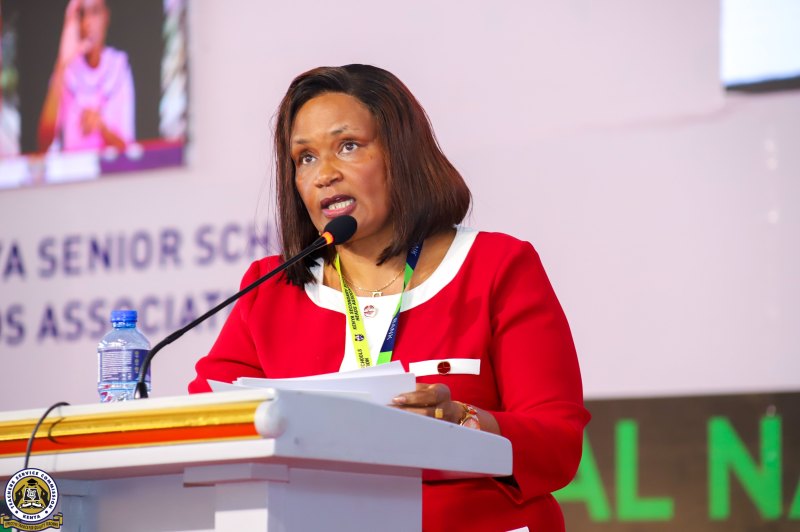
Public Service
Commission vice chairperson Mary Kimonye said the strategic
plan lays the foundation for the future of the public service in the
light of new and emerging demographical and technological
developments.
“The Strategic Plan
2025-29 lays a strong emphasis on technology, good governance, and the agility
and innovation of public servants,” she said.
Kimonye said
the shifting landscape of work dynamics, driven by generational
characteristics such as Gen Z and Gen Alpha, pose new challenges for the public
service.
She said the skills mix
and etiquette of public service inherited from the colonial government may not
be conducive to drawing out the best in young Kenyans entering the workforce.
Kimonye said the rapidly
advancing technologies, such as artificial intelligence, the Internet of
Things, and machine learning, will significantly affect the quality and
efficiency of public service delivery.
Auditor General Nancy
Gathungu said her office had identified several challenges in the public
service including lack of or incomplete employment records, unmatched skills to
roles and responsibilities, unsupported payments of salaries and allowances,
manipulation of payroll data and over-staffing.




![[PHOTOS] The new Ngong –Naivasha Road viaduct](https://cdn.radioafrica.digital/image/2026/06/64d4f771-4432-4aee-ba3c-2f304c4436ec.jpg)









![[PHOTOS] 'Mr Speaker Sir' Gen Z protester in court](https://cdn.radioafrica.digital/image/2026/06/b3e62d8e-25c3-4780-90f9-4eb48b1ce8a7.jpg)