

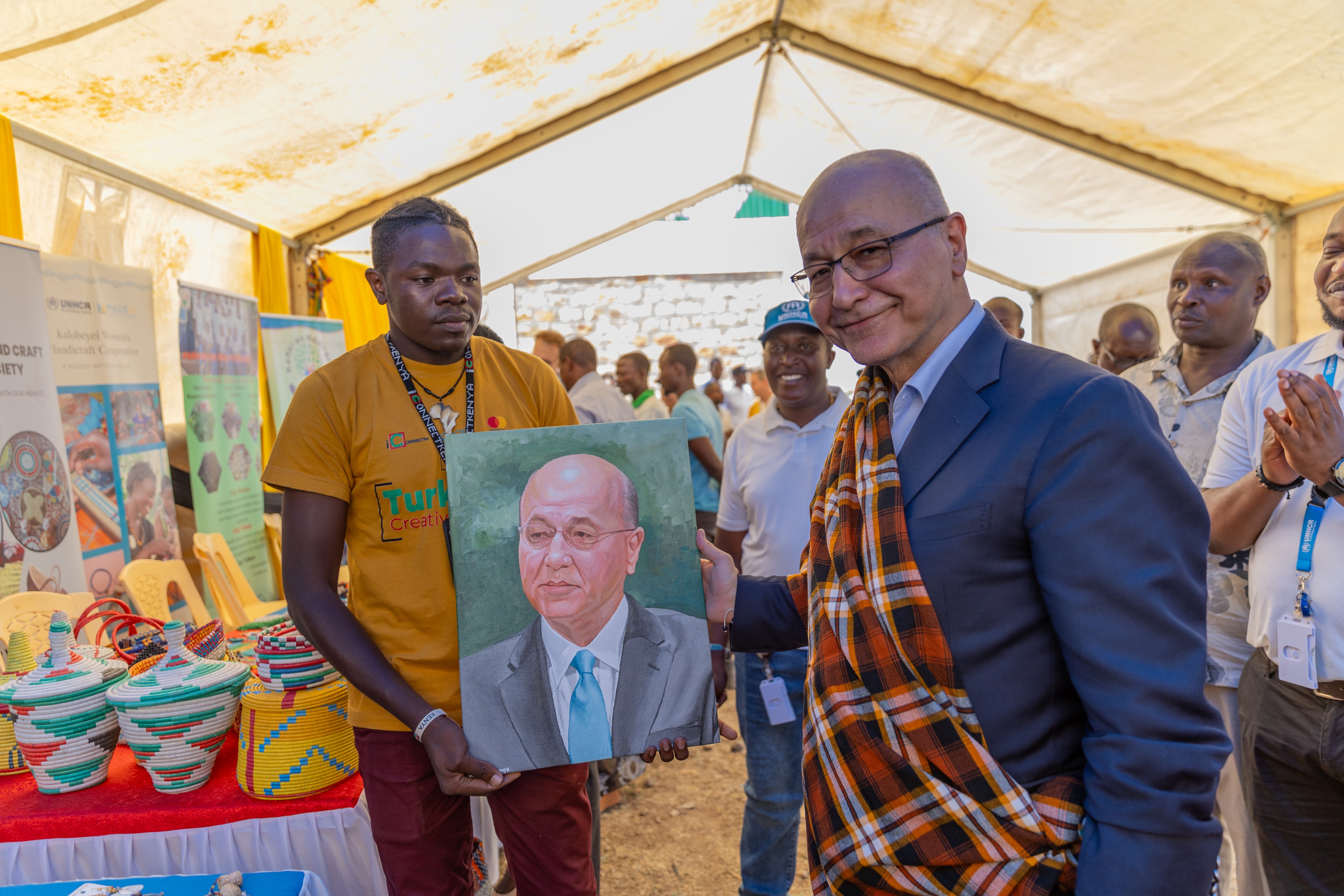
The Building Evidence to Enhance the Welfare of Refugees
and Host Communities in Kenya report says this is happening at a
time when the number of refugees entering the country is rapidly rising.
The report, co-produced with UNHCR and Centre for Effective
Global Action, says Kenya’s refugee population increased significantly from
555,183 in May 2022 to 835,793 by December 2025.
This surge is effectively placing immense pressure on
humanitarian systems and host communities.
The study noted a growing mismatch
between rising needs and declining resources, with aid agencies struggling to
maintain basic support for refugees.
“UNHCR Kenya and the UN World Food Program have faced
increased budget cuts, making the promotion of self-reliance of refugees even
more critical. There have been many instances of reduction (and volatility) of
food rations as well as cash transfers, which often caused unrest in refugee
camps,” the report says.
According to the study, the minimum food basket of Sh2,500
per person per month as of 2024 has reduced, with assistance covering only 40
to 60 per cent of its value throughout the year.
In the wake of sustained aid cuts, the humanitarian agencies
have proposed implementing the Differentiated Assistance model whereby refugees
will receive aid based on their level of vulnerability.
While nearly all camp refugees continue to receive some form of assistance,
the total dollar value of assistance has sharply decreased. The median amount
of aid received by refugees has fallen by 53 per cent in Kakuma, 23 per cent in
Kalobeyei and 33 per cent in Dadaab.
Food vouchers were suspended during May–June 2024, and
refugees only received food items in-kind during that period, the report says.
This has raised fears of increasing hunger, malnutrition,
and deteriorating health conditions in camps already struggling with
overcrowding and limited resources.
The report notes that while Kenya continues to host one of
the largest refugee populations, the scale of new arrivals has outpaced funding,
threatening to reverse gains made in improving living standards and economic
opportunities in refugee-hosting areas.
Decline in cash transfer programme, which many refugee
families rely on to purchase food, clothing, and other basic necessities, has
also been linked to unrest in refugee camps.
The report warns that reduced aid could push both
refugees and host communities deeper into poverty, worsening already fragile
living conditions.
Overcrowding in camps is putting
pressure on housing, sanitation, and healthcare services, increasing the risk
of disease outbreaks.
Education is another sector under strain as schools in
refugee-hosting areas are experiencing increased enrolment due to the growing
population. However, limited resources and funding gaps threaten access to
quality education for thousands of children.
Prolonged disruptions to education could have long-term
impacts on human capital development among refugee populations.
Beyond funding challenges, the report highlights the growing
role of climate shocks in worsening the humanitarian situation.
Recurring droughts and floods across the region have reduced
agricultural productivity, increased food insecurity, and contributed to
displacement. In refugee camps, these climate-related pressures are
exacerbating already difficult living conditions, particularly in areas where
water and food resources are scarce.
Climate variability is also affecting host communities that
rely on agriculture and pastoralism, increasing competition for limited natural
resources such as water and grazing land.
"Without stronger climate resilience
measures, environmental shocks could further deepen poverty and displacement in
the region," the report warns.
The sharp rise in refugee numbers coincides with escalating
instability in the Horn of Africa region and the Great Lakes region.
Since 2022, conflict in Sudan has displaced millions of
people, many of whom have fled to neighbouring countries. At the same time,
insecurity has persisted in South Sudan and the eastern DRC.
The surge in terror attacks by al-Shabaab in Somalia has
also contributed to displacement in the region, with some refugees seeking
safety in Kenya.
For instance, the UN Commission on Human Rights in South
Sudan in October last year said the escalating conflict had forced hundreds of
thousands to flee.
The commission said the renewed violence has forced at least
300,000 people out of South Sudan, with 25,000 ending up in Kenya. This, it
noted, had an impact of deepening an already dire regional refugee crisis.
The report also highlights the growing strain on communities
living near refugee camps. Increased demand for resources such as water,
healthcare, education, and employment opportunities is intensifying pressure on
already stretched local infrastructure.
In many areas, host communities face similar economic
challenges as refugees, making it harder for both groups to sustain
livelihoods.
The World Bank recommends supporting host communities as
part of broader development strategies, which is being executed through the
Shirika Plan.
Without such interventions, tensions over
scarce resources could increase and undermine social cohesion in
refugee-hosting regions.
The calls for renewed international support and
stronger partnerships between humanitarian agencies, development institutions,
and governments to address the crisis.
It noted the need for sustained funding to maintain
food assistance, cash transfers, and essential services, as well as longer-term
investments in infrastructure, livelihoods, and climate resilience.
![[PHOTOS] The new Ngong –Naivasha Road viaduct](https://cdn.radioafrica.digital/image/2026/06/64d4f771-4432-4aee-ba3c-2f304c4436ec.jpg)







![[PHOTOS] 'Mr Speaker Sir' Gen Z protester in court](https://cdn.radioafrica.digital/image/2026/06/b3e62d8e-25c3-4780-90f9-4eb48b1ce8a7.jpg)