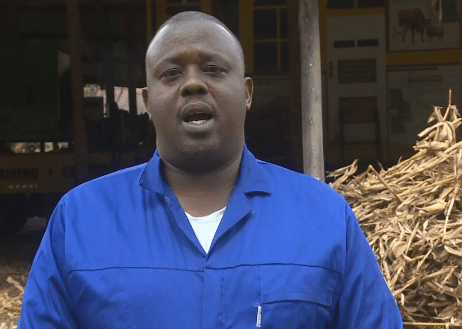



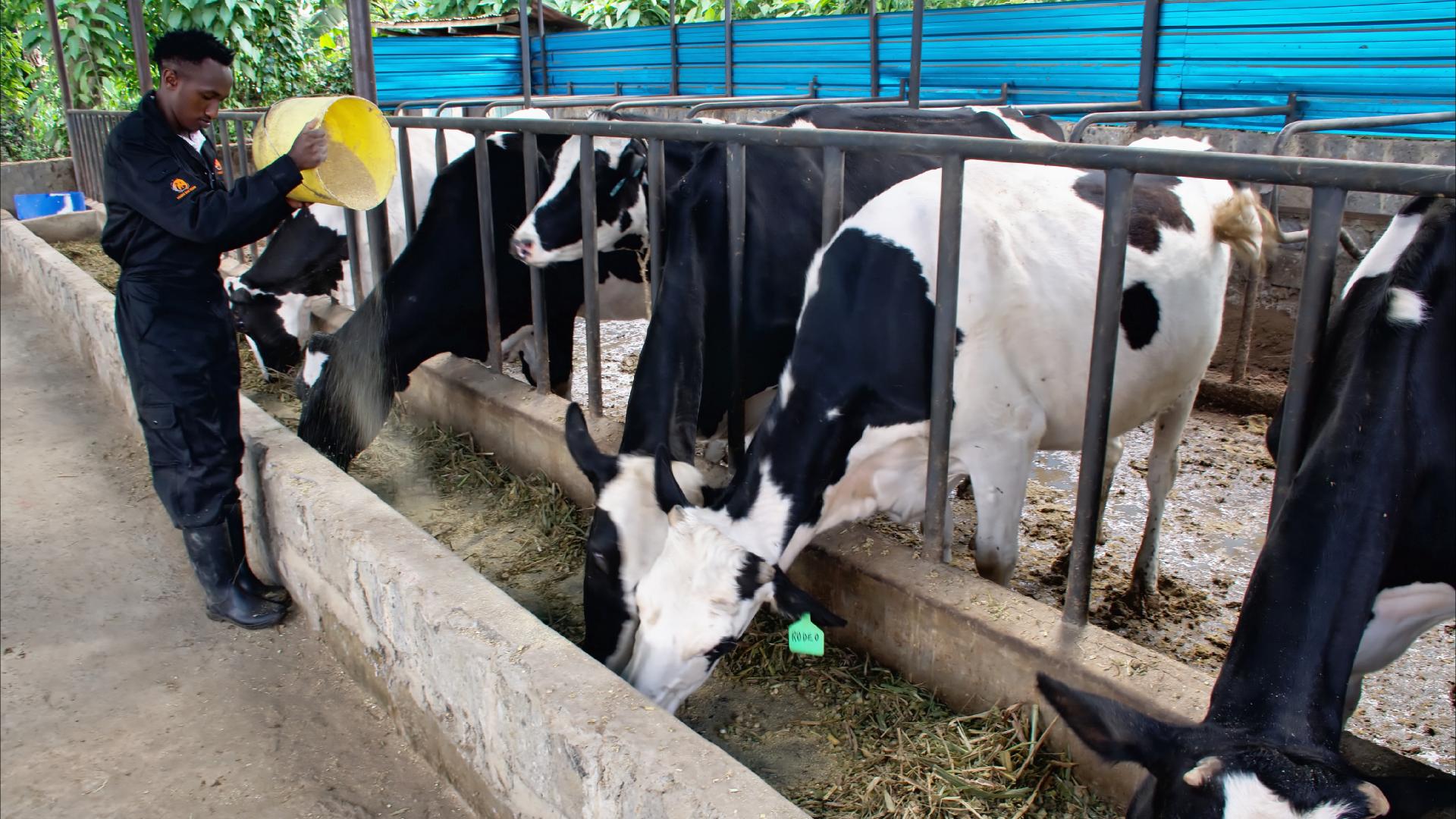
 Kelvin Gitau, CEO of Yound Don farm, feeds dairy cows at his farm./AGATHA NGOTHO.
 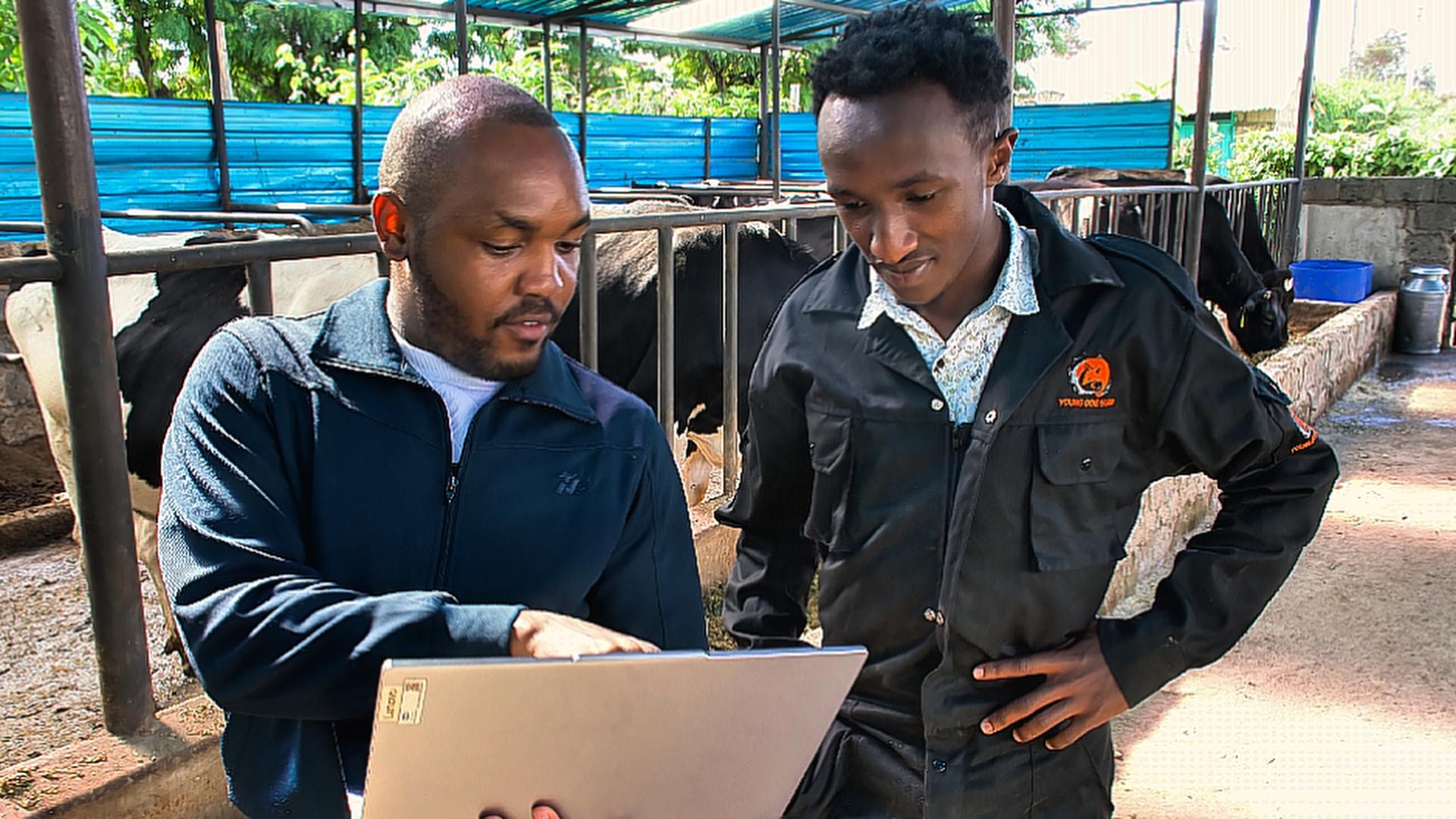 Kevin Gitau receives extension services from Gachenia Kinyanjui, a DEO at Githunguri Dairy Farmers Cooperative Society /AGATHA NGOTHO
When Kiambu dairy farmer Kelvin Gitau hears the hum of an electric motorbike approaching his farm, he knows help has arrived.
For years, accessing timely extension services meant waiting for hours or even days, for an officer to navigate long distances on fuel-powered bikes, often slowed by cost and breakdowns.
Today, the arrival of a Dairy Extension Officer (DEO) on a silent, clean-energy e-bike gives hope to farmers in Kiambu.
Kenya’s dairy sector is embracing e-mobility at a time when the world is working to curb carbon emissions and adopt cleaner, climate-friendly technologies.
In Kiambu county, that shift has taken shape through the introduction of 19 electric motorbikes to the local dairy cooperative society.
Gitau who is the founder and CEO of Young Don Dairy Farm, said the e-bikes are expected to make extension services faster, cheaper and more reliable for dairy farmers like him.
“With improved mobility, digital systems and fresh training for extension officers, farmers are hopeful,” he added. “Most farmers, especially youth, lack proper knowledge on dairy farming. With increased access to professional support, many will be inspired to venture into the dairy value chain.”
Gitau said even educated young people, despite having training in various professions, often lack hands-on understanding of dairy farming.
“I am advantaged because I got knowledge from my parents, but still, as a dairy farmer with a background in a different profession, I need support from DEOs,” he said.
The electric motorbikes were provided through a partnership between the United Nations Industrial Development Organization (UNIDO) and Tetra Pak, with financing from the Embassy of Sweden in Kenya, under the Pathways to Profitable Dairy Farming (Maziwa Faida) project.
“This investment reflects a commitment to modernising Kenya’s dairy sector through innovation, sustainability and strong public-private-development partnerships,” said Maina Karuiru, UNIDO’s national project coordinator.
Karuiru said by giving DEOs clean, efficient transport, the project ensures they can visit more farmers more often boosting productivity, improving livelihoods, and strengthening the dairy ecosystem.
Gitau praised the Maziwa Faida initiative for expanding the number of extension officers and equipping them with both skills and modern tools. “The biggest beneficiaries are farmers like us,” he added.
Githunguri Dairy Farmers Cooperative Society board chair John Ndichu said all 19 e-bikes will be assigned to newly recruited DEOs, also hired under the Maziwa Faida project.
“The additional workforce has significantly improved access to extension support, cutting the farmer-to-DEO ratio from 700:1 to 350:1. By halving the number of farmers each DEO has to attend to, we ensure every farmer is visited at least once in 60 days,” Ndichu said.
Key challenges that the cooperative’s farmers have been facing include breeding, feeding, hygiene and general livestock and farm management.
With increased number of extension officers and subsequent better services delivery to farmers, he expressed optimism that these challenges would be addressed.
Farmers will also be trained on fodder production to reduce dependency on commercial feed, thus reducing on cost of production and increasing profit margins.
“We have witnessed an increase in milk delivered by 30,000 litres daily and we hope to see this increase to 50,000 per day,” Ndichu said.
Through the project, all the 36 DEOs received a laptop each, enhancing efficiency in services such as record-keeping and feed formulation.
“Previously, we used to rely on bulky and risky paper-based systems and often had to return to the office to upload data into a central computer, which was not just tiring, but also time consuming and risky-just in case papers got lost or damaged,” Dorcas Nyambura, a DEO said.
They have also been trained on a programme known as Rumen8, which enables them to formulate feeds on-site, ensuring that animals’ nutritional needs are met accurately and promptly.
The cooperative is also set to benefit from establishment of a Dairy Academy which will be used as a training place for farmers and other stakeholders along the dairy value chain.
The academy is envisioned to be a center of excellence for not just Kenyans but other stakeholders in the East African region and beyond.
“We don’t just foresee trainees coming from other countries but also trainers moving from here to other countries to train,” said Dairy Development, Tetrapak project manager Micheal Van deb Berg.
The fact that the ‘older’ DEOs are already training the newly hired is evidence of the project’s sustainability even beyond its implementation period, he said.
Kenya’s dairy sector accounts for between three and four per cent of the national GDP, and 12 per cent of agricultural GDP, according to the Kenya Investment Authority.
The dairy sector supports approximately 1.8 million rural households. Dominated by smallholder farmers who account for 80 per cent of producers, this sector employs 700,000 people along the value chain.