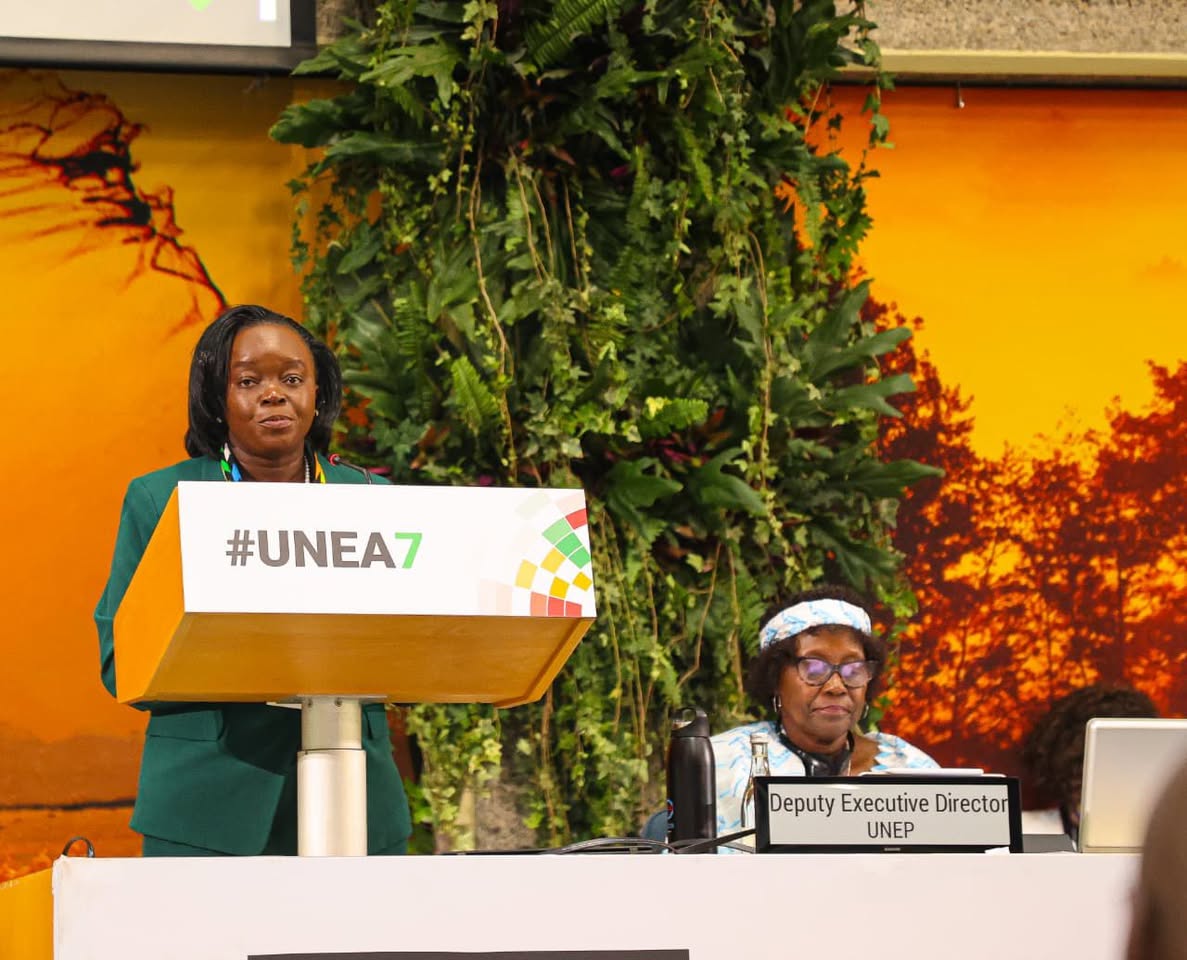
 Environment CS Dr Deborah Barasa makes remarks during the opening ceremony of the seventh session of UN Assembly at the UN Complex in Nairobi./HANDOUT
The seventh session of the UN Environment Assembly (UNEA-7)
opened on Monday in Nairobi, bringing together ministers, intergovernmental
organisations, civil society, youth representatives and private sector leaders
from around the world to advance solutions for a resilient planet.
As the UN’s highest environmental decision-making body, UNEA
comprises all 193 member states and meets biennially to set priorities for
global environmental policy.
Its resolutions, while not legally binding, guide the work
of the UN Environment Programme (UNEP) and often lay the groundwork for
precedent-setting international agreements.
President of UNEA-7 and head of Oman’s Environment Authority,
Abdullah Bin Ali Al-Amri, said the assembly comes at a critical juncture, as
communities worldwide continue to face climate change, biodiversity loss, land
degradation, pollution and waste.
“Our success this week depends not only on the outcomes we
adopt but also on how we reach them — through trust, transparency, compromise
and inclusiveness,” he said.
UNEP executive director Inger Andersen urged delegates to
rise to the challenge, noting that global temperatures are on track to exceed
1.5°C within the next decade, intensifying environmental and social impacts.
“Ecosystems are disappearing, land is degrading, dust storms
are intensifying, and toxins continue to pollute our air, water and land,” she
said, adding that turbulent geopolitical waters further complicate multilateral
efforts.
Environment Cabinet Secretary Dr Deborah Barasa said a
resilient planet requires more than protecting ecosystems.
“It means using resources wisely, building just and
inclusive societies, ensuring economic growth respects planetary boundaries and
embracing innovation to prevent harm before it happens,” she said.
She highlighted Kenya’s active role at UNEA-7, sponsoring
three resolutions, co-sponsoring two others and prioritising sustainable
solutions, resilience and inclusive environmental governance.
UNEA-7 was preceded by forums for youth, cities and regions,
and major stakeholder groups. More than 1,000 young delegates issued a Global
Youth Declaration outlining youth priorities for the assembly.
During the week, participants will negotiate 15 draft
resolutions addressing issues from glacier conservation to the environmental
impact of artificial intelligence.
High-level discussions will explore sustainability in industry, global finance and human health.
Heads of state, including Kenya’s President William Ruto,
will address the assembly during its penultimate day.
On the sidelines, UNEP will launch the seventh edition of
its Global Environment Outlook (GEO-7) on December 9 and announce five global
Champions of the Earth for 2025.
UNEA-7 has registered over 6,000 participants from more than 180 countries, including 79 ministers and 35 vice-ministers, convening under the theme: Advancing sustainable solutions for a resilient planet.