Kenya is set to increase the national black rhino population growth rate from the current 5 per cent to 8 per cent annually, President William Ruto has announced.
The shift, he said, will significantly accelerate the country’s long-term conservation goals of reaching 1,450 rhinos by 2030 and 2,000 rhinos by 2037.
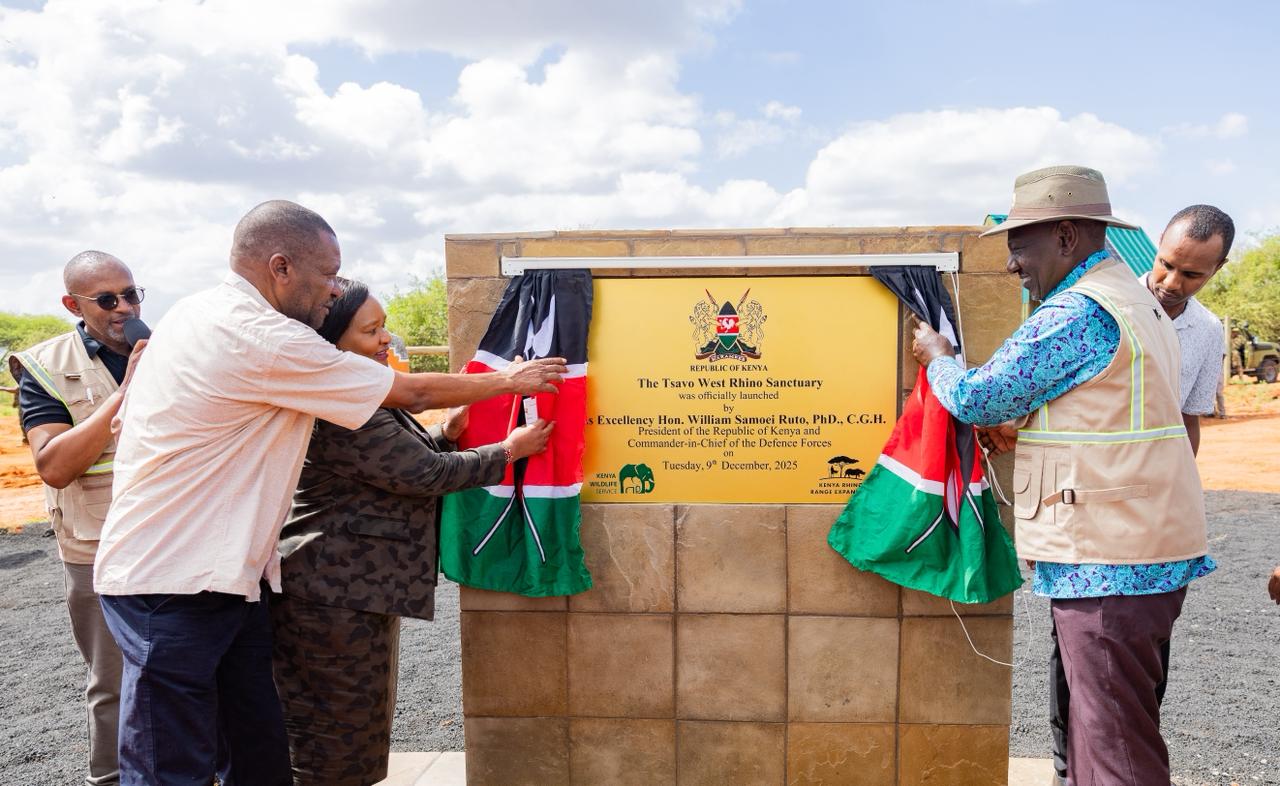
Speaking during the launch of the expansive Tsavo West Rhino Sanctuary, Ruto said the improved growth rate will be driven by expanded habitat, upgraded security systems, better genetic management, and reduced overcrowding in existing sanctuaries.
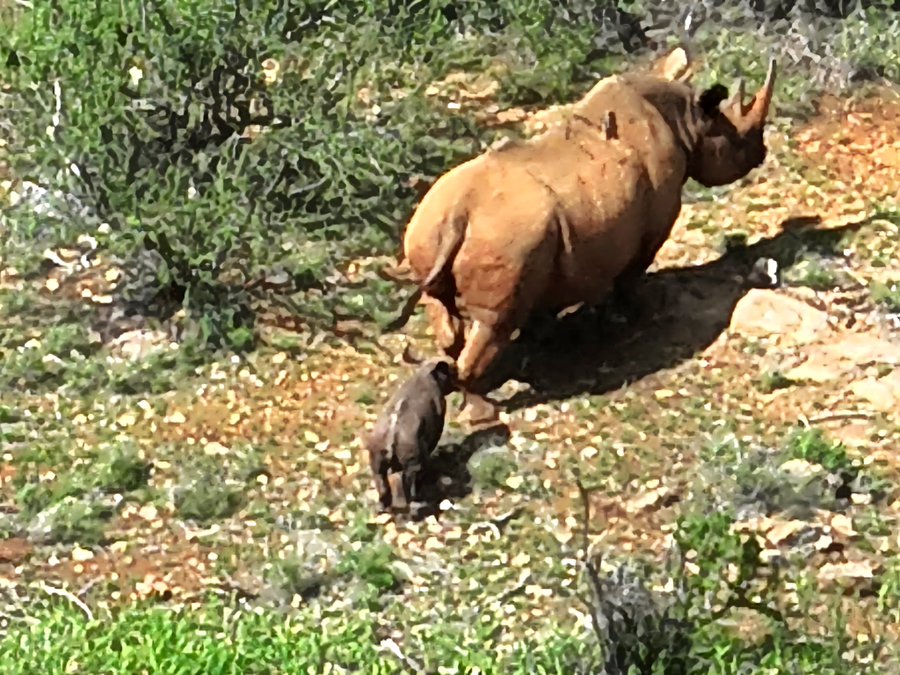
“Today, Kenya is home to about 2,100 rhinos, including 1,060 black rhinos, 1,040 southern white rhinos, and the world’s last two northern white rhinos. We have in our custody nearly 78 per cent of the global population of the Eastern Black Rhino,” he said.
The newly unveiled sanctuary, spanning more than 3,200 square kilometres, is now the largest rhino sanctuary in the world.
For decades, the Ngulia Rhino Sanctuary — only 92 square kilometres in size — has held nearly 150 black rhinos, more than two and a half times its ecological capacity.
The extreme congestion has limited breeding, increased territorial conflict, reduced calf survival, and placed immense stress on the animals.
Across the country, more than 80 per cent of Kenya’s black rhino population lives in similarly overstocked sanctuaries, a factor Ruto said has constrained national growth efforts for years.
“With this expansion, the 150 rhinos in Ngulia will now merge with 50 rhinos in the Tsavo West Intensive Protection Zone to form a single founder population of 200 black rhinos, the largest black rhino population in Kenya and among the most significant on the African continent,” the President added.
Historically, the greater Tsavo ecosystem was one of Africa’s most important black rhino strongholds, harbouring more than 8,000 rhinos in the early 1970s.
Years of intense poaching, prolonged droughts, and rising land pressure led to a catastrophic decline, with the population falling to fewer than 20 by 1989.
Ahead of the sanctuary’s expansion, Kenya conducted extensive feasibility studies, a full environmental and social impact assessment, an independent risk review, and broad community consultations across Taita-Taveta County.
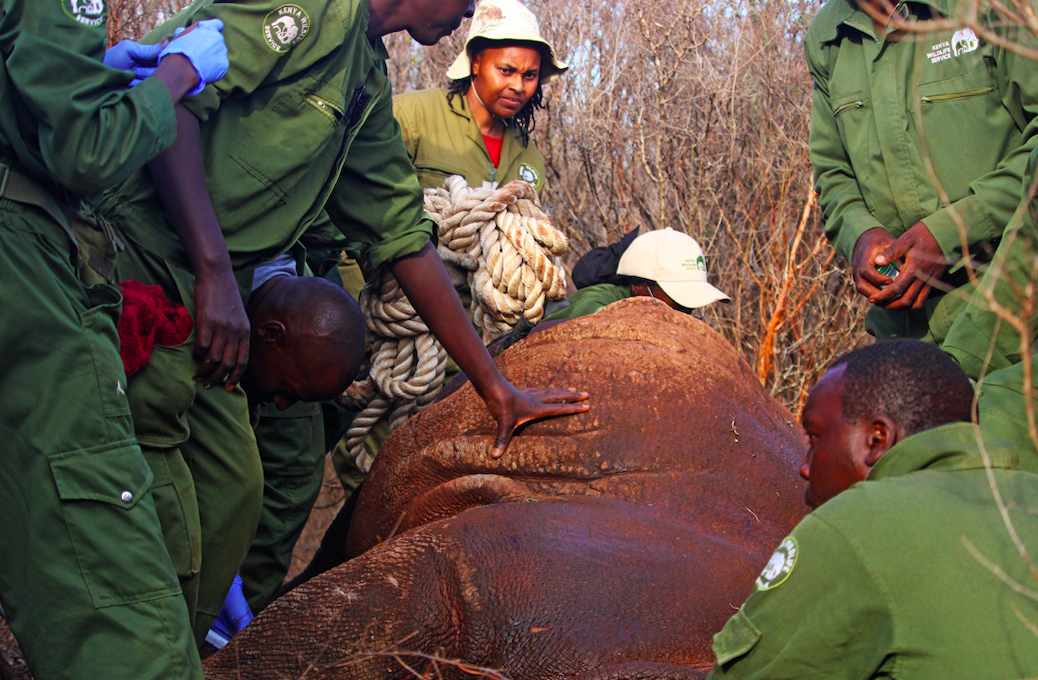
Ruto noted that the country also undertook the largest rhino monitoring and tagging operation ever recorded globally.
“As a result, 90 rhinos were safely immobilised while 89 were fitted with modern tracking devices and digital identifiers, enabling real-time, landscape-wide monitoring of their movement, health, and security,” he said.
To protect the sanctuary, the government has deployed advanced AI-enabled camera systems, expanded drone and aerial surveillance, extended Long Range Wide Area Network connectivity, strengthened encrypted digital radio networks, and increased patrol capacity with new vehicles and over 300 security personnel.
A dedicated fixed-wing aircraft has also been assigned for rapid response operations.
Infrastructure development has similarly expanded, with more than 250 kilometres of upgraded fencing installed, 40 new ranger houses and operational bases constructed, and extensive access roads, cutlines and firebreaks opened.
Water infrastructure has also been strengthened to support both wildlife and conservation operations.
Through the Kenya Rhino Range Expansion Initiative, over $4.7 million (Sh606 million) has been invested in enhancing Tsavo’s protection systems, cementing its position as one of the most technologically advanced wildlife security landscapes in Africa.
Beyond conservation, the new sanctuary is already stimulating economic transformation.
Jobs have been created in ranger deployment, surveillance, monitoring, construction, logistics, roadworks, and fencing.
By 2030, the initiative is projected to generate more than 18,000 jobs and over $45 million (Sh5.8 billion) in conservancy and tourism-related revenue.
Ruto said the launch represents a turning point for Kenya’s rhino recovery efforts and sets a new global benchmark for large-scale wildlife conservation.