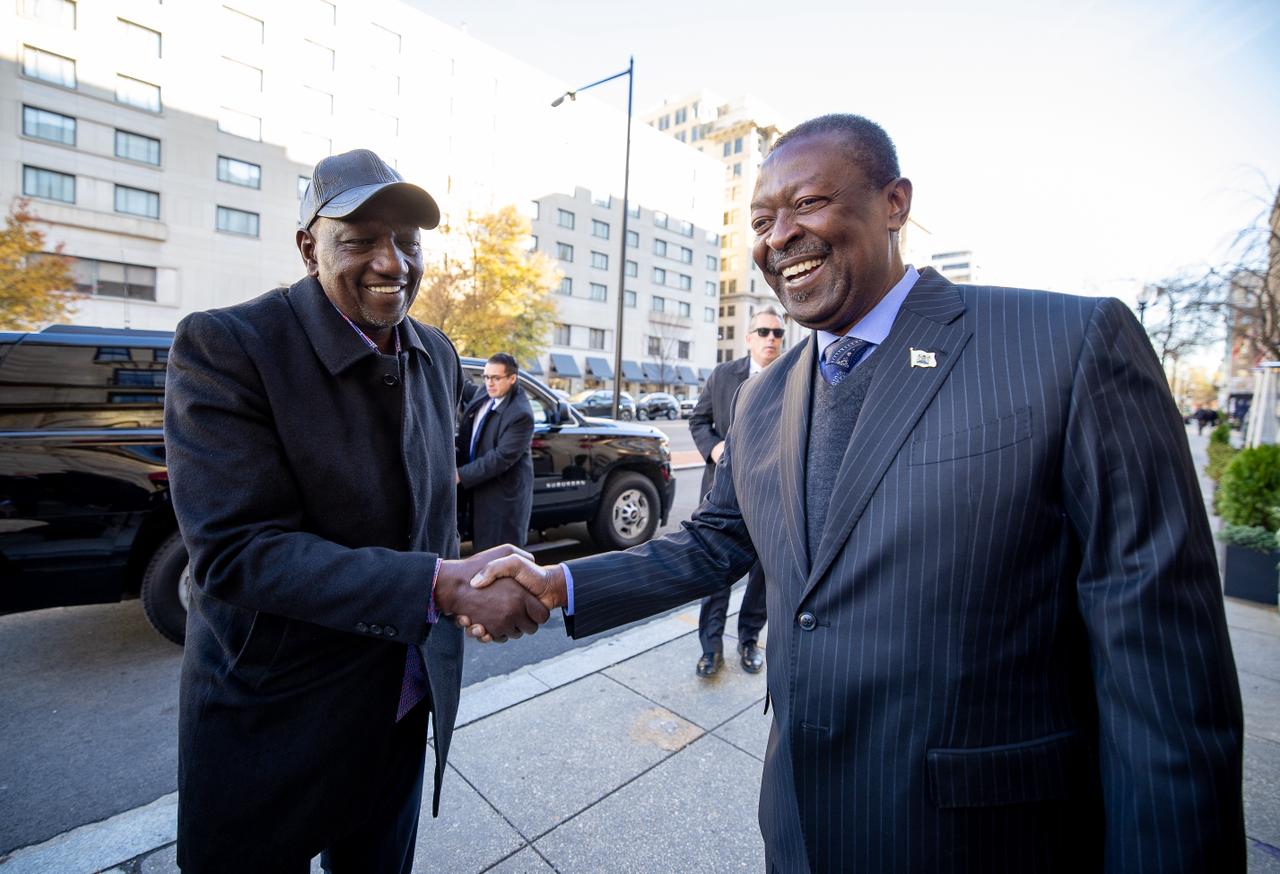
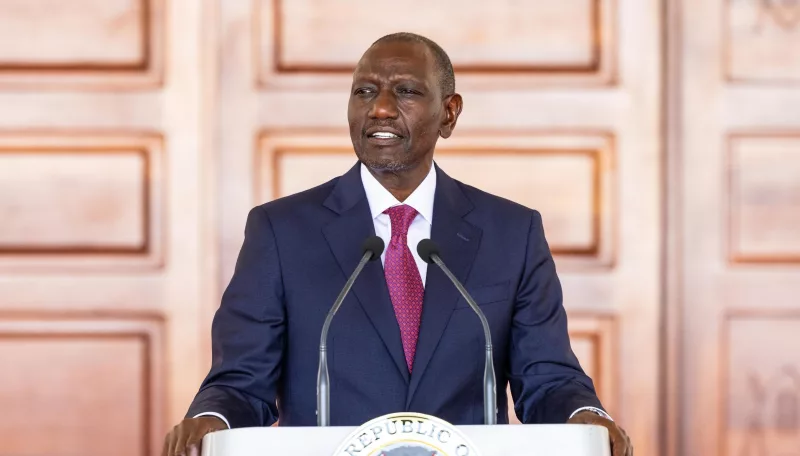
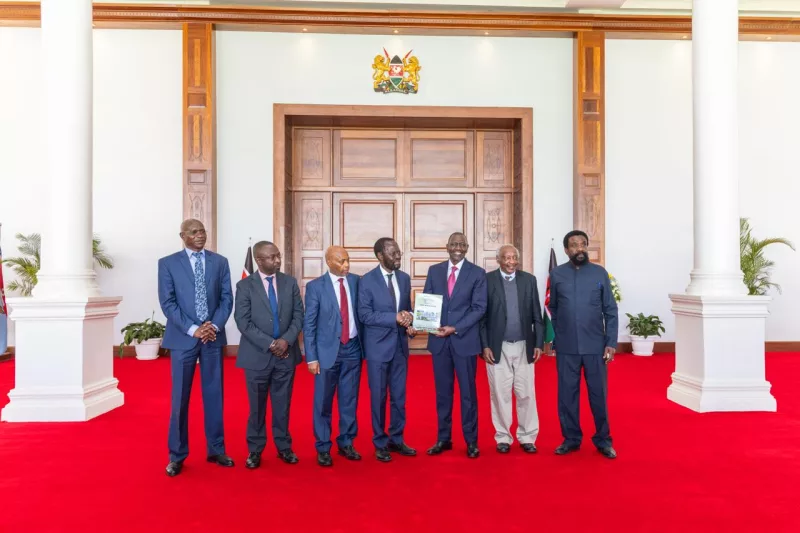
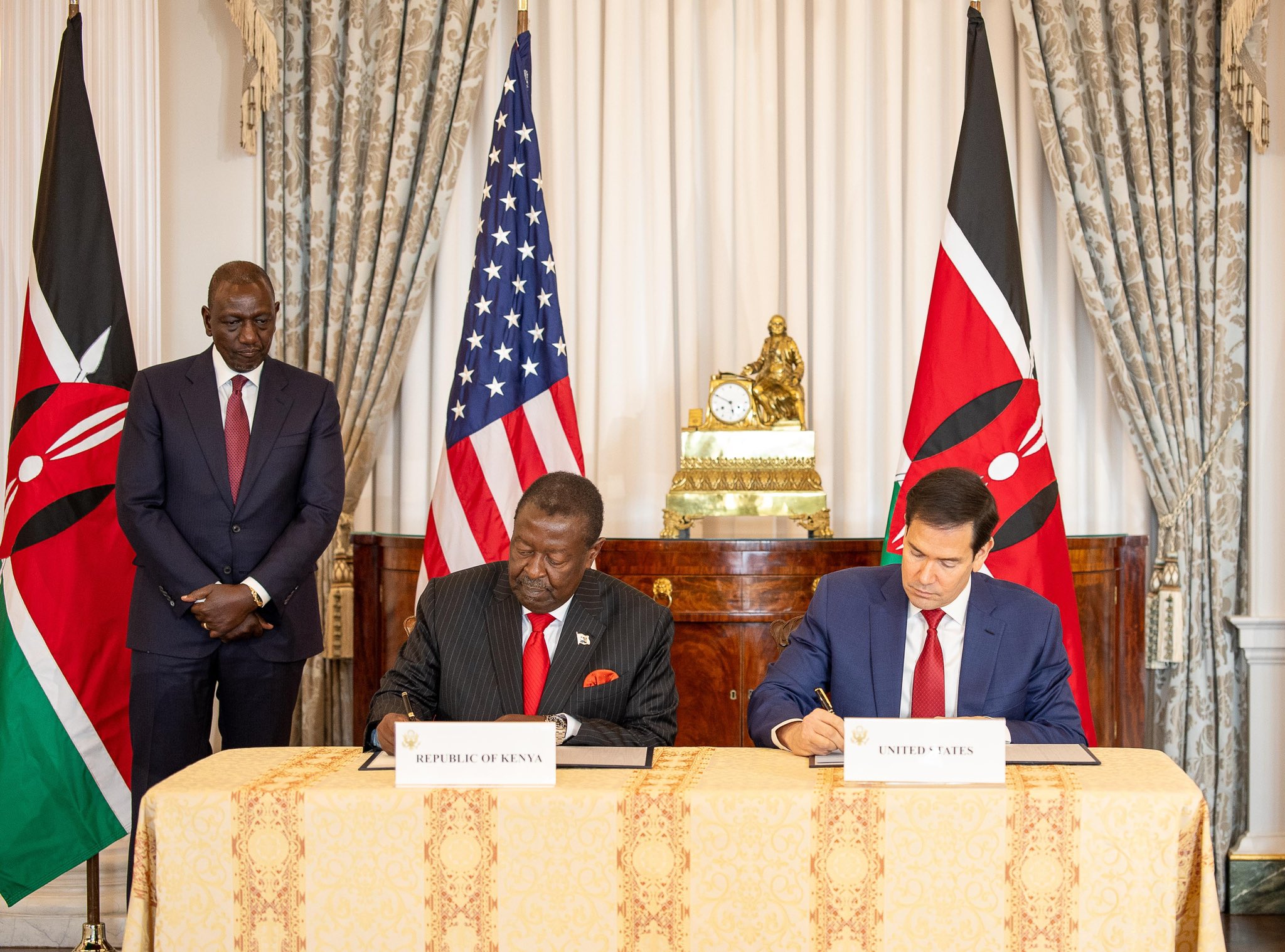
 President William Ruto witnesses the signing of the Health Cooperation Framework / PCS
Read the full 37-page document here
The government has released the full text of the newly signed Cooperative Framework on Health between Kenya and the United States.
The Ministry of Health announced that the Framework, which formalises long-term cooperation across key health sectors, has been made publicly accessible in line with Article 35 of the Constitution.
In a statement, the Ministry said the release of the document reflects the government’s commitment to openness and accountability in the management of health partnerships.
"Kenya and the United States have signed a Cooperative Framework on Health, marking a new chapter in strengthening collaboration across priority health areas. In line with Article 35 on Access to Information, the full document is now publicly available for all citizens," the statement read.
Read the full document here
On December 4, Kenya and the United States signed the Health Cooperation Framework, making Kenya the first country to enter a government-to-government agreement with the US.
In the agreement, the United States will invest directly in government health institutions and not NGOs.
The US will commit $1.6 billion (Sh208 billion) to Kenya over the next five years under the new framework.
The funds will go directly to government institutions, removing third-party involvement to ensure they reach the intended institutions.
President William Ruto witnessed the signing of the Kenya-US Health Cooperation Framework, signed by Prime Cabinet Secretary Musalia Mudavadi and Secretary of State Marco Rubio in Washington, D.C.
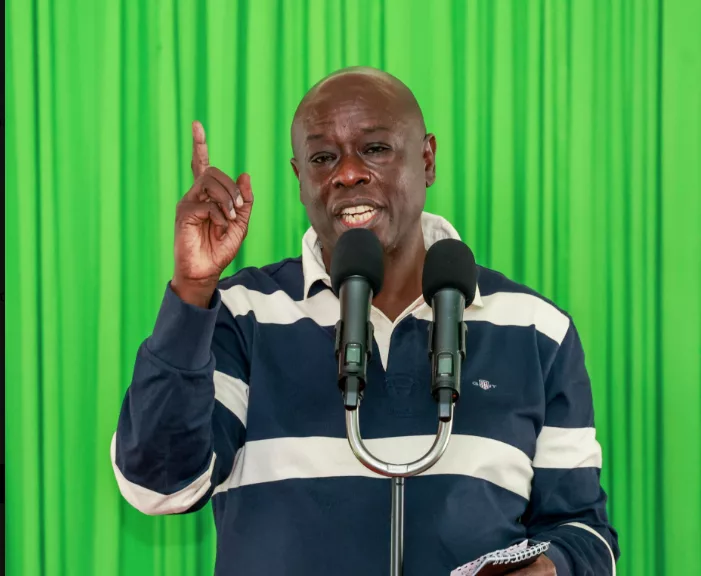
Ruto said the agreement will strengthen Kenya’s efforts to realise universal health coverage, modernise hospital equipment, deliver the Social Health Authority’s services, and boost disease surveillance and emergency preparedness.
“The framework we sign today adds momentum to my administration’s universal health coverage that is focused on supply of modern equipment to our hospitals, efficient and timely delivery of health commodities to our facilities, enhancement of our health workforce, and health insurance for all, and leaving no Kenyan behind,” he said.
Secretary Rubio said the US chose Kenya because of its stable and strong institutions in both government and the health sector.
He noted that the $1.6 billion will not only support medicine but also domestic health infrastructure, ensuring a health system that is self-sustaining.
Under the old model, he explained, much of the money went to the operating costs of NGOs, leaving only a small share for the host country, patients, and other intended programmes.
“We are not going to spend millions of dollars funding the NGO industrial complex while close and important partners like Kenya have very little influence on how healthcare money is spent. Bottom line – if you want to help a country, work with that country, not with a third party that imposes things on that country,” Rubio said.