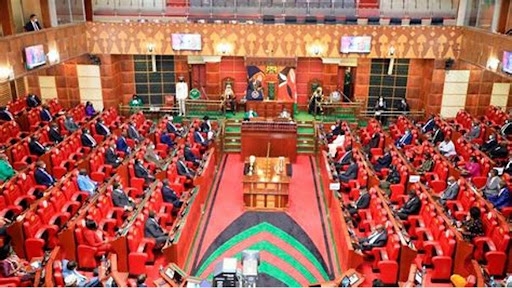


Embattled Nyamira Governor Amos Nyaribo has survived an impeachment motion after the Senate upheld a preliminary objection citing failure by the Nyamira County Assembly to meet the legal threshold required to remove a governor from office.
Thirty-eight senators voted to sustain the objection, while only four opposed it, effectively terminating the impeachment process on a technicality.
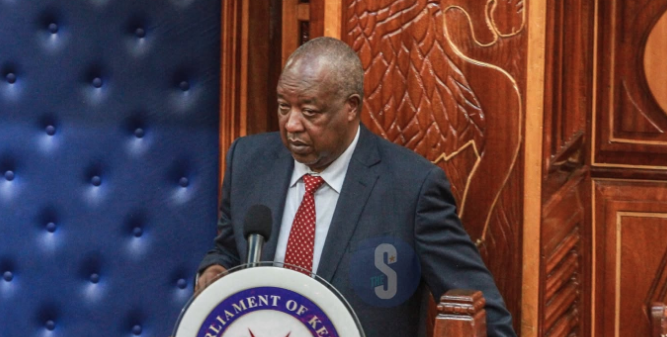
"The motion having been approved, the hearing of the proposed removal from office by impeachment of Amos Kimwomi Nyaribo, Governor of Nyamira County, is hereby terminated," said Senate Speaker Amason Kingi.
The governor’s legal team had argued that the assembly did not meet the constitutionally required two-thirds majority needed to pass an impeachment motion.
Moving the motion on whether to sustain the objection, Senate Majority Leader Aaron Cheruiyot questioned whether the matter had been properly placed before the Senate in the first place.
“We unfortunately must ask ourselves whether this matter is properly before us as a House,” he said.
“Have we been properly invited, or has a governor come through the door, or has this matter been thrown through the window?”
Cheruiyot faulted Parliament for failing to pass a comprehensive impeachment procedure law, noting that many of the recurring disputes, especially those involving numerical thresholds and voting procedures, would have been avoided with proper legislation.
“If we had set out an impeachment procedure bill, we would not be debating these issues today. By now, we would be listening to the case by the county assembly and the governor’s response. But here we are, unfortunately,” he said.
Nandi Senator Samson Cherargei echoed the concerns, stating that impeachment is both a political and quasi-judicial process and must follow strict procedural standards.
He emphasised the numerical issue at the heart of the dispute: while both sides agreed that 23 MCAs voted, the two-thirds requirement mathematically amounts to 23.33 members, meaning the assembly needed at least 24 votes.
“The principle under Section 33 has not been met,” Cherargei said.
“Do we proceed like in Kericho II, or do we terminate like in Kericho I?”
However, Kakamega Senator Boni Khalwale disagreed with colleagues who supported terminating the proceedings.
He argued that the Senate should allow the full trial to proceed so that contested issues—such as three MCAs who were reportedly absent—could be examined.
“This is the time for us to prosecute that matter,” he said.
“We must guide county assemblies and guide this Senate on what to do when members are not in plenary.”
Senate Speaker Amason Kingi clarified the principles guiding the House’s handling of preliminary objections.
He noted that a pure preliminary objection deals only with points of law and does not rely on contested facts requiring evidence.
He cited precedents from Kericho I and Kericho II impeachment cases.
In Kericho I, the number of MCAs who voted—31 out of 47—was undisputed, and the only issue was whether that number met the two-thirds threshold.
In Kericho II, however, there were disputes over whether some MCAs had actually voted, making it unsuitable for summary determination.
Applying these principles, Kingi noted that in the Nyamira case, it was uncontested that 19 MCAs were physically present during the vote and that, including disputed proxy votes, the total number did not exceed 23.
The County Assembly itself had submitted a list of 23 members who supported the impeachment.
The governor’s team argued that the correct threshold should have been 24 members.
Counsel for the County Assembly, Katwa Kigen, countered that the threshold depends on the assembly’s effective membership at the time, factoring in any vacancies, and therefore could vary.
Kingi concluded that determining whether the required threshold was 24 or 23 was a pure question of law that had to be resolved before the Senate could proceed further.
The Senate ultimately found that the threshold had not been met, ending the impeachment process.