


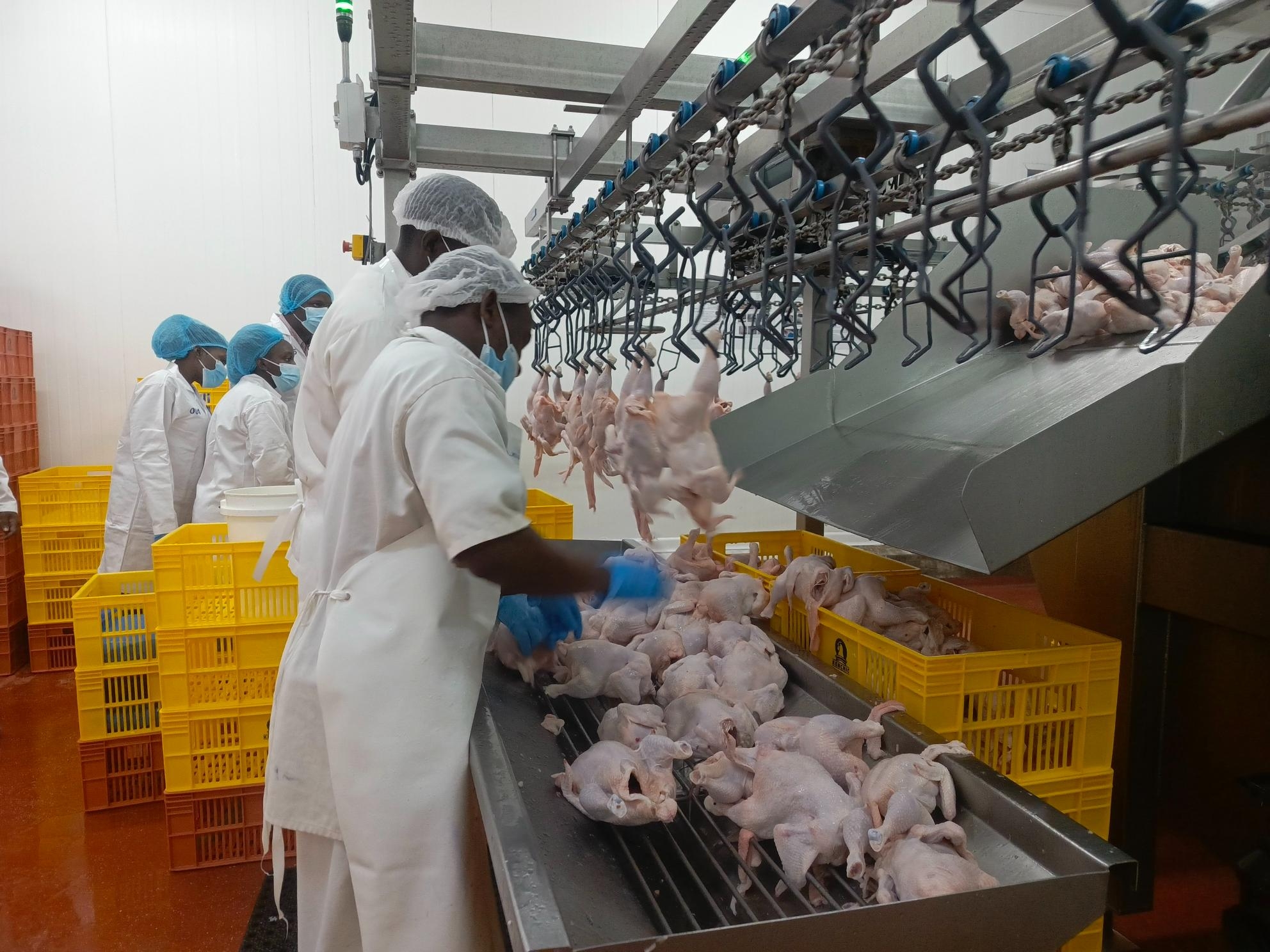
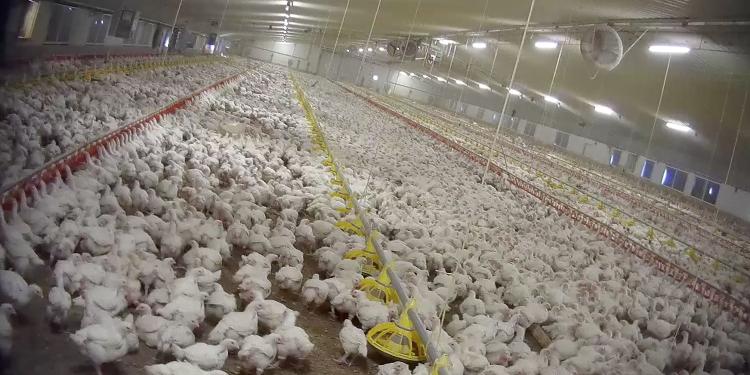
Factory farmed chicken.
A new global assessment has found that factory farming is shortening human lifespans, inflicting severe animal suffering, and accelerating environmental destruction on a vast scale.
The research, released on December 2, 2025 by World Animal Protection, is described as the first comprehensive attempt to calculate the overall global harm caused by industrial livestock production.
According to the assessment, “factory farming is reducing the lifespan of people and animals and creating irreversible damage to our environment.”
CEO of World Animal Protection Tricia Croasdell urged governments to act on the findings.
“We need to support countries in looking to the future of how they feed their populations without damaging human health, animals, and our planet,” she said.
She added, “This research is clear that in order to achieve a better quality of life for people, we need a better quality of life for animals. This ultimately means prioritising plant based diets, ending factory farming, and reducing the environmental impact that we are all facing if we don’t act.”
The Index evaluates the impact of factory farming across human health, environmental degradation, and animal welfare.
The findings show that factory farmed animal production reached 76 billion in 2020, with 46 percent of chicken, pigs, and cows raised in just four countries: China, Brazil, the USA, and Indonesia.
The countries with the highest per capita consumption include Israel, Panama, Belarus, and Qatar, where an estimated ten animals are consumed per person each year.
The report concludes that intensive farming of chicken, pigs, and cows for meat, dairy, and eggs causes an average global loss of 1.8 years of healthy life per person.
This loss is attributed to antibiotic resistance, pulmonary diseases linked to air pollution from animal waste, and excessive consumption of red and processed meat.
The Index reports that 66,000 tonnes of antibiotics are used on factory farmed animals double the amount used in human medicine.
The drugs are not only used to treat illness but also to prevent disease in crowded, unsanitary conditions and are frequently given to healthy animals to compensate for the stress and disease risks associated with intensive farming practices.
The research warns that the health impact extends even to those who do not consume products from industrial farms.
“This means that even if you don’t consume factory farmed animal products, the system is likely reducing your lifespan through the antibiotic resistance and particulate emissions it causes,” the report states.
The assessment also has significant implications for Kenya, highlighting the urgent need to address the environmental, health, and animal welfare impacts of intensive livestock production.
With the country’s growing demand for meat and dairy, Kenya faces risks from antibiotic resistance, air pollution, and excessive water and land use associated with factory farming.
It underscores the opportunity for Kenya to lead in sustainable food systems by promoting plant-based diets, supporting small-scale farmers who prioritise animal welfare and land stewardship, and adopting policies that reduce environmental harm.
Acting on these findings could improve public health, protect natural resources, and position Kenya as a model for humane and sustainable agriculture in the region.
“Emissions such as ammonia, nitrous oxide, and fine particulate matter from high concentrations of animal waste are linked to pulmonary illnesses and disproportionately affect people living or working near large farms,” the report noted.
Factory farming is also identified as a major contributor to the climate and water crises.
The global agrifood system is responsible for 29.7 percent of total greenhouse gas emissions, while factory farming contributes significantly to water pollution, accounting for around 25 percent of human caused contamination from nitrogen and phosphorus.
The system uses 14 percent of all human freshwater withdrawals an estimated 530 trillion litres every year and relies on cropland the size of India, much of it dedicated to animal feed.
The Index highlights the extent of animal suffering and dramatically shortened lifespans in industrial systems.
Globally, farmed chickens live just 5 percent of their natural lifespan, while pigs live 4 percent.
According to the researchers, improving welfare standards can improve a country’s score on the Index, but it is not enough to resolve the systemic crisis.
“The only lasting solution is to move away from factory farming and shift toward an equitable, humane, and sustainable food system.This includes greater reliance on plant-based diets and support for small-scale producers who prioritise land stewardship and animal care,” the researchers emphasised.