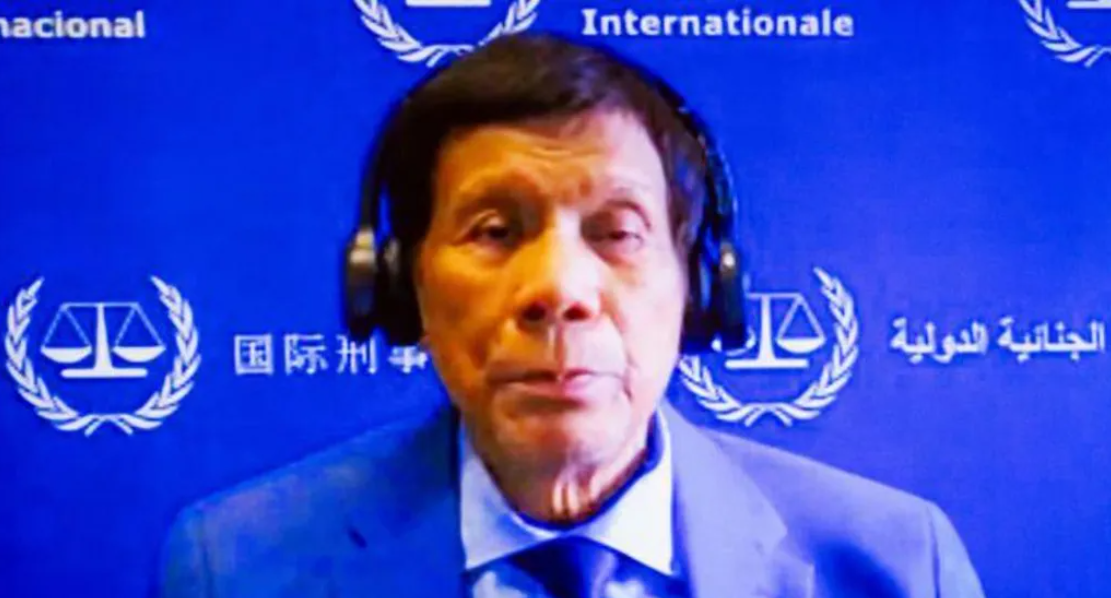
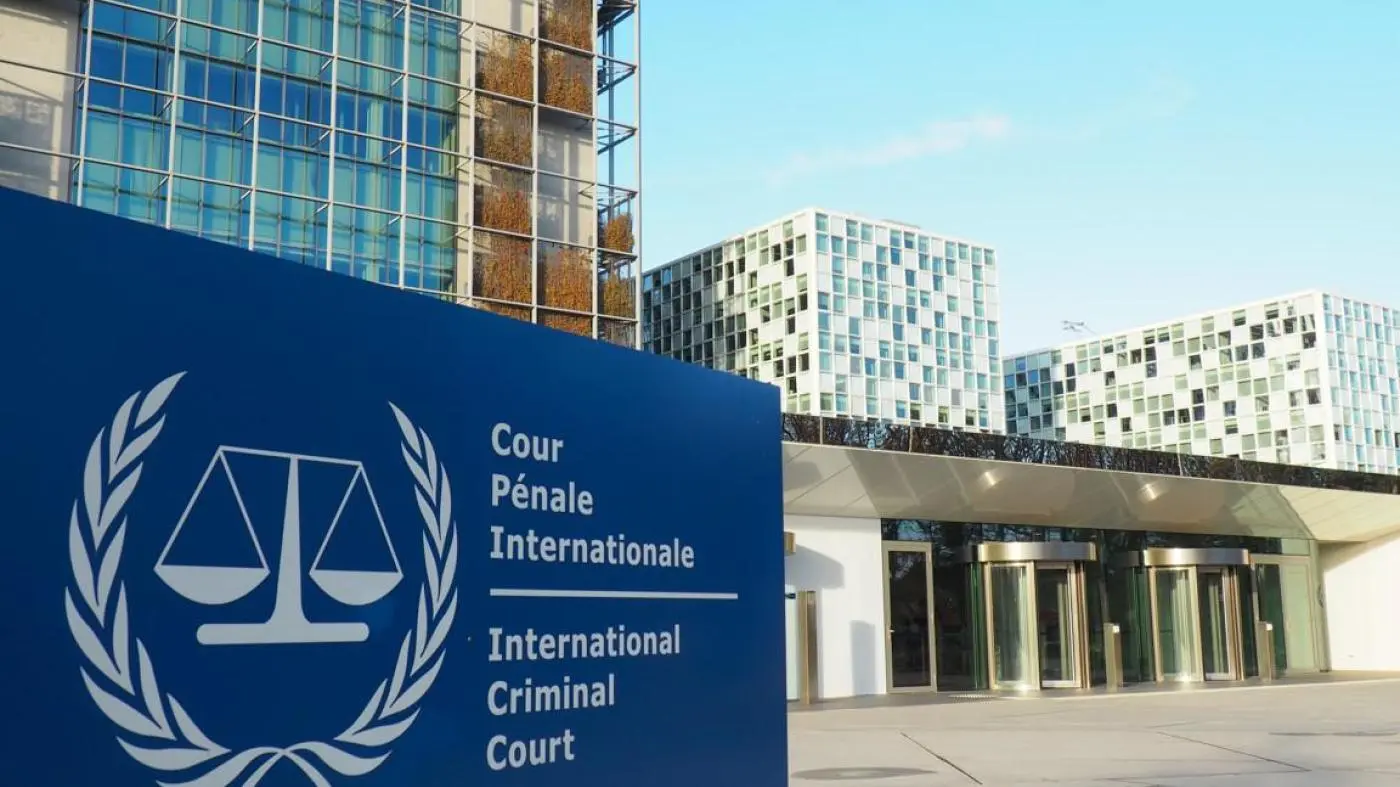
The International Criminal Court has formally closed its long-running
investigation into Kenya’s 2007–08 post-election violence.
The Office of the Prosecutor (OTP) said it finished the country’s inquiry on
November 27, 2023, but it has not closed every file.
Two individuals charged with offences against the administration of justice
however remain at large and are still being pursued by the Court.
“On November 27, 2023, the Office announced its decision to conclude the
investigation in this situation. Following this decision, the Office’s
activities have been limited to monitoring developments and tracking two
suspects at large,” a report by ICC read.
“They are the subject of warrants of arrest for alleged offences against the
administration of justice pursuant to Article 70 of the Rome Statute,
consisting of corrupting or attempting to corruptly influence ICC witnesses.”
That narrow remaining focus, closure of the broad investigation while
pursuing fugitives accused of witness interference, leaves unresolved legal,
political and moral questions for victims, for Kenya’s public memory of the
violence, and for the broader idea of accountability.
This explainer walks through what has been decided and what remains open, the
historic record of the ICC’s involvement in Kenya, the narrow but consequential
meaning of a continuing “hunt for fugitives,” and the likely consequences for
victims, domestic justice efforts and political stability.
What exactly closed, and what remains open
The closure the Court refers to is the Office of the Prosecutor’s formal
ending of active investigations into the broader Kenya situation.
According to the ICC’s public record, the prosecutor concluded investigative
work on the Kenya situation a little over two years ago, drawing a line under
the sustained inquiries that began after the 2007–08 violence.
That formal conclusion does not erase the Court’s existing case docket. It
simply signals that the OTP is no longer carrying out broad investigatory
operations in Kenya beyond limited follow-up work.
At the same time, the ICC has confirmed it continues to seek the arrest and
transfer of two named individuals who are alleged to have committed offences
against the administration of justice.
These are essentially, offences related to corruptly influencing or
attempting to influence ICC witnesses under Article 70 of the Rome Statute.
The active pursuit of the two fugitives is the main thread of ICC business
that continues to tie the Court to Kenya.
The historic record in brief
A short timeline helps explain why the end of investigation matters.
• 2007–08: Post-election violence.
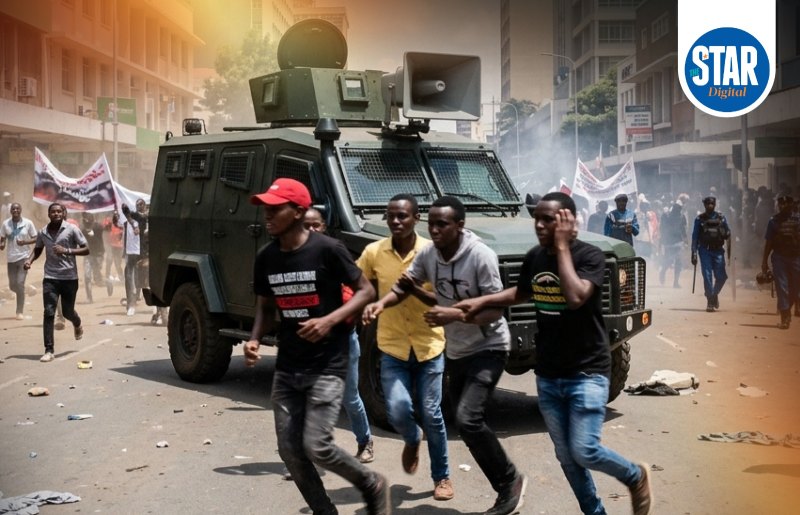
Following Kenya’s disputed December 2007 presidential election, violence
claimed over 1,000 lives and displaced hundreds of thousands. Large-scale human
rights abuses and attacks were documented and became the basis for later
international scrutiny.
The elections took place on December 27, and three days later, then
incumbent President Mwai Kibaki of the PNU was declared the winner.
The victory was greatly opposed by the late Raila Odinga of the ODM amidst
allegations of election fraud on both sides triggering outbreaks of violence.
On February 5, 2008, then International Criminal Court Prosecutor ICC
Prosecutor Luis Moreno-Ocampo said his office has begun a preliminary
examination of the post-election violence in Kenya.
On February 28, a mediation team, led by former UN Secretary-General Kofi
Annan, oversaw the signing of a power-sharing agreement called the National
Accord and Reconciliation Act, which established a coalition government with
Kibaki as president and Raila as prime minister.
It also set up the Commission of Inquiry on Post-Election Violence (CIPEV),
which later became known as the Waki Commission after its chair, Judge Philip
Waki.
On October 15, 2008, the Waki Commission submitted its report and recommendations
to the government of Kenya; recommendations included the establishment of a
special tribunal of national and international judges to investigate and
prosecute perpetrators of the post-election violence.
The report also stated that if the tribunal is not set up within six months,
information collected by the Waki Commission would be passed to the ICC,
including a sealed envelope of names of those suspected to be most responsible
for the violence.
• 2010s: ICC involvement. The
ICC’s Office of the Prosecutor opened a proprio
motu investigation into the situation in the country in March 2010, meaning
the prosecutor initiated the inquiry on their own authority rather than via a
state referral.
The cases that followed were intended to address alleged crimes against
humanity linked to the post-election violence.
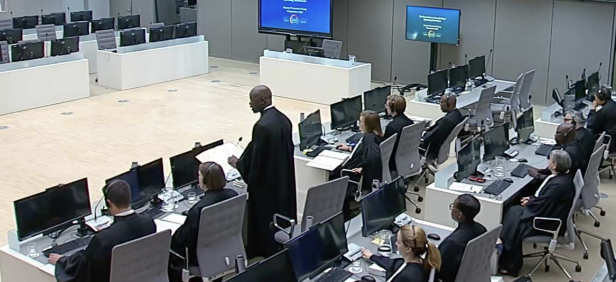
On March 31, 2010, Pre-Trial Chamber II issued its majority decision (2-1)
that there was a reasonable basis to proceed with an investigation into the
situation in relation to crimes against humanity within the jurisdiction of the
Court committed between June 1, 2005 and November 26, 2009.
On December 15, the ICC Prosecutor requested the issuance of ‘summonses to
appear’ for six people in the court’s Kenya investigation.
On April 7, 2011, the first three defendants made their initial appearance
before the Court in The Hague, and on the next day, the other three did so too.
In September and October, confirmation of charges hearing, for all
defendants, begun and concluded.
Some cases proceeded to pre-trial and trial phases, but the Court’s work was
repeatedly affected by witness problems and by political controversy inside
Kenya and beyond.
• 2013–2016: Trials and withdrawals.
One of the cases saw charges eventually withdrawn in 2014, and as another encountered
major setbacks as key prosecution witnesses were withdrawn amid allegations of
interference.
The process left many Kenyans and observers sceptical about whether the ICC
could secure full trials for the main political figures implicated.
At the time, parallel domestic cases in Kenya’s High Court (IDP and SGBV
petitions) sought accountability for victims outside the ICC framework.
• 2013–2021 and beyond: Article 70
proceedings. The Court also brought separate proceedings under Article 70, offences
against the administration of justice, where individuals were accused of
tampering with or corruptly influencing witnesses.
Some people were prosecuted at the ICC for those Article 70 offences; others
remained the subject of warrants.
It is these Article 70 matters, not fresh crimes against humanity
prosecutions, that account for the fugitives the Court continues to pursue.
That history shows the ICC’s Kenya involvement was never limited to a neat
set of courtroom dramas.
Investigation, prosecution and the Court’s work to protect or recover
witnesses stretched over years and intersected with Kenyan domestic politics in
ways that complicated both justice and reconciliation.
What does ‘hunt for fugitives’ mean in
practice
When the ICC says it is pursuing fugitives, that pursuit is a combination of
legal, diplomatic and operational activity.
Practically speaking it can include maintaining arrest warrants on the ICC
website and in its case records, which gives the warrants international legal
force and signals to states and international partners to act on any credible
information that turns up.
According to the Court, it means engaging in tracking, information-sharing
and cooperation requests with states and law-enforcement partners.
The ICC itself does not have a police force or powers to arrest; it depends
on state cooperation to locate, arrest and surrender suspects to The Hague.
To that end the Court conducts outreach with member states and can request
assistance where it believes suspects are present.
The November 2025 reporting around the Kenya situation notes the Court’s
continued monitoring and the narrow focus on fugitives and witness-protection
issues.
The hunt also means bringing and maintaining legal proceedings at the Court
where arrest has not yet occurred.
A pending warrant or an unexecuted arrest request means that the case
remains formally open at the pre-trial or article-70 stage until that person is
surrendered or otherwise accounted for.
The docket continues to require judicial oversight even if the scope of
active investigating has been reduced.
Because the ICC relies on states for arrests, the ‘hunt’ often becomes a
diplomatic test. If a fugitive is believed to be inside the territory of a
state that is unwilling or unable to cooperate, the chance of arrest is slim.
Conversely, if the person lives openly or seeks to travel internationally,
an arrest anywhere in the world could lead to transfer to The Hague.
Why the remaining fugitives matter for
justice
The continuing pursuit of two alleged offenders for witness interference is
not a technicality. It speaks to core issues of the ICC’s credibility, witness
protection and the integrity of any prior or future prosecutions.
There are three interlinked reasons the fugitives matter, where witness
protection is foundational. The Article 70 allegations are not peripheral
matters.
They relate to serious attempts to undermine the Court’s ability to protect
and rely on witness testimony.
The ICC has repeatedly said that preserving the integrity of testimony is
crucial to the administration of international justice.
If people can interfere with witnesses with impunity, it erodes the ability
to hold perpetrators of grave crimes to account.
Additionally, a legal closure is incomplete without accountability. For
victims and the public, a general “closure” of investigation can feel hollow if
individuals who allegedly obstructed justice are not apprehended.
The continuing warrants signal that the ICC considers those acts serious
enough to warrant ongoing pursuit even after the broader investigation ended
Seeking to prosecute the fugitives shapes public narrative and deterrence.
The fact the ICC still seeks fugitives underlines that tampering with witnesses
has consequences beyond domestic politics.
For future cases, the ICC’s pursuit, and its success or failure, will
influence whether potential obstructers perceive risk in trying to corrupt
testimony. The outcome will therefore affect deterrence and the credibility of
international fact-finding.
What closure means for victims and public
memory
For victims of the 2007–08 violence, closure of the ICC investigation is
double-edged.
On one hand, the end of investigation removes the prospect of further
international trials for many of the original allegations of crimes against
humanity.
For victims who sought trials of the principal political leaders believed
responsible, that is a profound disappointment.
Many survivors publicly called for accountability and saw the ICC as a
last-resort avenue when they lacked faith in national prosecutions.
The practical effect of closure means those hopes must now depend largely on
domestic mechanisms or other forms of redress.
Speaking with JfJ Justice in 2023 back when investigations were closed, Jacqueline Mutere, a survivor of
sexual violence from the post-election violence and co-founder of Grace Agenda
said the ICC decision was deeply disappointing and that the court should
revisit its mandate.
“The ICC represented accountability where local mechanisms could not work.
The decision is a mockery of the survivors and the process – and it is
literally dancing on the graves of lost loved ones. Why wait until now? What
has changed? Was this a cold case being revived for an opportune moment? What
then is justice? This is pure impunity!” Ms. Mutere said.
On the other hand, the ICC’s sustained involvement has already produced a
record: documents, witness statements, judicial decisions and a voluminous
public record that underpin historical memory.
Even where trials did not end in convictions of the highest-profile figures,
the Court’s investigations created an archival and judicial repository that
scholars, journalists and victims can use to reconstruct events.
That record plays a role in truth-telling and public memory, but it is not a
substitute for verdicts and reparations.
The Trust Fund for Victims and domestic reparations mechanisms have an
important role to play in filling the gap, but funding, political will and
legal frameworks determine whether victims receive meaningful measures of
redress.
In short, closure at the ICC does not erase the harms but it narrows the
routes through which victims can seek formal international justice.
What it means for domestic prosecutions and
complementarity
The Rome Statute is based on complementarity: the ICC acts when national
jurisdictions are unwilling or unable to genuinely investigate or prosecute.
With the ICC stepping back from active investigation, the spotlight turns to
Kenya’s domestic legal system.
If Kenya chooses to pursue credible, independent prosecutions for serious
crimes from 2007–08, that would fulfil the complementarity model and could
provide a path to accountability.
But the record shows domestic prosecutions for the post-election violence
were politically fraught and uneven.
Kenyan courts have handled some cases, but not at the scale or with the
impartiality victims and international observers hoped for during the ICC era.
The judiciary’s capacity, political constraints and the passage of time
complicate any large-scale domestic reckoning.
Where domestic prosecutions do not materialize, the ICC’s closure could
create an accountability vacuum.
That vacuum can retraumatise victims and entrench narratives of impunity.
Conversely, national truth-telling, commemorations, institutional reforms and
reparations could mitigate the sense of abandonment even without criminal
convictions.
Those non-judicial measures require political will, resources and civil
society pressure.
Political stability and the court’s legacy
The ICC’s Kenyan chapter was never only legal. It was political from the
start.
The involvement of major political figures, some of whom later held or now
hold the highest offices, made the Court a lightning rod for accusations of
bias and prompted robust domestic resistance to cooperation at times.
Closure of the investigation removes a recurring flashpoint for
international diplomatic tension, but it does not eliminate the political
narratives the ICC cases fed into.
For some politicians, the end of ICC activity is a political reprieve. For
others, particularly victims and opposition voices, it signals unfulfilled
justice.
How those perceptions translate into political behavior, whether they reduce
tensions or fuel grievance politics, depends on how the Kenyan state and civil
society handle memory, reparations and institutional reforms.
What would justice look like now,
realistically?
Given the current situation, realistic justice outcomes include the arrest,
surrender and possible trial of the two Article 70 fugitives. If states
cooperate and the fugitives are transferred, those proceedings would deal
directly with witness interference and would reaffirm the ICC’s interest in
protecting witnesses and sanctioning obstruction.
It could also bring in strengthened domestic processes. Kenya could mount
credible prosecutions for crimes arising from 2007–08, or implement meaningful
reparations, truth commissions or institutional reforms. Such measures would
require political will and transparent, victim-centred processes to be seen as
legitimate.
There is a possibility of a continuing archival role for the ICC. The
Court’s public records, judicial decisions and investigative materials will
remain a resource for historians, journalists and victims.
Even without new prosecutions, the record can underpin advocacy, reparative
claims and historical memory.
There is however the risk of an accountability gap.
If neither arrests at The Hague nor credible domestic measures occur, the
result will likely be a long-term political and moral gap that undermines
victim confidence in justice systems and weakens deterrence against future
abuses.
Bottom line
The ICC’s formal closure of investigative operations in Kenya signals an end
to the broad, years-long international inquiry into the 2007–08 post-election
violence.
But closure is not the same as finality. Two outstanding Article 70 suspects
remain the subject of active pursuit, and the Court retains the public record
of its work.
For victims, closure narrows the avenues for international trials and places
more weight on domestic remedies, reparative measures and collective memory.
For the international community, the remaining fugitives become a test of
whether states will cooperate to enforce the Court’s orders and sustain the
rule of law at an international level.
Whether the ICC’s exit from day-to-day investigation reduces political
tension or produces an accountability vacuum in Kenya depends on next steps:
arrests and prosecutions of the fugitives, credible domestic action for crimes
and reparations for victims, and robust public engagement with the historical
record.
The narrow “hunt for fugitives” is therefore small in scale but large in implication. It will help determine whether the Court’s legacy in Kenya is one of meaningful accountability or of an unfinished pursuit of justice.
![[PHOTOS] The new Ngong –Naivasha Road viaduct](https://cdn.radioafrica.digital/image/2026/06/64d4f771-4432-4aee-ba3c-2f304c4436ec.jpg)









![[PHOTOS] 'Mr Speaker Sir' Gen Z protester in court](https://cdn.radioafrica.digital/image/2026/06/b3e62d8e-25c3-4780-90f9-4eb48b1ce8a7.jpg)