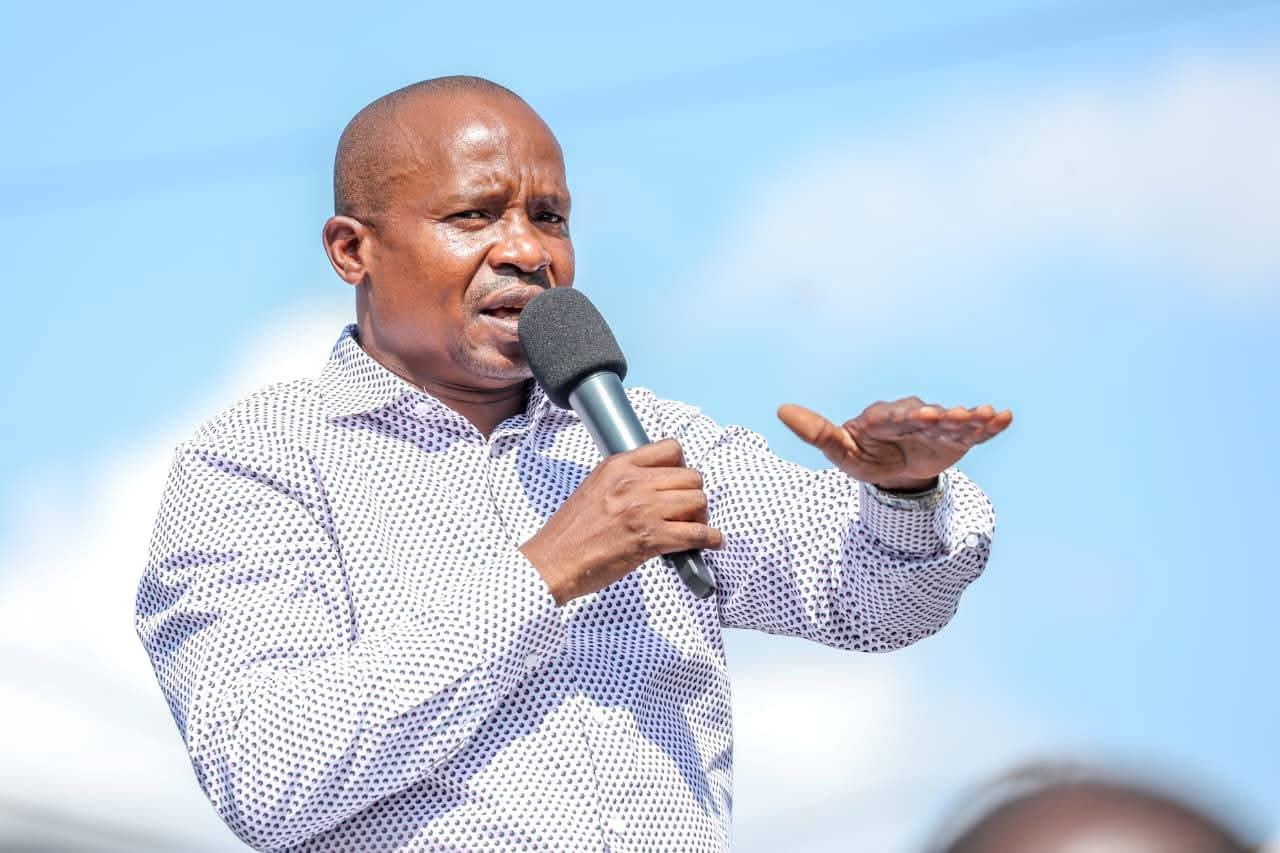
Former Nairobi Governor Mike Sonko has issued a sharp rebuttal to Jubilee Secretary-General Jeremiah Kioni, accusing him of twisting constitutional provisions and dragging him into political battles he has nothing to do with.
In a statement released, Sonko told Kioni to “fight his mountain wars” with former Deputy President Rigathi Gachagua without invoking his name.
Kioni, during a recent television interview, asserted that any politician who has been impeached is permanently barred from ever contesting for public office.
His remarks, made in direct reference to Sonko, ignited an immediate reaction from the former governor, who insisted that the Jubilee official was misleading the public.
“Once impeached, permanently impeached,” Kioni said during the interview, implying that Sonko’s political ambitions were constitutionally untenable.
But Sonko dismissed the interpretation as legally flawed and politically motivated. He cited Article 193(3) of the Constitution, arguing that a person can only be disqualified from running for office after all appeals and reviews have been fully exhausted.
“The Constitution is not a suggestion—it is the law,” Sonko said.
“Article 193(3) states that a person is not disqualified from running for office unless all avenues of appeal or review have been fully exhausted. My cases are under review and not yet concluded. I have not exhausted all the means available.”
He questioned whether newly discovered evidence could simply be dismissed because of public commentary by political actors or even judicial leaders.
“Can you not review a decision if new, incontrovertible facts emerge a year or two later?” he posed.
Sonko alleges that the court violated Regulation 18(1) of the Judicial Service Code of Conduct by commenting on a matter active before it.
He cited Article 12 of the Code of Conduct, which requires judicial officers to avoid online and media activity that could undermine the dignity of their office.
While insisting he respects the courts, Sonko said he would “not hesitate to pursue every lawful avenue” to defend both the Constitution and his reputation.
The Supreme Court had earlier upheld Sonko’s impeachment, prompting him to seek recourse at the East African Court of Justice (EACJ).
The Arusha-based court later faulted Kenya’s apex court for procedural shortcomings, noting violations of Sonko’s right to a fair trial as protected under Article 25 of the Kenyan Constitution and Articles 6 and 7 of the East African Community Treaty.
Although the Supreme Court decision still stands, the EACJ ruling cast significant doubt on the fairness of the impeachment process and raised important questions about judicial accountability within the region.
Sonko is currently seeking a review of his case, citing new evidence—including confessions from witnesses who now claim they were coerced by the former regime to implicate him.