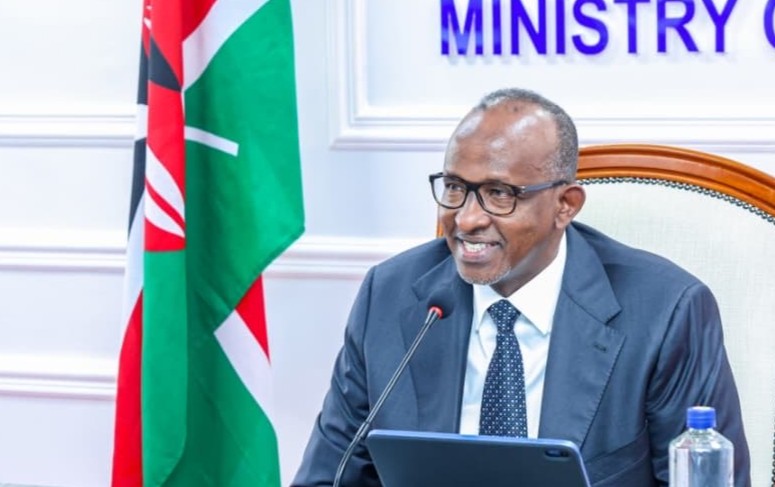
 Health Cabinet Secretary Aden Duale. /ADEN DUALE/X
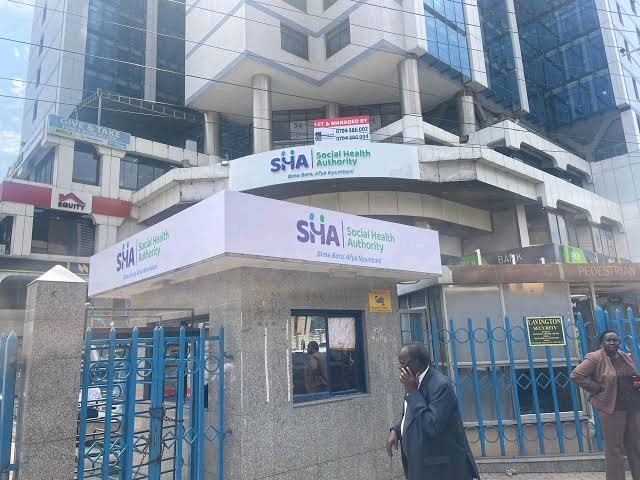
The Social Health Authority has surpassed 27 million registered members, marking a significant step in the government’s drive to reform the country’s healthcare system.
Health Cabinet Secretary Aden Duale confirmed the figure on Friday, saying that all 27,007,879 Kenyans registered with the authority now have valid Free Primary Health Care insurance.
The milestone comes barely a year since the new health financing system replaced the defunct National Health Insurance Fund (NHIF).
The SHA was officially launched on October 1, 2024, under the Social Health Insurance Act, 2023, to spearhead the government’s ambitious universal health coverage (UHC) agenda.
It oversees three key funds — the Primary Healthcare Fund, which supports preventive and community-based services; the Social Health Insurance Fund (SHIF), which finances inpatient and outpatient treatment; and the Emergency, Chronic and Critical Illness Fund, designed to cushion families against catastrophic medical expenses.
Unlike the NHIF, the SHA’s structure is meant to enhance equity and transparency in health financing.
Under the new framework, formal-sector employees contribute 2.75 per cent of their gross monthly income, while contributions for informal workers are based on income assessments.
Government funding, coupled with county-level allocations, is expected to strengthen service delivery in public health facilities.
However, the transition from NHIF to SHA has not been without challenges.
Health facilities have flagged delayed reimbursements, inadequate infrastructure to support the new digital registration system and confusion among members about benefit entitlements.
Health workers’ unions and civil society groups have also raised concerns about staffing gaps and the readiness of county facilities to deliver on the free primary care promise.
A parliamentary committee report earlier this year identified several operational bottlenecks within the first months of implementation, calling for stronger oversight to prevent misuse of funds and ensure efficient management.
Despite the setbacks, the growing enrolment is as a major step toward universal health coverage.
For millions of registered Kenyans, the SHA promises access to essential outpatient and inpatient services, reduced out-of-pocket costs and protection from financial hardship due to illness.
As the system matures, attention now shifts to translating registration numbers into tangible health outcomes — better service quality, consistent drug supply, and accessible care in every county.
On October 23, Duale hosted a delegation from the German Bundestag led by Mechthild Heil to strengthen global health solidarity through the Global Fund, which he described as a key driver of Kenya’s UHC agenda.
He said the discussions focused on Kenya’s ongoing health sector reforms under the Taifa Care Model, anchored by the Social Health Authority, and the government’s investment in digital health systems to enhance transparency, efficiency and accountability.
"I emphasized the need for stronger integration of Global Fund, Gavi and PEPFAR priorities to boost laboratory networks, disease surveillance and community-to-referral digital innovations," Duale said.
He also explored new partnerships through the Kenya Biovax Institute in equipment sharing, technology transfer, and vaccine production — areas in which collaboration with Germany remains invaluable.
Duale reaffirmed Kenya’s commitment to its 20 per cent co-financing obligation, amounting to USD 593.3 million under the 5th Administration, as part of efforts to end HIV, TB, and malaria, and advance the Sustainable Development Goal 3 vision of a healthier, more equitable world.