The strike is on. Lecture halls are empty. Public universities
are silent. Kenya’s dons – the custodians of knowledge, research and critical
thought – are on the streets once again.
The grievance is familiar: the
government has refused to honour the 2017-21 and 2021-25 collective bargaining
agreements. To make matters worse, the 2025-29 CBA, which the Uasu has submitted
as the basis of collective bargaining, has been left to gather dust before it’s
even implemented.
This is not an isolated dispute. It is the continuation of a
long history of betrayal. Every CBA since the 1990s has followed the same
tragic rhythm: prolonged negotiations, strikes, return-to- work formulas and
then broken promises.
The dons teach history, but they are also trapped in it. From
the very beginning, when Uasu clawed its way into recognition in the 1990s, the
state has never negotiated in good faith. CBAs have become the structure, but
not the solution.
The pattern has been brutally consistent: endless
negotiations stretched over years; strikes launched as the only language the
state seems to understand; return-to-work formulas signed with pomp and brouhaha,
but dishonoured before the ink has even dried; partial implementation,
staggered payments, arrears quietly shelved.
The common denominator is glaring: government never keeps
its word. CBAs have become pacifiers, not contracts. They are political fire
blankets – signed to cool tempers, not to deliver justice.
Here is the tragedy: the dons, the intellectual vanguard of
this country, continue to fall for the same routine. Strike. Negotiate. Sign.
Resume duty. Wait for betrayal. Repeat.
Every time, the government knows the
ending before the play begins. They know the lecturers will eventually grow
weary, sign on the dotted line and troop back to class.
The return-to-work formulas
are nothing but well-crafted lies, not worth the paper they are written on. It
is almost comical – professors of strategy, social engineers, political
scientists, economists, philosophers – falling for the same bait, the same
trap, year after year. If this were an exam, the lecturers themselves would be
candidates for retake.
Dons, let us be clear: this strike cannot end with another
worthless return-to-work formula. To do so would be to betray not just
ourselves, but the future of Kenya’s universities. The government has perfected
dishonesty. It is time Uasu perfected leverage. The strategy must change – right
here, right now – while the strike is still alive.
Stop treating CBAs as gentleman’s agreements. They are
contracts. Enforce them in court. Sue Treasury, sue Inter Public Universities Councils Consultative Forum of the Federation of Kenya Employers, sue universities. Create
legal precedents that make it costly for the state to breach. Litigation may be
slow, but the shadow of contempt orders and frozen accounts will wake Treasury
up faster than chants on University Way.
Right now, the public thinks lecturers strike for money. That
narrative must change. Uasu should translate the fight into a language citizens
understand: “When government cheats us, it cheats your children. When research
is unfunded, innovation dies.
When we leave for jobs abroad, Kenya bleeds
talent.” This is not about pay. It is about national survival. Strikes hurt
students and turn parents into enemies. We should think creatively: work-ins:
teach but refuse to grade.
Students side with lecturers when they feel the
pinch of missing transcripts. Also teach-outs:
deliver public lectures in parks, markets and county halls. Show the country
the brainpower it is squandering. And digital activism: expose the government’s
deceit online, with data and storytelling that embarrass them globally.
Treasury claims, “There is no money.” Yet MPs raise their
perks overnight, new offices mushroom and billions vanish in corruption. Uasu
must do forensic audits of government spending, publish reports and shame the
hypocrisy. Imagine the power of headlines: “Government denies lecturers Sh8 billion
while MPs share Sh12 billion in allowances.” That is how you shift the
battlefield.
Education is a public good, not a luxury. Uasu must storm
Parliament, county assemblies and budget hearings. Put MPs on record: “Do you
support starving universities?” Let it be an electoral question. No politician
likes being seen as anti-education.
Kenya’s universities do not exist in isolation. Uasu should
rally global faculty unions, development partners and academic networks to
expose the state’s duplicity. A government that boasts about being a knowledge
hub but can’t honour contracts with its scholars deserves contempt.
This is bigger than lecturers’ salaries. It is about what
kind of country Kenya wants to be. Does it want to be a knowledge economy or a
marketplace of mediocrity? Does it want to nurture research or export brains to
foreign universities?
When the government treats lecturers as disposable, it tells the
youth that education is worthless. It tells scholars abroad not to come home.
It tells innovators that their ideas will rot in underfunded labs. In short, it
mortgages the country’s future.
Comrades, the struggle is just. But the strategy is broken.
Stop being predictable. Stop signing papers that mean nothing. We must stop
mistaking vuvuzelas for leverage.


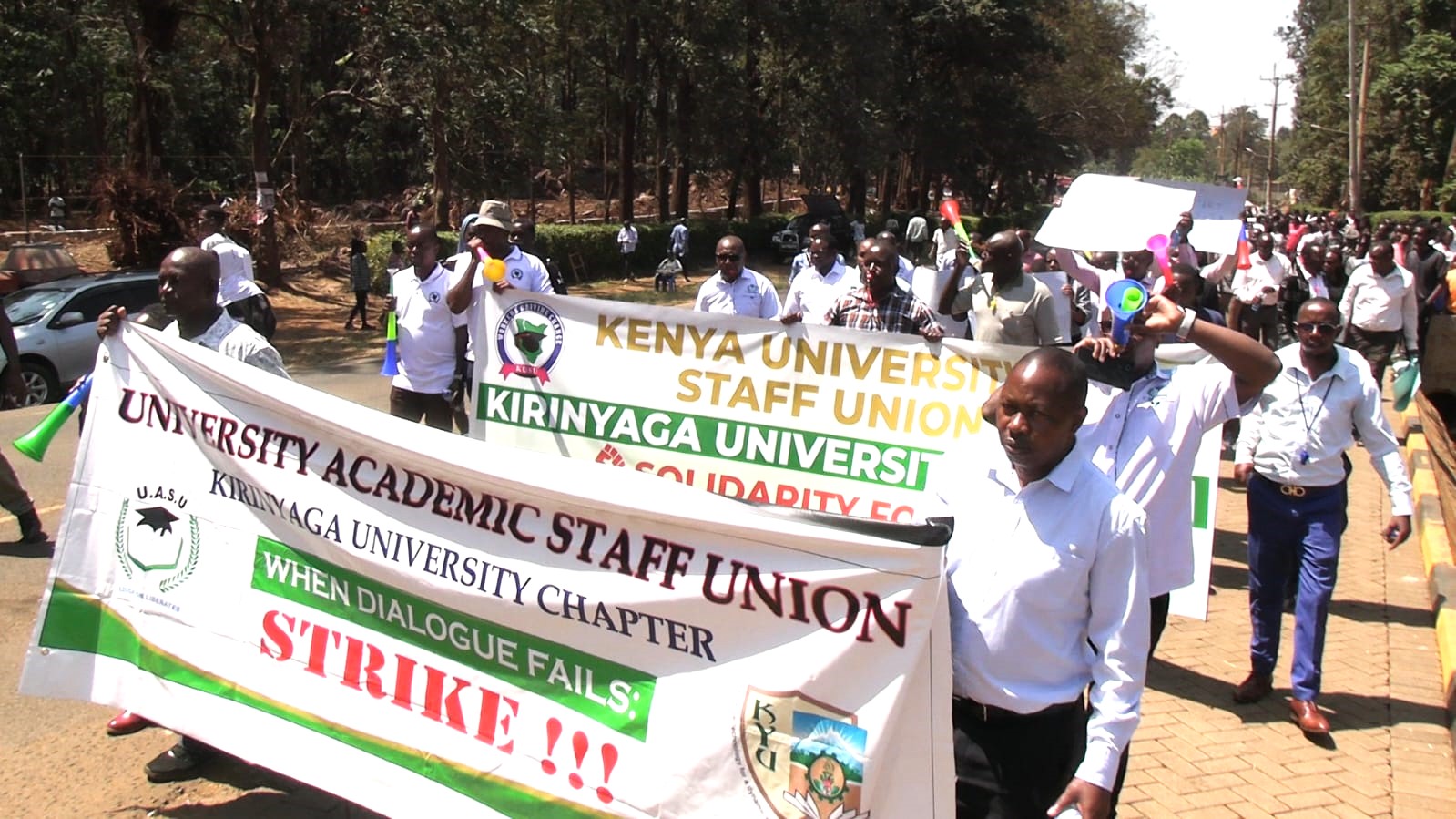 Lecturers during a past strike










![[PHOTOS] Raila Odinga Stadium construction enters home stretch](https://cdn.radioafrica.digital/image/2026/06/45f6990c-4882-4cd2-b83c-8fc730dcdce5.jpg)
![[PHOTOS] Calm prevails in Kisumu, Homa Bay](https://cdn.radioafrica.digital/image/2026/06/dff8923b-c99a-4f40-a4be-cc996653e4e0.jpg)