In
every functioning democracy, public participation is more than a legal
requirement. It is a moral covenant between the
governed and those who govern. It affirms the inherent dignity of citizens
as co-creators of the social contract.
It transforms governance from a
monologue of power to a dialogue of
legitimacy. In Kenya, however, public participation often teeters dangerously
close to a well-rehearsed theater—carefully choreographed, spectacularly
staged and profoundly hollow.
Fifteen
years after the 2010 Constitution promised inclusive governance, the reality of public
participation falls short.
Though enshrined in Articles 10, 174(c) and 232,
participation remains more symbolic than
substantive. Despite having among Africa’s strongest constitutional provisions
on participatory governance, Kenyans still lack a unified law to give them
practical effect.
In its absence, public participation has become a muted
ritual – citizens are invited, but rarely heard.
Enter
the Public Participation Bill 2025, a legislative proposal spearheaded by the
Office of the Attorney General and the
State Department for Justice, Human Rights and Constitutional Affairs.
It is supported by from partners such as UNDP and the Office of the United Nations High
Commissioner for Human Rights.
The
Bill seeks to codify how, when and with whom participation should happen across
all tiers of government. It is a long-overdue step towards bridging the
chasm between principle and practice.
Yet,
even as we welcome this legislative intervention, we must ask a more
fundamental question: what kind of participation
do we seek to institutionalise?
Do we aim to merely fulfill constitutional
obligations, or do we dare to pursue a deeper democratic ethos – one that elevates the
voice of the unheard, the unseen and the systematically excluded?
The
answer lies in confronting three interlocking crises that continue to attend
Kenya’s participatory landscape: weak institutions, weak citizenship and
entrenched negative ethnicity.
First,
our governance institutions are still in a post-colonial hangover – vertical,
centralised, technocratic and often
resistant to scrutiny.
Participation, for many state agencies, is a box to tick,
a compliance exercise, a nuisance, a photo opportunity. There are no feedback
loops, no standard operating procedures and no consequences for failure to
act on public input.
Bureaucrats
lament “consultation fatigue”, yet citizens remain fatigued by being routinely ignored.
A law that does not address institutional capacity, integrity and
responsiveness will only deepen public
cynicism.
Second,
there is a profound weakness in citizenship itself. Decades of socioeconomic
exclusion, state violence and political betrayal have eroded the belief
among many Kenyans that their participation matters.
Civic literacy remains low. Among many marginalised Kenyans in urban and
rural areas, public forums are often associated with empty promises, elite
posturing, or even political theatre. Where
the citizen is disempowered, participation becomes spectacle – a performance
of democracy without its substance.
Third,
public participation is often captured by ethnic clientelism. Decisions hinge
not on merit but on whether “our people” benefit. Ethnic elites
dominate forums, claiming to speak for communities while
silencing dissent.
Participation becomes a tribal contest, not a public good.
The Public Participation Bill 2025 must ensure representation beyond ethnicity
– embracing social class, gender, ideology, disability, age and geography.
Beyond
procedures, public participation must be value-driven, anchored in honesty,
respect, equity, empathy and service to the common good.
Without this
moral compass, it risks becoming a tool for
manipulation—used to rubber-stamp unpopular policies, divide communities,
or entrench elite control. The Bill must safeguard against politicisation,
ensuring forums remain spaces for genuine dialogue and collective problem-solving, not political theatre or ethnic brinkmanship
So
how do we move from illusion to inclusion?
First,
the law must conceptualise and frame participation as a right and a duty – with enforceable
standards on timelines, documentation, transparency and outcomes. Participation should
not be ad hoc, reactive, or dependent on the goodwill of officials. It must be
structured, traceable and accountable.
Second,
the law must recognise that digititalisation is not neutral. In an age of
expanding ICT, meaningful participation
must blend digital and physical spaces – but not at the cost of deepening
exclusion.
While urban elites may engage on Twitter or attend Zoom town halls,
rural women, persons with disabilities, or informal workers often lack
access or digital literacy. The law must mandate accessible
formats, use of vernacular languages, and investment in community media,
radio, and mobile platforms. Technology should bridge divides, not widen them.
Third,
participation must be resourced as a core function of government, not a
donor-dependent project. Civic education, outreach,
logistics, translation and reporting all cost money. Without dedicated
budgets, participation will continue to be under-resourced and
under-prioritised.
County
and national governments must be compelled to allocate funds and report on participatory
activities as part of their annual performance audits.
Finally,
the law must embed a philosophy of co-creation, not consultation. Participation
must be redefined from the right to be heard to the right to shape.
Citizens should not just respond to state proposals; they should
initiate, co-design and co-monitor public programs and policies. A vibrant
democracy is not built on passive audiences but on active, responsible citizens
who co-author their destiny.
As
we implement the Bill, let us invest in the spaces where ordinary people
speak – not just to be heard, but to shape the decisions that affect their
lives, guided by values that unite rather
than divide.

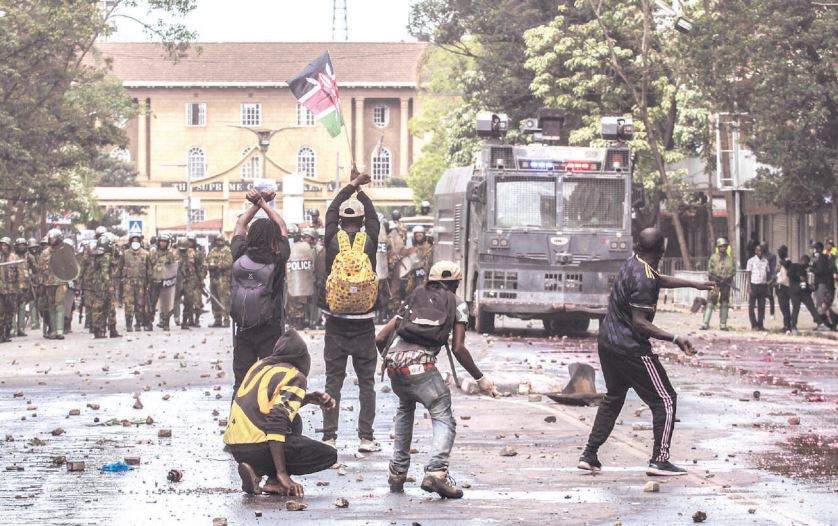
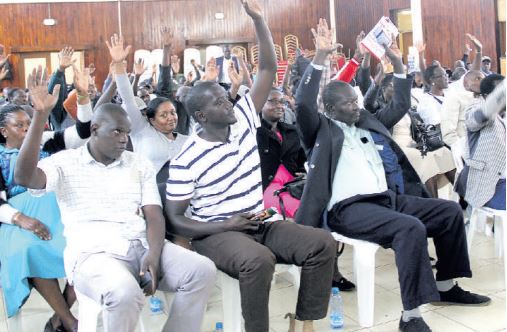 Uasin Gishu residents during a public forum /KNA