WANJAWA: Loyalty misplaced by police serving power not people
Policing crisis not accidental. It’s structural, political, and historical
by EDWIN WANJAWA
Audio By Vocalize
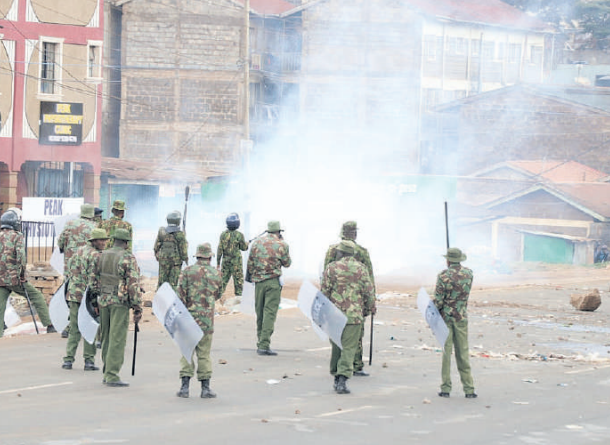
Police officers along Waiyaki Way during Saba Saba day on July 7 /ENOS TECHE
The events of recent weeks, marked by reports of Kenyans being shot, injured, or allegedly disappearing during protests, have once again highlighted deep-seated challenges within the country’s policing culture. Although the Constitution defines it as a “police service,” what exists in practice often appears closer to a police force, and, critics say, a heavy-handed one.
The Kenya Police Service has been described by observers as a weak link in the nation’s democracy and governance systems. This is despite years of reform initiatives. Over the past two decades, efforts have included task forces, policy reviews, legislative changes, new training manuals, welfare audits and oversight institutions. Yet, the impact of these interventions remains limited. The question many now ask is no longer whether the police are struggling, but why this persists, and who benefits from such dysfunction.
Kenya’s policing challenges are rooted in structural, political and historical factors. The institution’s origins lie in the colonial state’s model of control and suppression, and despite independence and constitutional reforms, aspects of that legacy endure. The 2010 Constitution sought to reimagine this relationship, aiming to transform the force into a service, place it under civilian oversight, and embed its operations in a human rights framework.
However, critics argue that this vision has been undermined by political interests that continue to view the police less as protectors of citizens and more as instruments for maintaining political stability. When citizens take to the streets over governance issues, their protests are often met with force. Young people who organise peacefully sometimes face arrests or intimidation. And when communities call for justice, their pleas are at times met with silence. This has led to perceptions that the police remain more aligned to those in power than to the public they are meant to serve.
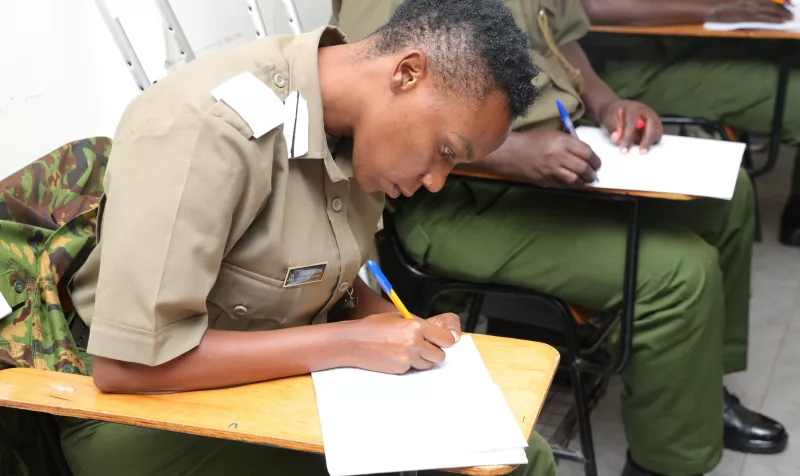
Challenges within the police service are multifaceted. The structure has been described as militarised, training methods as harsh, and the welfare of officers as neglected. Internal disciplinary mechanisms face hurdles, while corruption remains an endemic problem. Oversight agencies like the Independent Policing Oversight Authority (Ipoa) struggle with limited resources and capacity, raising questions about their effectiveness. For many Kenyans, impunity within the police is not viewed as a rare occurrence but as a recurring concern.
Across the country, from Mathare to Isiolo, Kondele to Utawala, and Mumias to Bamba, many citizens report feeling more threatened than protected by law enforcement. This reflects a troubling dynamic where security is equated with submission, and lawful dissent is often met with state response.
To address these concerns, analysts argue that reforms should focus on shifting the philosophy of policing from one grounded in force to one centred on service. This would involve demilitarising the police, transforming training to prioritise dialogue, empathy and constitutional values, and ensuring operational independence from political influence.
Additionally, empowering oversight bodies like Ipoa and the National Police Service Commission is essential. Strengthening their independence and capacity could help ensure accountability for officers and leadership alike.
Improving police welfare is another key step. Better pay, decent housing and support for mental health would not only improve officers’ lives but could also help curb misconduct driven by frustration or demoralisation.
Community policing, often touted in policy documents, must move beyond token gestures to become a meaningful strategy for rebuilding trust. By fostering partnerships between police and communities, there is potential to repair the social contract and restore public confidence.
Society’s role in this transformation is equally important. Double standards, tolerating heavy-handed policing in informal settlements while demanding restraint in affluent areas, or supporting extrajudicial measures in some contexts while condemning them in others, undermine efforts to reform. Citizens must hold institutions accountable while rejecting any normalisation of brutality or injustice.
At its core, the policing challenge reflects a broader tension between democratic ideals and authoritarian practices. A democracy cannot thrive if dissent is met with violence or if those tasked with protection act with impunity.
Reclaiming the police as a service for the people will require political will, sustained public pressure and honest national dialogue. As part of this, calls for intergenerational conversations about Kenya’s future governance, such as the proposal made by opposition leader Raila Odinga, could serve as platforms for addressing longstanding grievances and shaping a shared vision for the country.
Kenya stands at a crossroads, continue along a path where policing is viewed through the lens of control, or pursue a new trajectory where law enforcement is grounded in service and respect for rights. Until such change is realised, the central question remains, who do the police serve, and at what cost?
Edwin Wanjawa teaches Globalisation and
International Development at Pwani University and is a Programmes Associate at
DTM, a Media CSO. [email protected]
This is premium content
Subscribe to Continue Reading
Help us continue bringing you unbiased news, in-depth investigations, and diverse perspectives. Your subscription keeps our mission alive and empowers us to provide high-quality, trustworthy journalism. Join us today to make a difference!