Kenya indicted for shielding South Sudanese involved in illicit money flows
The report has also raised queries regarding loss of revenue to e-services money making corruption mechanisms.
by ELIUD KIBII
Audio By Vocalize
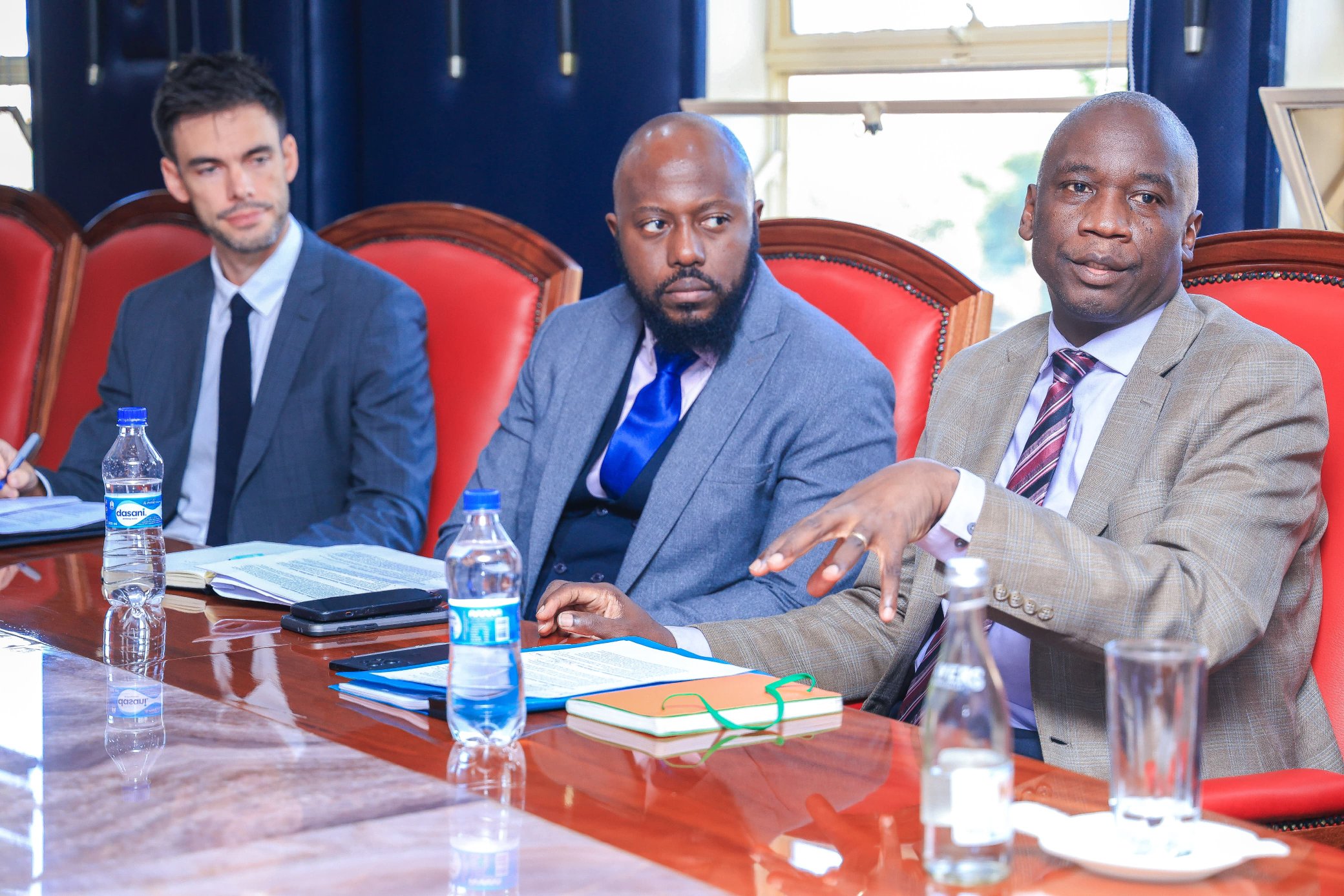
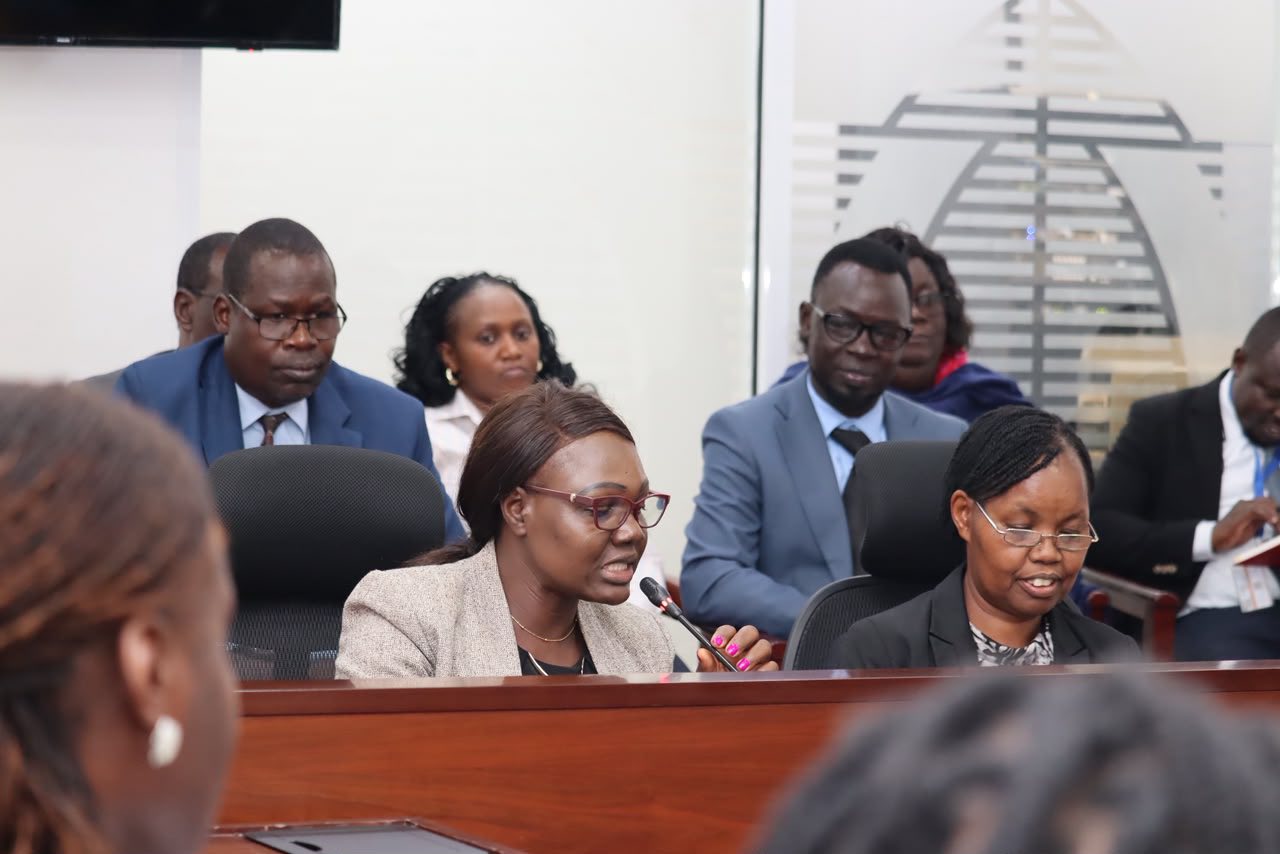
The delegation from the Commission on Human Rights in South Sudan when it paid a courtesy call on Inspector General of Police Douglas Kanja at his Jogoo House ‘A’ office on September 17, 2025
A human rights team has indicted Kenya for failure to
prosecute South Sudanese officials suspected of economic crimes and illicit
financial flows from South Sudan.
The Commission on Human Rights in South Sudan in a report to
the Human Rights Council — which Kenya is a member — says that failure by
Kenya, alongside Uganda, to act on the issue has contributed to the country’s
poverty, security and fuel instability and the financing of the conflict.
The report dated September 16 is headlined Plundering a
Nation: How rampant corruption unleashed a human rights crisis in South Sudan.
“All the five countries sharing borders with South Sudan are
states parties to United Nations and African Union treaties on corruption and
crime. Among them, Kenya and Uganda have introduced domestic measures to
implement international obligations. Accordingly, the governments of these
countries could undertake prosecutions and other interventions to counter
illicit financial inflows from South Sudan,” report read.
However, it said the governments of Kenya and Uganda are yet
to deploy anti-money laundering provisions with respect to South Sudanese
moving proceeds of corruption across borders unlike in the UK, the US, Sweden
and Australia.
Among the legal actions the said states have taken against
South Sudanese officials on suspicion of economic crimes mostly focused on
freezes, seizure or forfeiture of assets.
“Several sanctions regimes, imposed by the United Nations, the
European Union, and several states, are in effect for designated individuals
and entities associated with South Sudan. Of the national jurisdictions
implementing sanctions, the United States government for example has sanctioned
South Sudanese individuals under its Global Magnitsky Act targeting human
rights abusers and corruption, as well as its South Sudan sanctions programme
and related laws,” the report adds.
Regrettably, the commission observed that no prosecutions
appear to have been initiated in Kenya and Uganda.
This is despite anti-money laundering laws and evidence
available to authorities being assessed as sufficient to investigate economic
crimes related to human rights violations in South Sudan, with a view to
effective prosecutions.
The commission added that insider information shared
directly to it showed that although officials possess significant evidence of
money laundering, investigations and prosecutions are not pursued against South
Sudan’s political elites, for fear of damaging diplomatic relations and
lucrative export trade.
This is a departure from other jurisdictions such as Sweden,
where two former executives of Lundin Energy AB are on trial for allegedly
aiding and abetting war crimes perpetrated by Sudanese armed forces and allied
militia against civilians between 1997 and 2003.
Lundin Energy AB was a Swedish oil company that operated in the
US during the armed conflict when the territory was part of Sudan. The two
executives are charged with supporting war crimes allegedly conducted on their
behalf in the context of developing oilfields and related infrastructure.
The trial is being
conducted on the basis of universal jurisdiction, which under Swedish law
enables the prosecution of international crimes in cases where the crime has a
link to Sweden.
The report has also raised queries regarding loss of revenue
to e-Services money making corruption mechanisms.
For instance, the study found that in late 2020, the South
Sudan’s Ministry of Interior launched an online portal to enable ‘e-Visa’
applications for entry to South Sudan and to facilitate visa fee payments.
The commission, however, identified that the website set up
by Crawford — “ a company with connectedness” —uses the same ‘e-Citizen’
platform developed by Webmasters Kenya for use by the Government of Kenya.
“Although Crawford did not build the platform software, nor
significantly customise it for South Sudan, it nonetheless takes 75 per cent of
the profits it generates. This is highly lucrative for Crawford,” it said.
Comparatively, the report says, regular visa fees for
citizens of most countries start at $100 for one month and rise to $350 for six
months of multiple entries. However, Crawford’s payment processing subsidiary
Capital Pay Ltd, also charges an additional service fee of $20.16 on top of
their 75 per cent profit share for the $100 visa.
“While the lack of available arrivals data makes the total
monetary sums difficult to quantify, the arrangement evidently diverts significant
revenue from the government to Crawford,” it added.
Further, a November 2020 contract with the National Revenue
Authority to be its ‘e-Tax’ collector also gives Crawford a legal entitlement
to two per cent of all digitally assessed taxation in the country, a figure the
team said is highly inflated.
Commercial banks report receiving just 0.5 per cent for
collecting, storing and transporting physical cash revenues to the central
bank.
Imports of goods to South Sudan from 2024 were also hampered
by a separate new ‘Electronic Cargo Tracking Note’ tax imposition of $300 per
importing truck.
Despite being related to tracking physical goods into South
Sudan, the team said this was another e-Government Service revenue, and its
imposition caused cargo bound for South Sudan to pile up at the Port of
Mombasa, resulting in delays still impacting imports in 2025.
The CHRSS team lead by commissioner Barney Afako on
Wednesday paid a visit to Inspector General of Police Douglas Kanja.
The National Police Service in a statement said discussions
focused on the commission’s ongoing work in assessing the human rights
landscape in South Sudan.
“The commission emphasised the importance of collaboration
with regional partners and institutions through the exchange of information and
the sharing of recommendations via regular briefings. This is to ensure
stakeholders are well-informed and aligned,” the statement said.
NPS added that IG Kanja assured the commission of his
support in addressing any emerging challenges.
This is premium content
Subscribe to Continue Reading
Help us continue bringing you unbiased news, in-depth investigations, and diverse perspectives. Your subscription keeps our mission alive and empowers us to provide high-quality, trustworthy journalism. Join us today to make a difference!








![[PHOTOS] Ruto pushes for stronger Kenya-EU economic ties in Brussels](https://cdn.radioafrica.digital/image/2026/06/3aebc395-285b-441c-8aa4-33cb538f8d44.jpg)